Top 10 Harness Assembly Manufacturers for Global Buyers

Choosing a harness assembly manufacturer is more than comparing unit prices. Buyers must match electrical requirements, production volumes, and delivery plans with a supplier’s actual capabilities. A cable set may look simple on a drawing, yet small details matter: terminal retention, wire labeling, bend radius, connector fit, and abrasion protection. Details matter. This guide introduces ten manufacturers serving global buyers and outlines what to examine before requesting a quotation. It considers engineering support, prototype readiness, process control, material sourcing, traceability, and communication across time zones. These factors can affect launch schedules as much as the quoted price.

No supplier is best for every project. A high-volume automotive program may need repeatable automation, while industrial equipment makers may value flexible builds and engineering changes. A medical or robotics application can bring different documentation and validation needs. Buyers should confirm specifications, test methods, certifications, capacity, and shipping assumptions directly with each company; capabilities can vary by facility and product line. Fit is everything. The profiles are a practical starting point, not a substitute for technical review or a factory assessment. Public information may also leave gaps. That is worth remembering. Use the comparison to frame useful questions, request current evidence, and assess whether a manufacturer can support the product throughout its life cycle. A clear drawing, sample build, and candid discussion often reveal more than a polished presentation.
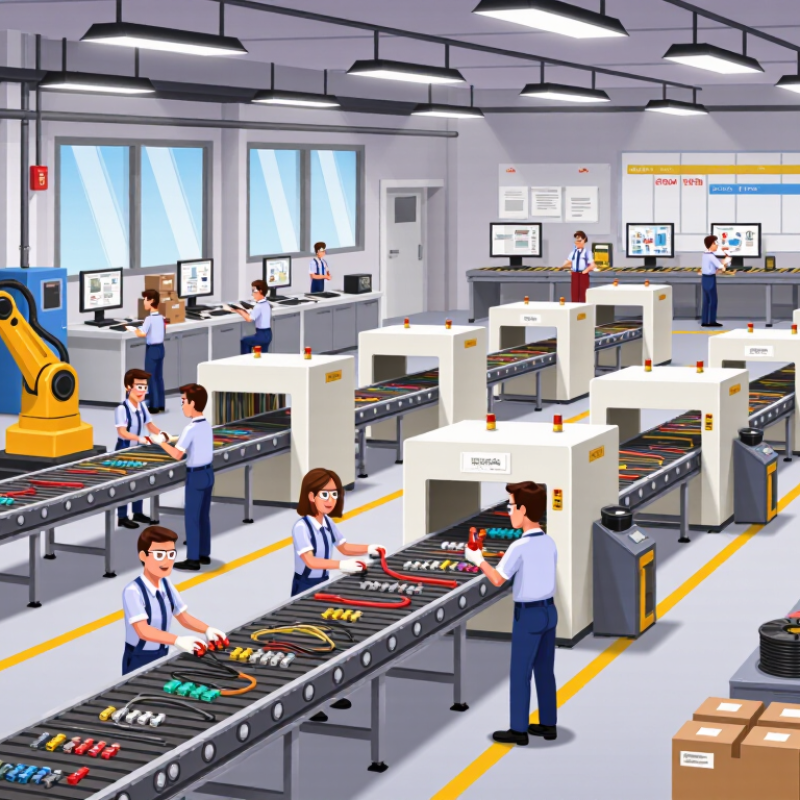
Top 10 Harness Assembly Manufacturers for Global Buyers

What Harness Assembly Manufacturers Produce and Where Their Products Are Used

Harness assembly manufacturers turn electrical drawings into tested, install-ready cable networks. Typical products combine cut wires, crimped terminals, connectors, seals, labels, clips, and protective sleeving. They serve vehicles, factory equipment, appliances, medical devices, and other systems that need reliable power or signal paths. Fit matters. A small routing error can cause abrasion, difficult installation, or a connector that cannot be reached during maintenance.

Electric vehicles show why these assemblies matter. The International Energy Agency’s Global EV Outlook 2024 reports nearly 14 million electric car sales in 2023, about 18% of global car sales. It projected roughly 17 million sales in 2024, or more than one in five new cars. These vehicles may use separate harnesses for battery connections, charging, power electronics, sensors, and cabin controls. Not every cable carries high voltage; low-voltage networks still handle many signals and functions.

Harnesses also connect motors, sensors, controllers, and safety circuits in automated production lines. The International Federation of Robotics reported 4.28 million industrial robots operating worldwide in 2023, up 10% from the previous year. That installed base creates demand for durable, clearly routed assemblies that tolerate movement, vibration, and heat. Yet a tidy drawing is not proof of a dependable harness. Buyers still need to check test records, connector fit, bend radius, and service access against real installation conditions. Some requirements are missed until the first maintenance visit.
Key Criteria for Comparing Harness Assembly Suppliers

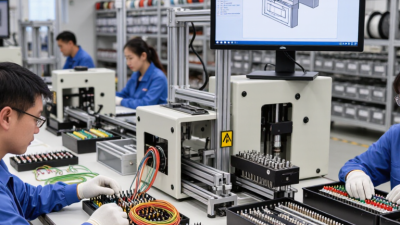
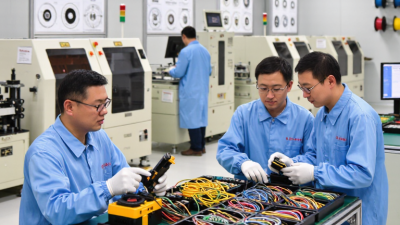
Comparing harness assembly suppliers starts with the build, not the unit price. Ask how each supplier controls wire cutting, stripping, crimping, sealing, and connector insertion. Request sample inspection records, crimp pull-force results, continuity-test coverage, and traceability from incoming wire to finished harness. Small details matter. A terminal that looks secure may still fail under vibration.

The IEA’s Global EV Outlook 2024 reports nearly 14 million electric cars were sold in 2023, about 18% of global car sales. That shift makes power, signal, and high-voltage harness capabilities increasingly relevant. Compare suppliers’ demonstrated experience with your voltage range, wire gauges, branch layouts, and annual volumes. Check whether capacity figures include shifts, tooling limits, and realistic ramp-up time—not just a best-case quote.

Quality systems deserve a closer look. IPC/WHMA-A-620 provides widely used workmanship acceptance criteria for cable and wire-harness assemblies; ask suppliers how they apply the relevant requirements and record inspection results. Compare defect data, corrective-action timing, lead-time history, and change-control practices using the same definitions. One audit is not proof of consistent performance, and I would not treat a certificate as a substitute for reviewing actual production records.

Profiles of Ten Leading Harness Assembly Manufacturers

A useful review of ten leading harness assembly manufacturers compares capabilities, not just factory size. The profiles cover a global automotive supplier, a high-voltage electric-vehicle specialist, and a commercial-vehicle assembler. They also include industrial automation, telecom, medical equipment, appliance, robotics, rapid-prototyping, and vertically integrated regional suppliers. Each serves different volume, testing, and customization needs. Small details matter.

Scale is only one signal. OICA reported 93.5 million motor vehicles produced worldwide in 2023, while the IEA reported nearly 14 million electric cars sold that year, about 18% of global car sales. These figures help explain why buyers assess production capacity alongside high-voltage handling, traceability, and change control. A supplier’s ability to document crimping, continuity tests, and connector revisions can matter as much as its quoted price.

When comparing the ten profiles, check whether each supplier can show relevant process controls, sample inspection records, and realistic lead times. Ask how it manages wire changes and low-volume builds; polished presentations do not prove shop-floor consistency. That comparison is useful, but imperfect: public data rarely reveals defect rates or how well a factory responds when a design changes mid-run.

Top 10 Harness Assembly Manufacturers for Global Buyers

2023 motor vehicle production in major manufacturing countries (millions of vehicles)

Vehicle production provides context for regional automotive supply-chain demand; it is not a ranking of harness manufacturers. Source: OICA, 2023 production statistics.

Manufacturing Capabilities, Certifications, and Service Regions

Global buyers comparing the top ten harness assembly manufacturers should examine process capability, not just quoted capacity. Check whether each factory can handle your wire gauges, connector types, crimping, sealing, and test requirements. Ask for sample inspection records, continuity-test results, and crimp pull-force data. The International Federation of Robotics reported about 4.28 million industrial robots in operation worldwide in 2023 (World Robotics 2024). Automation can support repeatability, but it does not prove a supplier can meet your exact harness specifications.

Certifications help buyers assess quality systems. IPC/WHMA-A-620 defines workmanship criteria for cable and wire harness assemblies; ISO 9001 covers quality management, while IATF 16949 is relevant to automotive supply chains. Verify the certificate’s scope and manufacturing site. A certificate alone is not enough. Service regions matter, too: confirm engineering response times, sample shipping, spare tooling, and local inventory plans. Regional support can reduce delays, though the actual benefit depends on the supplier’s operating setup.

Tip: Send a drawing, annual volume, and test requirements before comparing quotes. Request a production sample and review its records. One detail is easy to miss: a supplier may serve your region without holding local stock. Check that point directly.

Top 10 Harness Assembly Manufacturers for Global Buyers - Manufacturing Capabilities, Certifications, and Service Regions Anonymous supplier archetypes for sourcing comparison—not a verified ranking or claims about specific manufacturers. The regions below are examples of manufacturing ecosystems; confirm each supplier’s actual facilities, certifications, and service coverage directly.
No. Supplier Profile Typical Manufacturing Capabilities Relevant Standards to Request or Verify Example Sourcing Regions Buyer Due-Diligence Focus
1 High-Volume Automotive Harness Specialist Automotive wire cutting and stripping, terminal crimping, connector assembly, taping, routing-board assembly, and end-of-line electrical testing. Ask whether the specific production site is certified to IATF 16949 and ISO 9001. Request evidence of compliance with applicable customer specifications and IPC/WHMA-A-620 workmanship requirements. Examples include China, Mexico, Central and Eastern Europe, and Southeast Asia. Check site-specific certification scope, process audits, traceability, change control, capacity, and production approval documentation.
2 Electric-Vehicle and High-Voltage Harness Supplier High-voltage cable preparation, shielded cable assembly, connector integration, protective sleeving, and electrical or insulation testing as required by the design. Verify applicable quality-system certifications, customer requirements, and documented controls for the specified voltage and insulation system. IPC/WHMA-A-620 may be relevant to workmanship. Examples include China, Japan, South Korea, Mexico, and selected European manufacturing centers. Confirm voltage and current ratings, test methods, material traceability, operator training, and validation for the exact application.
3 Commercial Vehicle and Off-Highway Harness Supplier Ruggedized harnesses, branch assemblies, sealed connectors, protective conduit, and assemblies designed for vehicle vibration, moisture, dust, or temperature exposure. Request applicable IATF 16949 or ISO 9001 certificates and evidence of testing against the buyer’s environmental and vehicle-specific requirements. Examples include North America, Mexico, Europe, India, and China. Review environmental test capability, connector sourcing controls, repair procedures, and performance under the intended operating conditions.
4 Aerospace and Defense Harness Specialist Low- to medium-volume harnesses, complex routing, controlled documentation, specialized wire processing, and inspection for demanding applications. Ask whether the site holds AS9100 certification when required. IPC/WHMA-A-620, including applicable aerospace addenda, is a workmanship standard; verify the specific revision and contract requirements. Examples include the United States, Canada, the United Kingdom, France, Germany, and other aerospace manufacturing regions. Verify approved-source requirements, configuration control, material and lot traceability, inspection records, and export-control obligations.
5 Medical Device Cable and Harness Supplier Medical equipment cable assemblies, connectorized leads, controlled assembly processes, and documentation tailored to the device manufacturer’s requirements. Request ISO 13485 certification where required and verify its scope. The device manufacturer remains responsible for determining applicable regulatory and product requirements. Examples include the United States, Ireland, Germany, Costa Rica, Mexico, and Malaysia. Confirm cleanliness and handling controls, supplier qualification records, material documentation, change notification, and validation responsibilities.
6 Industrial Automation and Controls Harness Supplier Control-cabinet wiring, machine harnesses, sensor and actuator cables, custom lengths, labeling, and small- to medium-batch production. ISO 9001 is commonly requested as a quality-management certification. Verify any product-specific electrical, safety, or customer requirements separately. Examples include Germany, Italy, the United States, Mexico, China, and Taiwan. Assess drawing review, labeling accuracy, terminal and connector compatibility, test coverage, and engineering-change responsiveness.
7 Telecommunications and Data-Center Cable Assembly Supplier Power and signal harnesses, rack and equipment interconnects, cable preparation, connector termination, and assembly to customer-defined layouts. Request ISO 9001 evidence where applicable. Verify the exact electrical, performance, and workmanship specifications required by the equipment owner. Examples include China, Vietnam, Malaysia, Mexico, and the United States. Check connector authenticity, cable specifications, labeling, test records, production capacity, and continuity of supply.
8 Appliance and Consumer Electronics Harness Supplier High-volume wire sets, connector assembly, crimping, routing, labeling, and production aligned to appliance or electronics bills of materials. Verify the supplier’s quality-system certification and the product-specific component and regulatory requirements applicable to the destination market. Examples include China, Vietnam, Thailand, India, Mexico, and Eastern Europe. Review process controls, component substitution rules, incoming inspection, traceability, and peak-season capacity planning.
9 Robotics and Motion-Control Harness Supplier Flexible or moving cable assemblies, sensor and motor connections, custom routing, and assemblies designed around stated motion and bend-life requirements. Request ISO 9001 evidence where applicable and confirm any customer-specific workmanship, performance, or environmental standards. Examples include Japan, South Korea, Germany, the United States, and China. Validate bend radius, flex-life test conditions, shielding and grounding design, connector retention, and the supplier’s interpretation of the application requirements.
10 Prototype and Low-Volume Custom Harness Supplier Prototype builds, engineering samples, short runs, custom cable preparation, design-for-manufacture feedback, and transition support for production. Ask for the quality-system certification relevant to the project and confirm whether IPC/WHMA-A-620 workmanship requirements are specified in the contract. Examples include North America, the United Kingdom, Germany, China, and other regional engineering hubs. Check minimum order quantities, engineering-change handling, test documentation, component sourcing, and the supplier’s ability to scale into repeat production.

How Global Buyers Can Match Suppliers to Project Requirements

Top 10 Harness Assembly Manufacturers for Global Buyers
How Global Buyers Can Match Suppliers to Project Requirements

Choosing a harness assembly supplier starts with the application, not a ranking. Define circuit count, wire gauge, connector type, operating temperature, and expected annual volume. A harness routed through a tight enclosure may need different bend and strain-relief allowances than one installed in an open panel. Share drawings, sample parts, and test requirements early. Clear inputs make quotations easier to compare.

Ask how suppliers control crimp height, continuity, labeling, and inspection records. Request sample build documentation and clarify who approves design changes. Also compare production capacity, lead-time assumptions, and communication across time zones. A low unit price means little if tooling, packaging, or validation costs appear later. A first specification is rarely perfect; prototype feedback may reveal routing or access problems that drawings missed.

Tips: Send a marked-up drawing and a short list of acceptance criteria. Ask for a sample inspection report, not just a capability statement. Small details matter. Confirm how revisions are tracked and how rejected parts are handled. These answers help buyers judge process consistency, while leaving room to question assumptions before committing to volume production.