How to Choose a Top China Harness Cable Assembly Supplier?

Choosing a top China harness cable assembly supplier is not just a price comparison. The right partner must turn drawings, sample parts, and changing production needs into consistent assemblies. A connector that looks correct can still fail fit checks. A crimp that passes visual inspection may need closer validation.

For this guide, the expert voice is illustrative rather than a verified real-world quotation. Harness engineering specialist Elena Ruiz puts the central consideration this way: “A reliable assembly starts with clear specifications, then proves itself through repeatable workmanship and documented testing.” Keep that principle in view when comparing suppliers. Ask how they control wire length, terminal crimping, labeling, and continuity testing. Request sample records, inspection criteria, and details about how design changes are reviewed. Specific answers matter. Vague assurances do not.

Price still counts. So do lead time, communication, and the supplier’s ability to scale without letting quality drift. Look closely at the factory’s process: Are work instructions available at the bench? Are test results traceable to production batches? Can the team explain how it handles a rejected sample? These details can reveal more than a polished sales presentation.

No checklist removes every risk. A supplier may perform well on a pilot run and struggle when volumes rise; that deserves honest consideration. The sections ahead explain how to assess technical capability, quality controls, certifications, communication, and total cost before choosing a China-based harness cable assembly partner.
How to Choose a Top China Harness Cable Assembly Supplier?

Define Your Harness Cable Assembly Requirements

How to Choose a Top China Harness Cable Assembly Supplier?

Define Your Harness Cable Assembly Requirements

Before requesting quotations, document what the harness must do and where it will operate. Specify working voltage, peak current, signal type, connector interface, cable length, and acceptable voltage drop. Add temperature range, vibration exposure, moisture or chemical contact, and required service life. A harness routed beside a hot motor needs different insulation and protection from one installed inside a dry control cabinet. Include a drawing, pinout, and sample build when possible. Even a simple routing photo can prevent costly assumptions.

Your requirements should reflect the application’s direction, not just today’s prototype. The International Energy Agency’s Global EV Outlook 2024 reported that electric car sales were expected to exceed 17 million in 2024, representing more than one in five cars sold worldwide. Electrification can increase demand for high-voltage connections and careful separation of power and signal circuits. State whether shielding, grounding, labeling, or continuity testing is needed, and define inspection criteria before production begins. IPC/WHMA-A-620 provides workmanship criteria for cable and wire harness assemblies; cite the applicable class and acceptance expectations in your specification.

Be precise, but leave room for review. A rushed specification can miss bend radius or assembly access. That happens. Ask suppliers to flag unclear dimensions, propose a validation sample, and identify test methods for pull strength, continuity, and insulation resistance. Record approved substitutions in writing. Small details matter: a connector latch facing the wrong direction can turn a sound design into a difficult installation.

Explore China’s Supplier Landscape and Manufacturing Capabilities

China’s supplier landscape is broad, but national scale does not guarantee consistent cable assemblies. China’s Ministry of Industry and Information Technology reported manufacturing value added of 33.6 trillion yuan in 2023, about 26.2% of the global total. This indicates deep industrial capacity, not the capability of any individual factory. Look for suppliers that can show process controls, trained technicians, and traceable materials—not just a large equipment list.

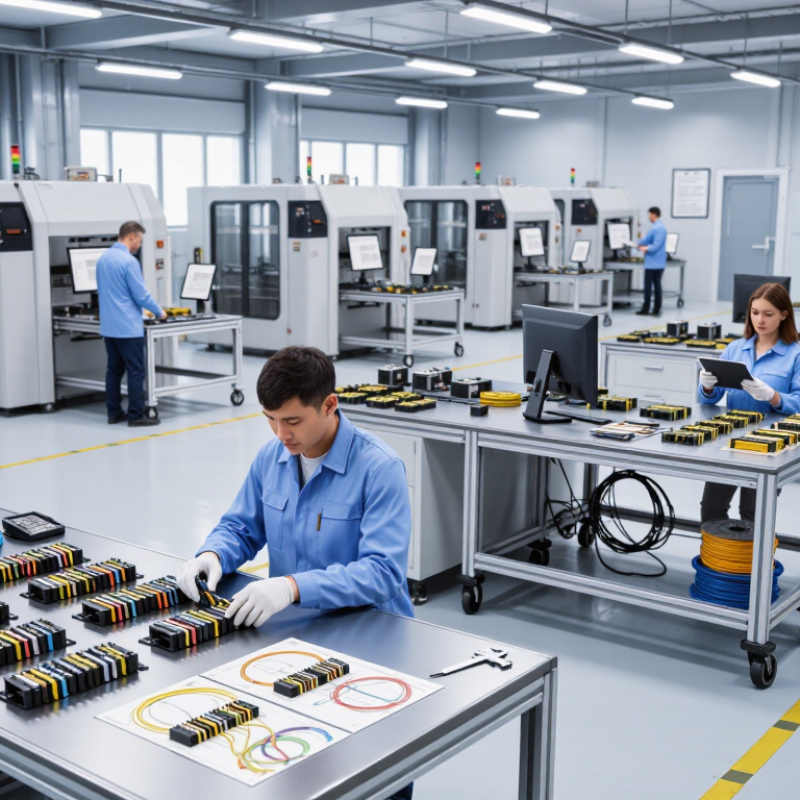
Ask how the supplier manages wire cutting, stripping, crimping, and final electrical testing. Request sample records showing pull-force results, continuity checks, and inspection criteria.

For a real evaluation, compare a production sample with its drawing: check connector orientation, label placement, and branch lengths. Small details matter.

IPC’s 2023 Global Electronics Association survey reported ongoing supply-chain challenges across the electronics industry, making transparent sourcing and lead-time communication especially important. The figure is industry-wide, not specific to harness suppliers, so treat it as context rather than proof.

A site visit can reveal practical gaps, though one visit cannot verify every shift or process. That’s worth remembering. Ask for corrective-action examples and updated process documents, then verify them against the parts you receive.

Verify Quality Systems, Certifications, and Traceability

How to Choose a Top China Harness Cable Assembly Supplier?
Verify Quality Systems, Certifications, and Traceability

A supplier’s quality system should be visible on the production floor, not only in a certificate folder. Check whether its ISO 9001 certificate is current, issued for the actual manufacturing site, and supported by recent audit records. Ask to see inspection plans for wire cutting, crimping, and continuity testing. Can operators identify the approved crimp height and gauge at their station? Small details matter. A certificate alone cannot prove that every shift follows the same process.

Traceability should link each finished harness to its materials, production date, operator, and test results. Request a sample lot record and follow one cable from its label back to its wire and terminal batches. The Deloitte 2023 Global Chief Procurement Officer Survey identifies supply chain resilience as a leading procurement priority; usable traceability helps buyers investigate disruptions and quality issues faster. Still, records can look complete while missing a clear link between the tested sample and shipped lot. Check that connection.

Ask suppliers how they handle nonconforming parts, corrective actions, and calibration of crimp tools and test equipment. Review a redacted corrective-action report, then see whether the fix was verified on later production. This takes time. It is worth it. I would also compare certificate scope, site address, and product records carefully; paperwork mismatches are easy to overlook, and I have seen them delay otherwise sound evaluations.

Evaluate Engineering Support, Capacity, and Supply Chain Reliability

A strong China harness cable assembly supplier should bring engineers into discussions before drawings are frozen. Ask how they handle connector substitutions, bend-radius limits, wire gauge changes, and crimp pull-force requirements. Request sample inspection records and a clear escalation path for design changes. Small details matter. A fast quotation is useful, but it cannot replace technical answers.

Check capacity with evidence, not a factory tour alone. Ask for current line loading, trained operator coverage, tooling maintenance records, and realistic lead times for both prototypes and repeat orders. Confirm that the supplier can scale without skipping first-article checks or electrical continuity testing. I would still treat a polished capacity spreadsheet cautiously; it may not reflect next month’s staffing or actual bottlenecks.

Supply chain reliability needs similar scrutiny. McKinsey Global Institute’s 2020 analysis estimated that companies experience disruptions lasting a month or longer about once every 3.7 years, on average. Ask where critical terminals, wire, and connectors are sourced, and whether approved alternatives are documented. Check how the supplier tracks lot numbers and communicates shortages. No checklist catches everything. Review recent delivery performance, corrective-action records, and a realistic recovery plan before awarding production work.

Compare Samples, Quotations, and Service Before Choosing a Supplier

When comparing China harness cable assembly suppliers, request samples built to your drawing and operating conditions. A neat sample can still hide weak crimps or an awkward connector fit. Check wire gauge, pin mapping, labels, and bend radius against your requirements. Fit matters. For critical connections, ask how continuity and crimp quality are checked, and request relevant test records. A sample is useful, but it cannot prove every production batch will match.

Compare quotations line by line, not just by unit price. Confirm cable and connector specifications, tooling charges, minimum order quantities, sample costs, and estimated lead times. Ask whether substitutions require your approval. A low quote may omit testing or packaging details; that does not automatically make it a poor offer, but it needs clarification. Small omissions can become expensive later.

Service is easier to judge through specific exchanges. Send a drawing with one unclear dimension and note how the supplier handles the question. Do they explain the risk, suggest a measurable revision, and confirm the change in writing? Ask who will manage sample feedback and production updates. Quick replies help, yet technical accuracy matters more. It is tempting to choose the smoothest presentation; sometimes that is the wrong signal. Keep a simple comparison sheet for sample results, quotation assumptions, and response quality.

How to Choose a Top China Harness Cable Assembly Supplier?

Compare samples, quotations, and service before choosing a supplier.

Example evaluation scores only—not verified supplier data. Score each area from 1 (weak) to 5 (strong): inspect samples for fit and workmanship, quotations for clear specifications and costs, and service for response speed and technical support.