2026 Best Wire Harness Assembly Suppliers?

Choosing the right wire harness assembly supplier in 2026 requires more than comparing online rankings. A dependable partner must combine engineering knowledge, controlled production, traceable materials, and responsive communication. The strongest suppliers can explain how each connector, terminal, seal, and wire gauge fits the application.

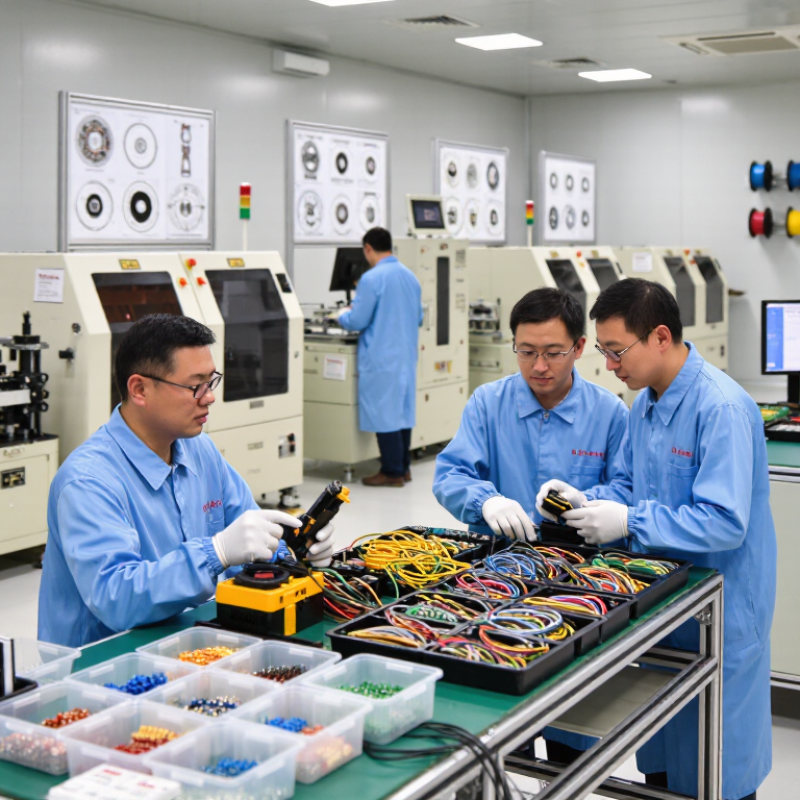
This guide examines suppliers through practical criteria used by engineering and purchasing teams. These include drawing interpretation, prototype support, crimp-force monitoring, automated testing, batch traceability, and change-control procedures. A factory floor should show more than polished equipment. Look for labeled workstations, calibrated tools, clear inspection records, and operators who understand the assembly drawings.

Details matter.

Supplier reliability also depends on capacity and transparency. Can the company maintain quality during a sudden volume increase? Does it disclose subcontracting arrangements? Can it provide first-article samples, test reports, and realistic lead times? These questions often reveal more than a low quotation. However, no supplier list remains perfect for every project. A vendor praised for automotive programs may struggle with medical-device documentation or low-volume prototypes. That assumption can fail.

The following overview compares leading wire harness assembly suppliers by capabilities, certifications, industries served, customization, quality systems, and customer support. It also considers practical risks, including communication gaps, tooling costs, minimum order quantities, and inconsistent documentation. Readers should verify current certifications and production capacity directly before making a final decision. Reliable sourcing is not only about finding a capable factory. It is about building a process that remains dependable when specifications change, deadlines tighten, and every connection matters.
2026 Best Wire Harness Assembly Suppliers?

What Defines a Leading Wire Harness Assembly Supplier in 2026

In 2026, a leading wire harness assembly supplier offers more than low unit pricing. It shows repeatable control from drawing review to final inspection. During supplier evaluations, I look for trained technicians, controlled crimp height, verified pull-force results, and clear cable-routing methods. That evidence matters. A polished website proves little without process records and recent audit results.

Strong suppliers combine practical experience with engineering discipline. They review connector fit, bend radius, heat exposure, and assembly tolerances before production begins. Digital traceability should link each harness to materials, operators, test results, and revision history. Automated continuity testing helps, but skilled visual inspection still catches damaged seals and uneven lacing. Small details prevent expensive field failures.

Supply resilience also defines leadership. Reliable partners maintain approved material alternatives, realistic capacity plans, and transparent communication during shortages. They should explain environmental controls, worker training, and compliance practices without hiding behind vague claims. However, no supplier is perfect. One pilot project revealed inconsistent terminal crimping despite acceptable electrical tests. The supplier corrected the tooling, but the lesson remains: sampling must be demanding, and customer feedback must change the process. Cost matters, yet dependable performance, honest reporting, and measurable improvement matter more.


Main Supplier Types and Their Industry Applications

2026 Best Wire Harness Assembly Suppliers?

Main Supplier Types and Their Industry Applications

Wire harness suppliers usually fall into three groups: high-volume contract manufacturers, prototype specialists, and application-focused assemblers. Contract manufacturers suit automotive, appliances, and industrial equipment programs requiring repeatable output. They typically offer automated cutting, crimping, testing, and traceability systems. Prototype specialists support engineering teams during early design changes. Their smaller batches can reduce development delays. Application-focused assemblers serve demanding sectors, including medical devices, aerospace systems, and heavy machinery. These suppliers often understand tighter documentation, material control, and inspection requirements. No supplier fits every program.

Tips: Match production volume, wire complexity, testing needs, and certification requirements before requesting quotations. Ask for sample inspection records and process-control details. Cheap pricing can hide expensive rework.

A reliable supplier should explain conductor selection, terminal compatibility, bend radius, shielding, and labeling methods clearly. For medical and aerospace applications, documented inspection and controlled revisions matter greatly. Automotive projects may prioritize cycle time, vibration resistance, and automated electrical testing.

Industrial customers often need flexible builds for machine upgrades and maintenance parts.

In practice, supplier evaluations are rarely perfect. One overlooked connector tolerance can stop assembly.

Engineers should review drawings, samples, and test limits together. Clear communication remains more valuable than impressive sales language. Shortlist carefully.

How to Evaluate Quality, Engineering, and Compliance

2026 Best Wire Harness Assembly Suppliers: How to Evaluate Quality, Engineering, and Compliance

A strong wire harness supplier proves quality through repeatable evidence, not attractive samples. Ask for crimp-height records, pull-force results, continuity tests, and insulation-resistance data. Inspect terminals under magnification. A loose strand or uneven crimp can create a hidden field failure. Confirm that operators follow controlled work instructions and that inspection equipment is calibrated.

Engineering support matters when drawings are incomplete or designs change. Review the supplier’s ability to interpret tolerances, recommend routing improvements, and build functional prototypes. Check whether engineers document revisions and approve changes before production. Ask for first-article inspection records and traceability by lot. In practice, communication often reveals more than a capability brochure. Delayed answers may signal weak internal control. No checklist is perfect.

Tips: Request a sample harness, its inspection report, and the related material certificates. Compare wire gauges, terminal plating, labels, bend radius, and connector fit. Verify testing against the applicable specification, not a vague “industry standard.” For compliance, review declarations for restricted substances, material origin, and product-specific safety requirements. Certification claims should be independently verified and matched to the actual facility and process. Keep records of approvals, deviations, and corrective actions. A clean document package can still conceal inconsistent production, so periodic audits and incoming checks remain necessary.

2026 Best Wire Harness Assembly Suppliers: Evaluation Priorities

This buyer-oriented weighting model focuses on quality, engineering capability, and compliance. The criteria reflect commonly used requirements such as ISO 9001, IATF 16949, IPC/WHMA-A-620, PPAP, RoHS, and REACH. Percentages are evaluation weights, not company performance data.

Quality management and engineering capability receive the highest weighting because they directly influence production consistency, design-for-manufacturing decisions, validation, and long-term supply reliability.

Comparing Manufacturing Capacity, Costs, and Delivery

2026 Best Wire Harness Assembly Suppliers?
Comparing Manufacturing Capacity, Costs, and Delivery

Choosing a wire harness supplier in 2026 requires more than comparing unit prices. Ask how many assembly lines are active, not merely installed. A factory with 20 lines may reserve only three for new programs. Request monthly output records, shift patterns, and bottleneck data. Then compare available capacity with your forecast. Real capacity is what can ship consistently.

Costs often change after engineering review. A low quote may exclude custom fixtures, terminal testing, packaging, or small-batch setup fees. I have seen a harness price rise after routing changed by only a few centimeters. Require a line-item quotation and confirm material substitutions in writing. Copper, insulation, connectors, and labor should be priced separately. The cheapest offer can become expensive quickly.

Delivery depends on production control, not promises. Check component lead times, safety stock rules, first-article approval, and inspection records. Ask for a sample build and measure crimp height, pull force, continuity, and labeling accuracy. A supplier should explain its corrective-action process with evidence. Still, forecasts are imperfect. A port delay or demand increase can expose weak planning. Build a realistic buffer, but do not accept vague dates. Monthly capacity reviews and weekly shipment updates create useful pressure.

A Practical Framework for Selecting the Best Supplier

2026 Best Wire Harness Assembly Suppliers?

A Practical Framework for Selecting the Best Supplier

Selecting a wire harness supplier in 2026 requires more than comparing unit prices. Use a practical scorecard covering engineering skill, process control, delivery stability, and communication. Ask for sample build records, cable specifications, crimp-height data, and inspection methods. A reliable supplier should explain how terminals are tested, labeled, and traced through production.

Look beyond polished samples. Request a controlled pilot run using your actual drawings and materials. Review first-article results, pull-test records, continuity checks, and change-control procedures. Visit the production area if possible. Observe wire cutting, terminal crimping, routing, and final inspection. Small details matter. Loose labels and uneven insulation can reveal weak process discipline.

Supplier experience should match your application. Automotive, medical, industrial, and energy assemblies may require different validation practices. Check technical training, equipment maintenance, capacity planning, and corrective-action speed. Digital traceability is useful, but it cannot replace trained operators and clear work instructions. No scorecard is perfect. A supplier may pass an audit and still struggle with urgent design changes. Leave room to assess honesty, not just documents. Ask what went wrong in a recent project and how the team fixed it. Their answer often shows more than a sales presentation.

2026 Best Wire Harness Assembly Suppliers? - A Practical Framework for Selecting the Best Supplier

Supplier evaluation scorecard for comparing wire harness assembly partners without relying on company or brand names

Evaluation Dimension Weight Practical Benchmark for 2026 Evidence to Request Scoring Guidance Warning Signs
Quality Management 20% Documented quality system aligned with ISO 9001 or an equivalent independently audited system; defined inspection and corrective-action procedures. Current certificate, audit scope, defect-rate history, corrective-action records, and sample inspection reports. 5 = certified, stable quality data, and fast corrective action; 3 = documented system with limited performance data; 1 = informal or undocumented controls. Expired certification, unexplained defect trends, or no documented root-cause process.
Harness Workmanship 15% Assembly and acceptance criteria documented against IPC/WHMA-A-620 or the customer’s approved workmanship specification. Workmanship standard, crimp-height records, pull-test results, visual inspection criteria, and first-article samples. 5 = controlled process with validated tooling and test records; 3 = partial documentation; 1 = visual inspection only. Inconsistent terminals, exposed conductors, damaged insulation, or missing pull-test data.
Engineering Capability 15% Ability to interpret drawings, bills of materials, wiring tables, tolerance requirements, and revision-controlled specifications. Engineering organization chart, sample design-for-manufacturing review, change-control procedure, and prototype process. 5 = proactive design feedback and documented revision control; 3 = build-to-print capability; 1 = frequent clarification or rework. Uncontrolled drawings, unclear revision history, or inability to identify assembly risks before production.
Testing and Traceability 10% Electrical continuity testing for applicable circuits, documented test limits, lot identification, and retention of production records. Tester specifications, test reports, barcode or lot-traceability examples, calibration records, and record-retention policy. 5 = 100% applicable testing with traceable records; 3 = sampling or manual records; 1 = no repeatable test evidence. No calibration records, incomplete lot identification, or reliance on operator memory.
Production Capacity 10% Capacity plan matches forecasted demand, including peak volume, labor availability, tooling, and backup production resources. Capacity model, line-loading data, equipment list, staffing plan, utilization assumptions, and peak-demand response plan. 5 = verified spare capacity and contingency resources; 3 = capacity available only under normal demand; 1 = capacity based on unverified estimates. Single-point equipment dependency, excessive overtime, or no documented capacity reserve.
Lead Time and Delivery 10% Clear separation of prototype, first-article, and repeat-production lead times; delivery performance tracked monthly. Historical on-time-delivery data, standard lead-time matrix, expedite policy, and production scheduling process. 5 = consistent delivery with transparent milestones; 3 = acceptable average lead time with occasional delays; 1 = undocumented or frequently changing commitments. Verbal delivery promises, no milestone visibility, or repeated schedule changes after order placement.
Total Cost of Ownership 10% Quote reflects materials, labor, tooling, testing, packaging, logistics, engineering changes, and expected quality costs. Itemized quotation, tooling ownership terms, material-substitution policy, payment terms, and warranty provisions. 5 = transparent and stable cost structure; 3 = acceptable price with several assumptions; 1 = lowest price but significant exclusions or unclear surcharges. Unpriced tooling, unclear material assumptions, unusually low quotation, or frequent surcharge changes.
Regulatory and Product Compliance 5% Documented control of applicable material, environmental, safety, labeling, and customer-specific requirements. Material declarations, restricted-substance statements, safety documentation, labeling samples, and compliance responsibility matrix. 5 = complete, current, and product-specific records; 3 = general declarations available; 1 = compliance responsibility is unclear. Generic certificates with no product linkage or inability to provide material documentation.
Supply Continuity and Risk 5% Risk controls cover critical components, alternate sources, disaster recovery, cybersecurity, and communication during disruptions. Business-continuity plan, critical-component list, alternate-source strategy, recovery-time targets, and supplier-risk review. 5 = tested contingency plan and proactive risk reporting; 3 = documented but untested plan; 1 = reactive management only. Single-source dependency, no recovery plan, or delayed communication about material shortages.
Total Evaluation Weight 100% Recommended decision rule: shortlist suppliers scoring at least 75/100, with no critical quality, traceability, compliance, or continuity score below 3/5.
Scoring Method: Rate each dimension from 1 to 5, multiply the rating by the assigned weight, and divide by 5 to calculate the weighted points. Validate supplier claims through samples, audits, production records, and documented performance data.