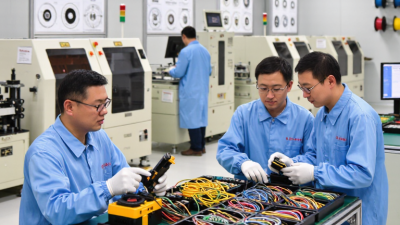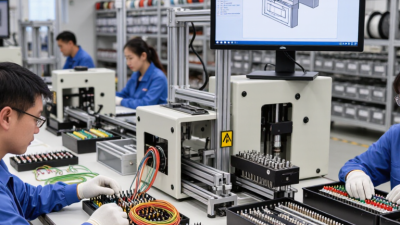
A cable wire harness assembly may look simple on a drawing, yet small production choices can affect fit, reliability, and service life. A connector that sits too close to a bracket can make installation awkward. A wire with the wrong insulation may struggle with heat, abrasion, or repeated movement. These details are easy to miss when comparing suppliers by price alone. Small details matter.
Choosing a supplier is therefore a practical engineering decision, not just a purchasing task. Buyers should look beyond polished brochures and ask how the supplier reviews drawings, controls materials, and verifies each build. Request examples of inspection records, continuity testing, and traceability for wires and connectors. Ask who handles design changes, and how quickly questions reach the people on the production floor. Clear answers are useful. Vague assurances are not.
The right partner should also understand your application, expected volumes, delivery needs, and quality requirements. A capable supplier may flag a tight bend radius or a hard-to-source component before it becomes a production delay. Still, no checklist can replace a careful review of the actual assembly and its operating conditions. It is worth revisiting assumptions, even when a design has worked before. The following ten tips offer a grounded way to compare suppliers, identify evidence that matters, and ask better questions before committing to a cable wire harness assembly project.
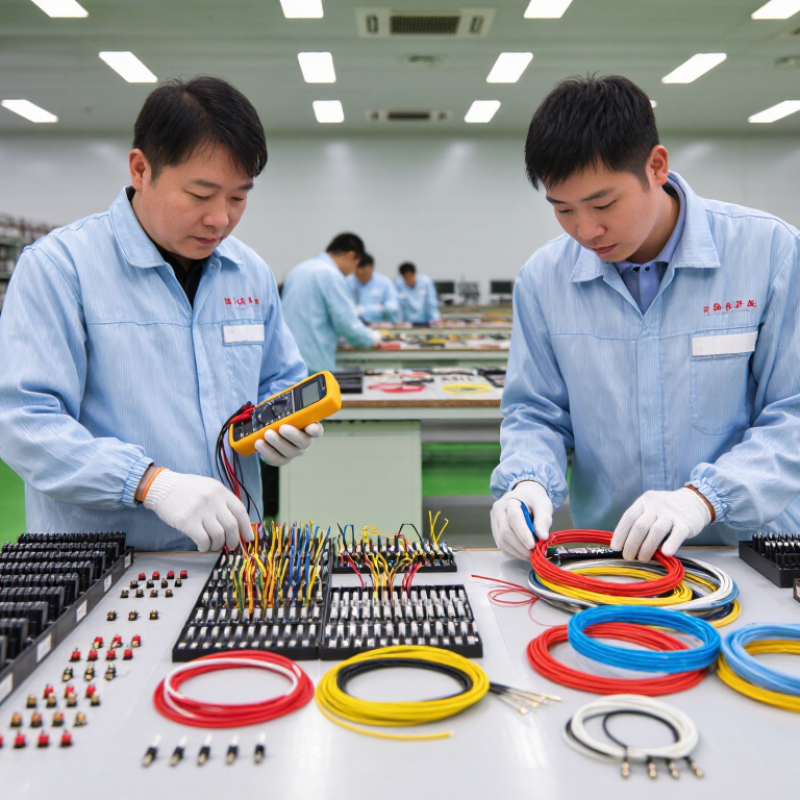
Before requesting a quote, describe what the cable wire harness assembly must do and where it will operate. Record the equipment’s available space, cable route, bend points, and expected movement. A harness fitted to a bench may fail once installed behind a vibrating panel. Small details matter. Note operating temperature, moisture, dust exposure, and any contact with oils or cleaning agents.
List electrical and mechanical requirements in measurable terms. Specify circuit count, conductor size, current, voltage, insulation type, connector details, and target cable lengths. Mark pin assignments clearly, and include drawings or photographs when they reveal routing that words miss. If a dimension is still uncertain, label it as provisional rather than letting a supplier guess. It is tempting to specify every detail, but an unnecessary restriction can limit workable options.
Define how samples will be checked before production. For example, identify continuity tests, polarity checks, visual inspection points, and fit checks in the actual enclosure. Share expected production volumes and delivery timing, since these affect tooling and scheduling. Requirements may change after the first prototype; that is normal, but record revisions and approval dates. A rushed drawing update can quietly create two different versions of the same harness. Keep one controlled specification for quotation, sampling, and later orders.
A clear supplier brief should cover the key details in each category. This illustrative checklist counts the example requirement fields shown; it is not survey data or a universal specification.
A supplier’s years in business matter less than relevant cable harness experience. Ask whether its team has built assemblies using similar wire gauges, connector types, routing constraints, and operating conditions. Request a sample project record with customer details removed. Specific examples reveal more than a broad claim of expertise.
Technical capability should be visible on the production floor. Look for controlled crimping tools, calibrated test equipment, clear work instructions, and operators who can explain key checks. Ask how the supplier verifies continuity, pin placement, and crimp quality. A neat sample is useful. Documented repeatability is better. If possible, review a first-article build against your drawing and revision notes.
Discuss how engineers handle design changes. A capable team should flag unclear tolerances, suggest practical routing changes, and explain trade-offs before production. Ask who reviews design files and how updates reach the line. Small communication gaps can lead to rework. Experience is not a guarantee, though. Some suppliers excel at prototypes but lack capacity for steady volume, so check both.
A supplier’s quality certificate is a starting point, not proof that every harness will meet your needs. Ask to see the certificate scope, audit date, and procedures for handling defects. Then compare those procedures with your drawing, wire gauge, connector type, and production volume. Small details matter. A terminal crimp that looks neat may still fail a pull test.
Review how the supplier tests finished assemblies. Continuity checks can catch open or crossed circuits, while insulation resistance or dielectric tests may suit higher-voltage applications. Ask which tests run on every unit and which use samples. Request example reports with serial numbers, measured results, and acceptance limits. For crimp quality, look for documented pull-force checks and periodic cross-section reviews. A test list without pass criteria tells you little.
Check compliance against the product’s actual destination and use. Ask for material declarations and traceability records for wire, terminals, and housings. Requirements may differ by market, so confirm applicable substance restrictions and safety standards with your compliance team. Verify that any claimed certification covers the relevant product and process. Paperwork can look perfect. It cannot replace a clear change-control process; suppliers should notify you before altering materials, tooling, or test methods. Even experienced teams miss things, so agree on how deviations are recorded and resolved.
A capable cable wire harness assembly supplier should explain how its production capacity fits your actual order pattern. Ask about available shifts, trained operators, testing stations, and current workload, not just the largest monthly output on a sales sheet. A line may assemble thousands of simple harnesses but struggle with short runs that involve many wire lengths, connectors, and inspection steps. Request a sample production schedule for your expected order volume. Check whether the supplier can scale output without skipping continuity tests or changing agreed specifications. Small details matter.
Compare lead times by asking for separate estimates for design review, material procurement, sample approval, and full production. A quoted four-week delivery may start only after every connector arrives. Ask which components have longer replenishment times and how schedule changes are communicated. Then compare total costs, including tooling, packaging, inspection, freight, and fees for small or urgent orders. A low unit price can become expensive when minimum quantities leave unused stock on your shelves. It is easy to overlook that. Put the same order assumptions in each supplier’s quotation request, then compare the figures side by side. Estimates still carry uncertainty; record what could shift them, such as a revised drawing or delayed materials.
A cable wire harness supplier should make communication measurable, not merely friendly. Ask who owns each drawing revision, how quickly engineering questions receive answers, and what triggers an escalation. A missed connector change can leave a harness incompatible with its mating component. Request sample status updates that show open issues, owners, and promised dates. Details matter. McKinsey’s 2024 supply-chain survey found that nine in ten respondents experienced supply-chain challenges in the previous year. That finding makes it reasonable to test a supplier’s disruption plan before production begins: ask how it reports material shortages, capacity changes, and recovery estimates.
Risk management should include practical evidence. Review change control, lot traceability, inspection records, and backup plans for critical materials. IBM’s 2024 Cost of a Data Breach Report put the global average breach cost at 4.88 million dollars; protect drawings and production files with controlled access and clear incident-notification procedures. Then assess ongoing support: can the supplier investigate a field failure, preserve affected lot records, and recommend a corrective action with a named owner? Silence is a signal. A polished scorecard may still miss a slow handoff between sales and engineering, so test the relationship with a real technical question. I would not treat one delayed reply as proof of poor service, but repeated vague answers deserve a harder look.
| # | Evaluation Area | What to Check | Evidence to Request | Why It Matters |
|---|---|---|---|---|
| 01 | Communication and responsiveness | Confirm who handles engineering questions, order updates, and escalations. Agree on response expectations and communication channels. | A named point of contact, escalation path, and example project-update schedule. | Clear ownership helps resolve design questions and delivery issues before they disrupt production. |
| 02 | Engineering review | Check whether the supplier reviews drawings, connector selection, wire sizing, routing, and assembly requirements before quoting or production. | Documented design-review process and a sample list of clarification questions or design-for-manufacturability feedback. | Early review can identify ambiguous specifications, assembly constraints, and avoidable rework. |
| 03 | Quality management | Ask how incoming materials, crimping, soldering, assembly, and final inspection are controlled and recorded. | Quality procedures, inspection records, nonconformance process, and relevant audit or certification documentation. | Consistent process controls support repeatable assemblies and traceable corrective actions. |
| 04 | Crimp and electrical testing | Verify that test methods match the harness requirements, such as continuity, short-circuit, insulation, or pull-force checks where applicable. | Test plans, equipment calibration records, and sample test reports tied to defined acceptance criteria. | Appropriate testing helps detect wiring errors and verifies specified connection performance. |
| 05 | Material and supply-chain risk | Discuss component availability, approved substitutions, lead times, and how shortages or end-of-life notices are handled. | Risk-review process, critical-component list, and a documented approval workflow for substitutions. | Proactive supply planning reduces the chance of unapproved changes or production interruptions. |
| 06 | Capacity and delivery planning | Assess whether the supplier can support expected volumes, demand changes, and agreed delivery schedules without compromising process controls. | Capacity assumptions, production lead-time estimates, and a process for communicating schedule changes. | Realistic planning helps align purchasing, inventory, and production requirements. |
| 07 | Change management and traceability | Confirm how revisions to drawings, bills of materials, work instructions, or approved components are reviewed and released. | Revision-control procedure, lot or batch traceability approach, and sample change-notification record. | Controlled changes help prevent mixed revisions and make issues easier to investigate. |
| 08 | Risk management and corrective action | Ask how defects, delivery risks, and process deviations are reported, contained, investigated, and followed through to closure. | Corrective-action workflow, example root-cause report with confidential details removed, and escalation criteria. | A consistent response process limits repeat problems and clarifies accountability. |
| 09 | Ongoing technical and production support | Check whether support is available for troubleshooting, product revisions, replacement builds, and production ramp changes. | Support contacts, stated service hours, response process, and post-launch review arrangements. | Reliable follow-up is important when products change or field and production issues arise. |
| 10 | Quote clarity and total cost | Review the quote for scope, assumptions, tooling, testing, packaging, minimum order quantities, lead times, and exclusions. | Itemized quotation, written assumptions, and confirmation of which specifications and revisions the price covers. | A transparent quote makes supplier comparisons more meaningful and reduces unexpected costs. |
Precision Cable Assemblies
16830 Pheasant Drive
Brookfield, WI 53005
Phone: 262-784-7887
Fax: 262-784-0681