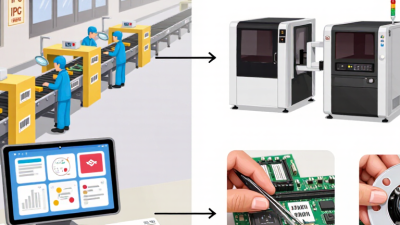
Choosing a China pca assembly supplier requires more than comparing unit prices. The right partner must prove process control, engineering capability, and consistent delivery. A polished website is not enough. Ask for factory photos, certification records, inspection procedures, and recent project examples.
John W. Mitchell, IPC president and CEO, offers a useful principle: “Standards are the foundation of quality and reliability in electronics.” This idea matters throughout pca assembly. A dependable supplier should understand IPC-A-610 requirements, component traceability, soldering profiles, and electrostatic discharge protection. Their engineers should review Gerber files, BOM accuracy, component availability, and design-for-manufacturing risks before production begins.
Look closely at the details. Can the supplier provide first article inspection reports? Do operators record reflow oven temperatures? Are moisture-sensitive components stored in controlled cabinets? These small actions reveal real manufacturing discipline. They also expose weak suppliers quickly.
Price still matters. It should not become the only decision. A lower quotation may hide substitution risks, unstable labor, poor testing, or delayed communication. Delivery promises can also sound better than reality.
No supplier is perfect. Even experienced factories may miss a revision or underestimate a difficult package. What matters is how openly they report problems and correct them. Buyers should evaluate prototype support, communication speed, testing capacity, production scalability, and after-sales responsibility.
This guide explains how to compare China pca assembly suppliers with practical evidence. Some evaluation steps may feel slow. They are still cheaper than discovering defects after shipment. Reliability begins before the first board enters the assembly line.

PCA assembly means mounting electronic components onto a printed circuit board. It includes solder paste printing, component placement, reflow soldering, inspection, and functional testing. China remains attractive because its electronics supply chain combines component access, skilled technicians, and scalable production. According to Fortune Business Insights’ 2024 PCB market report, the global PCB market was valued above 80 billion US dollars in 2023. Asia-Pacific held the largest regional share. This supports China’s strong manufacturing position, but price alone is not enough.
A dependable Chinese PCA assembly supplier should provide clear engineering communication and traceable production records. Ask for process capability data, inspection standards, component sourcing controls, and sample testing results. IPC industry reports continue to identify supply-chain disruption and skilled-labor shortages as major electronics manufacturing concerns. A supplier should explain how it manages shortages, substitutions, and delivery risks. In practical work, small details matter. A missing polarity mark can delay an entire batch. No supplier is perfect. Even experienced teams need structured reviews and honest corrective actions.
Tips: Request a pilot run before mass production. Review solder-joint images and test reports. Confirm whether automated optical inspection and X-ray inspection are available. Check moisture-sensitive component storage and packaging procedures. Compare the quotation with yield data, not only unit price. A lower offer may hide tooling fees, inspection limits, or rework costs. Also confirm communication hours and engineering response times. Slow answers often become expensive production problems.
| Evaluation Dimension | What PCA Assembly Includes | Practical Benchmark or Requirement | How to Verify a Supplier | Why It Matters |
|---|---|---|---|---|
| PCA Definition | Printed Circuit Assembly combines a bare printed circuit board with electronic components installed by surface-mount technology (SMT), through-hole technology (THT), or both. | The supplier should support the assembly method required by the product design and provide complete manufacturing documentation. | Request a process flow, sample inspection records, and a review of the bill of materials, Gerber files, and pick-and-place data. | A clear definition prevents omissions between PCB fabrication, component sourcing, assembly, testing, and final delivery. |
| Assembly Technology | SMT places components directly on PCB pads; THT inserts component leads through drilled holes. Mixed-technology boards use both methods. | The supplier should demonstrate suitable placement, soldering, rework, and inspection capability for the package types in the design. | Check equipment lists, package experience, soldering profiles, and representative sample assemblies. | Matching the production process to the component mix improves solder quality and reduces manual rework. |
| Quality Standard | Assembly quality is commonly evaluated against IPC workmanship criteria, including solder joints, component placement, cleanliness, and board condition. | The purchase specification should state the applicable IPC class and acceptance criteria before production begins. | Ask for the controlled quality standard, operator training records, first-article reports, and nonconformance procedures. | Written acceptance criteria make inspection results consistent and reduce disputes. |
| Inspection Coverage | Typical inspection may include automated optical inspection (AOI), X-ray inspection for hidden solder joints, flying-probe or in-circuit testing, and functional testing. | Inspection should be selected according to package type, circuit complexity, test-point availability, and product risk. | Confirm inspection locations, sample plans, test fixtures, test coverage, and the format of quality reports. | Layered inspection identifies visible, hidden, electrical, and functional defects at different production stages. |
| Component Sourcing | A full-service supplier may purchase components, manage approved manufacturers, control substitutions, and handle shortages or lifecycle changes. | Every substitution should require written approval and must preserve form, fit, function, specification, and regulatory requirements. | Request traceability records, date-code controls, authenticity controls, and a documented shortage-management process. | Controlled sourcing reduces counterfeit, obsolete, and unauthorized-substitution risks. |
| Regulatory Compliance | Compliance can involve restrictions on hazardous substances, material declarations, product-specific requirements, and export documentation. | The supplier should identify applicable requirements such as RoHS and provide supporting declarations or test documentation when requested. | Review compliance statements, material records, supplier declarations, and change-notification procedures. | Correct documentation supports legal market access and reduces customs or customer-approval delays. |
| Design for Manufacturing | Design review checks pad geometry, component spacing, solder-mask openings, panelization, fiducials, test points, and assembly orientation. | A manufacturability review should be completed before tooling or mass production, with all recommended changes documented. | Request a design-review report showing risks, proposed corrections, and customer approval status. | Early engineering feedback can reduce defects, rework, and production delays. |
| Traceability | Traceability links the finished assembly to the PCB lot, component lots, operators, machines, inspection results, and test records. | The required traceability level should be defined by product risk and contract requirements before quotation. | Ask for example serial-number, lot-control, and production-history records with sensitive information removed. | Traceability supports root-cause analysis, warranty handling, recalls, and process improvement. |
| Capacity and Scalability | Capacity includes available SMT and THT lines, engineering resources, feeder capacity, shift arrangements, and production scheduling. | The supplier should show how it will support prototype, pilot, and recurring production without changing the approved process unexpectedly. | Compare current loading, line configuration, contingency planning, and historical delivery performance. | A scalable process avoids bottlenecks when demand increases. |
| Lead-Time Planning | Total lead time may include engineering review, component procurement, PCB fabrication, tooling, assembly, testing, and export preparation. | The quotation should separate each stage and identify assumptions, long-lead components, minimum order quantities, and approval points. | Request a milestone schedule and a written escalation process for shortages or engineering changes. | Transparent scheduling provides a more reliable delivery forecast than a single total-day estimate. |
| Cost Structure | The quotation may include components, bare PCBs, setup, stencils, programming, testing, packaging, freight, taxes, and engineering services. | All one-time and recurring charges should be itemized, with currency, quantity breaks, validity period, and payment terms clearly stated. | Compare equivalent quotations using the same BOM revision, quantity, test scope, delivery term, and packaging requirement. | A transparent total cost prevents low initial prices from becoming expensive after hidden charges. |
| Communication and Documentation | The supplier should manage revisions, engineering questions, purchase orders, inspection reports, change notices, and shipment documents. | Use one controlled revision for the BOM, Gerber files, drawings, assembly notes, and test procedures. | Evaluate response time, technical clarity, document control, and the named contact for quality and engineering issues. | Accurate communication reduces revision errors and speeds up problem resolution. |
| Why Consider China | China has extensive electronics manufacturing infrastructure, established component and PCB supply chains, and broad access to SMT, THT, testing, tooling, and logistics services. | The supplier should still be evaluated on quality systems, technical capability, transparency, communication, and total landed cost rather than location alone. | Use sample orders, audits, reference documentation, process reviews, and a written quality agreement before scaling production. | A structured selection process helps capture supply-chain advantages while controlling quality, compliance, and delivery risks. |