China remains a major manufacturing base for wire harnesses, industrial cables, and precision interconnects. However, supplier quality varies sharply. This article examines China’s top cable assembly connector suppliers through practical, evidence-based criteria. These criteria include production capability, connector compatibility, testing discipline, export experience, and after-sales support.
Industry reports support this focus. MarketsandMarkets’ Cable Assembly Market report identifies automotive, telecommunications, and industrial automation as important demand sectors. Mordor Intelligence also highlights Asia-Pacific as a leading regional market, supported by electronics manufacturing and infrastructure investment. Bishop & Associates’ connector industry research shows that connector demand increasingly depends on high-speed data, vehicle electrification, and factory automation. These trends affect how buyers should evaluate Chinese manufacturers. Price alone is not enough.
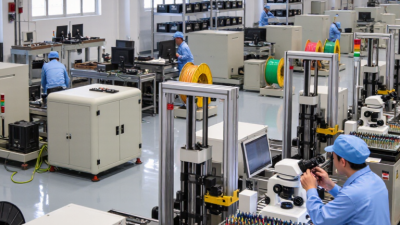
A reliable supplier should provide controlled crimping, continuity testing, insulation resistance testing, and documented material traceability. Buyers should also review compliance records, sample approval procedures, and production consistency. IPC/WHMA-A-620 remains a useful reference for cable and wire harness workmanship. Site audits can reveal details that brochures hide, such as unlabeled reels, crowded workstations, or inconsistent inspection records. Small details matter. Certifications can also become outdated, and some online rankings appear overly promotional. That is an uncomfortable limitation. Therefore, this guide compares suppliers using verifiable capabilities rather than reputation alone. Readers should confirm current certificates, factory ownership, lead times, and technical support before placing orders. The strongest supplier may not be the largest company. It may be the one that communicates clearly and delivers stable assemblies repeatedly.
What Are China Top Cable Assembly Connector Suppliers?
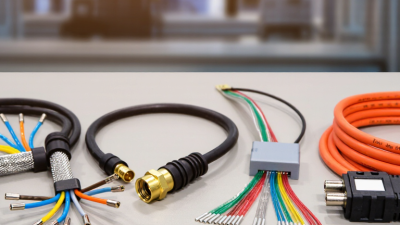
A cable assembly connector supplier designs, sources, assembles, and tests connectorized cables for specific equipment. The work goes beyond attaching a plug. Engineers select contacts, insulation, shielding, wire gauge, and strain relief for the operating environment.
Bishop & Associates reported global electronic connector sales of about USD 84.5 billion in 2023. This scale shows why supplier evaluation needs technical evidence, not attractive catalogs. A capable supplier should provide drawings, material specifications, sample testing, and traceable production records. It should also understand IPC/WHMA-A-620 requirements for cable and wire harness workmanship.
Ask for practical proof.
A reliable supplier can explain crimp-height control, pull-force testing, continuity checks, and high-voltage testing. For harsh applications, request temperature cycling, vibration, salt-spray, or ingress testing when relevant. Independent market research, including Grand View Research, indicates continued growth in cable assembly demand, supported by automotive electronics, industrial equipment, communications, and medical devices. However, market forecasts differ because analysts define “cable assembly” differently. That limitation matters.
The best supplier is not always the largest factory. It is the one that controls variation, communicates design risks, and maintains stable lead times. Review its quality certificates, audit reports, corrective-action records, and production samples. A perfect first sample proves little. Long-term consistency proves more. Even experienced buyers can overlook connector mating force or bend-radius limits, so design reviews should remain active throughout production.
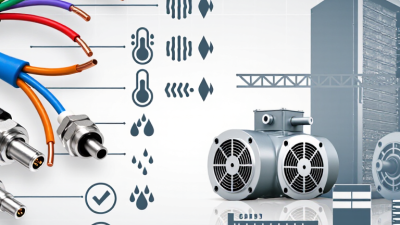
A cable assembly connector supplier provides connector components, terminated cables, overmolded assemblies, testing, customization, and production support. For supplier evaluation, protection against solids and water is an important technical consideration. The chart below summarizes the official IEC 60529 IP protection scale commonly used when specifying connector assemblies.
Under IEC 60529, the first IP digit rates protection against solid objects and dust from 0 to 6, while the second digit rates protection against water from 0 to 9. When comparing suppliers, confirm that the proposed cable assembly, connector interface, sealing method, and test documentation match the required IP rating.
Evaluating China’s top cable assembly connector suppliers requires more than comparing prices. MarketsandMarkets’ 2024 Cable Assemblies Market report estimates growth from about USD 85 billion in 2024 to USD 105 billion by 2029. This expansion raises pressure on quality consistency and delivery control. Ask for production capacity, lead-time records, and recent inspection data. A polished brochure proves little.
Review the supplier’s engineering process closely. Confirm connector drawings, wire specifications, crimp-height controls, and pull-force results. Request samples from normal production, not a special laboratory batch. Check continuity, insulation resistance, hipot testing, and terminal retention. IPC/WHMA-A-620 provides useful workmanship references for cable assemblies. However, compliance claims still need independent evidence. Verify ISO 9001 or IATF 16949 certificates through the issuing body.
Traceability deserves equal attention. Each shipment should identify materials, operators, equipment, test results, and production dates. Grand View Research’s 2024 cable assembly report identifies automotive and industrial electronics as major growth areas, where failure costs can quickly exceed purchase savings. Ask how suppliers manage engineering changes and rejected lots. Visit the factory when possible. Look at crimp machines, storage humidity, calibration labels, and finished-goods packaging. Small details reveal habits. A spreadsheet can still lie. My own evaluation would also include a pilot order, because excellent samples sometimes hide unstable daily output.
Chinese cable assembly connector suppliers commonly serve industrial automation, where stable signal transmission matters on factory floors. They produce harnesses for sensors, control cabinets, servo motors, and robotic equipment. These assemblies often need resistance to vibration, oil, dust, and repeated bending. Engineers usually request drawings, pin layouts, cable lengths, and testing requirements before production begins. Small details matter.
Automotive and new energy equipment are also important markets. Suppliers support battery systems, charging equipment, vehicle sensors, and dashboard electronics. They may provide high-voltage assemblies, waterproof connectors, and custom terminals. Medical equipment manufacturers require clean, reliable, and traceable cable solutions. Imaging systems, patient monitors, and laboratory instruments cannot tolerate casual quality checks. Documentation becomes part of the product.
Telecommunications, consumer electronics, renewable energy, and transportation use these suppliers as well. Data centers need dense, organized connections, while solar and energy-storage projects demand outdoor durability. Some suppliers also serve aerospace or defense-related engineering, but qualification requirements can be strict and project-specific. A low quotation may hide weak testing or inconsistent materials. That risk deserves attention. No supplier fits every industry perfectly. A factory may excel at volume production yet struggle with complex prototypes. Buyers should review sample assemblies, inspection records, material certificates, and communication speed. Site audits help, although they are not a complete guarantee. Supplier capability must match the actual working environment.
| Supplier Profile | Typical Cable Assembly Capabilities | Commonly Served Industries | Typical Products and Applications | Relevant Standards or Compliance Areas | Typical Buyer Requirements |
|---|---|---|---|---|---|
| Custom Cable Assembly Manufacturer | Wire cutting, stripping, crimping, soldering, overmolding, labeling, continuity testing, and custom harness production. | Industrial equipment Automation Consumer electronics | Point-to-point wire harnesses, control cables, sensor cables, power leads, and internal equipment wiring. | IPC/WHMA-A-620 workmanship requirements, RoHS, REACH, UL-related component requirements, and ISO 9001 quality systems. | Customized drawings, sample approval, stable production quality, traceability, and flexible order quantities. |
| Connector-Integrated Assembly Supplier | Assembly of cable sets with circular, rectangular, board-to-wire, terminal, coaxial, and waterproof connectors. | Industrial automation Robotics Instrumentation | Motor cables, encoder cables, I/O harnesses, control-panel wiring, and machine interconnect assemblies. | Connector manufacturer specifications, IP protection testing where applicable, electrical continuity testing, and IPC/WHMA-A-620 practices. | Mating compatibility, pinout accuracy, insertion and withdrawal performance, environmental sealing, and mechanical retention. |
| High-Speed Data Cable Specialist | Twisted-pair, shielded, coaxial, and high-speed cable assemblies with impedance control, shielding, and signal-integrity testing. | Telecommunications Networking Data centers Test equipment | Ethernet assemblies, coaxial assemblies, display and data cables, RF jumper cables, and equipment interconnects. | Applicable Ethernet or transmission specifications, shielding requirements, RoHS, REACH, and customer-defined signal-integrity tests. | Controlled impedance, insertion loss, return loss, crosstalk performance, bend radius, and repeatable test results. |
| Automotive Cable Assembly Supplier | Low-voltage harnesses, sensor leads, battery cables, sealed connectors, high-temperature assemblies, and vehicle wiring systems. | Passenger vehicles Commercial vehicles Electric vehicles Charging equipment | Battery and charging cables, engine-bay harnesses, lighting harnesses, sensor cables, and infotainment connections. | IATF 16949 quality management, automotive customer specifications, environmental testing, terminal crimp validation, and relevant vehicle regulations. | PPAP documentation, crimp-force monitoring, traceability, vibration resistance, temperature resistance, and dependable supply continuity. |
| Medical Cable Assembly Supplier | Small-diameter cables, molded cable assemblies, patient-monitoring leads, reusable or disposable assemblies, and clean production processes. | Medical devices Diagnostic equipment Laboratory instruments | ECG leads, ultrasound connections, monitoring cables, sensor cables, and cables for laboratory analyzers. | ISO 13485 quality systems, biocompatibility considerations where applicable, RoHS, REACH, and customer-specific medical-device controls. | Document control, material traceability, cleanliness, sterilization compatibility where required, validation records, and controlled change management. |
| Energy and Power Cable Supplier | High-current assemblies, battery interconnects, inverter cables, solar cables, grounding cables, and weather-resistant molded connections. | Solar power Energy storage Power conversion Industrial power systems | Battery pack harnesses, photovoltaic cable assemblies, inverter connections, busbar links, and high-current terminal assemblies. | Applicable UL, IEC, or customer safety requirements, insulation testing, high-voltage separation, flame resistance, and RoHS. | Current capacity, voltage rating, temperature rating, insulation resistance, polarity control, and long-term environmental durability. |
| Aerospace and Defense-Oriented Supplier | Lightweight harnesses, shielded assemblies, ruggedized connectors, backshells, environmental sealing, and specialized testing. | Avionics Unmanned systems Defense electronics Satellite equipment | Signal harnesses, power harnesses, avionics interconnects, rugged data cables, and vibration-resistant assemblies. | Customer-defined aerospace or defense specifications, workmanship standards, environmental testing, material traceability, and configuration control. | Low weight, vibration resistance, EMI shielding, controlled documentation, secure supply chains, and rigorous inspection records. |
| Prototype and Low-Volume Assembly Partner | Engineering samples, rapid prototyping, design-for-manufacturing feedback, small-batch assembly, and pilot production. | Product development Research equipment Startups Specialized machinery | Prototype harnesses, evaluation cables, engineering change samples, test fixtures, and pre-production assemblies. | IPC/WHMA-A-620 practices, customer drawings, RoHS, REACH, electrical safety requirements, and agreed inspection procedures. | Fast quotation, engineering communication, low minimum order quantities, revision control, and repeatable transition to mass production. |
| High-Volume Contract Manufacturer | Automated cutting and crimping, semi-automatic assembly lines, in-line testing, production scheduling, and supply-chain coordination. | Consumer electronics Appliances Automotive components Industrial products | Standardized harnesses, appliance wiring, internal device cables, power cords, and recurring production assemblies. | ISO 9001, applicable UL or IEC requirements, RoHS, REACH, process-control procedures, and customer quality audits. | Competitive unit cost, capacity planning, stable component sourcing, automated inspection, delivery consistency, and scalable production. |
Leading Chinese cable assembly connector suppliers offer more than molded wires and catalog parts. They support connector selection, cable design, rapid prototyping, overmolding, labeling, and volume production. Their teams often match contact plating, insulation, shielding, and bend radius to each application. Automotive, medical, industrial, and telecommunications projects require different tolerances. One connector cannot solve every problem.
Market evidence supports this broader service model. Grand View Research estimates the global cable assembly market will expand at a compound annual growth rate of about 5.6% through 2030. MarketsandMarkets also identifies data centers, electric vehicles, and industrial automation as major demand areas. These sectors need controlled impedance, stronger strain relief, and stable signal performance. Reliable suppliers should provide continuity testing, hipot testing, dimensional inspection, and material traceability. In field audits, documentation is often weaker than the hardware. That gap can delay approval.
Tips: Request drawings, sample reports, and test limits before ordering. Confirm minimum order quantities and tooling ownership. Ask whether suppliers can provide first-article inspection data. A low unit price may hide expensive rework. Fit matters. Tiny details matter. Also review packaging, change-control procedures, and corrective-action records. Some supplier claims sound impressive, but measurable evidence remains more useful.
Choosing the right cable assembly connector supplier requires more than comparing prices. The supplier must understand your voltage, current, signal frequency, space limits, and operating environment. Ask for drawings, material specifications, and test procedures before requesting a final quotation. Clear questions reveal technical depth.
Request representative samples. Inspect crimp quality, connector fit, cable marking, shielding, and strain relief. If possible, test assemblies under vibration, heat, moisture, or repeated bending. A reliable supplier should provide traceability for materials and production batches. Quality records matter.
Review their engineering experience with similar assemblies, not just their equipment list. Confirm production capacity, inspection tools, change-control procedures, and delivery planning. Certifications can support trust, but they do not replace practical evidence. Speak with the quality and engineering teams directly.
Communication is often the hidden risk. Slow replies may become missed approvals later. Ask how they handle design changes, nonconforming parts, and urgent replacement needs. A low quote can look attractive, yet weak testing may create expensive field failures. I have learned that the cheapest offer is rarely the safest choice. Still, higher prices do not automatically prove better workmanship. Compare measurable results, not polished promises. Supplier selection deserves careful records, realistic samples, and a little healthy doubt.
Precision Cable Assemblies
16830 Pheasant Drive
Brookfield, WI 53005
Phone: 262-784-7887
Fax: 262-784-0681