China Top Connector Cable Assembly Manufacturers?
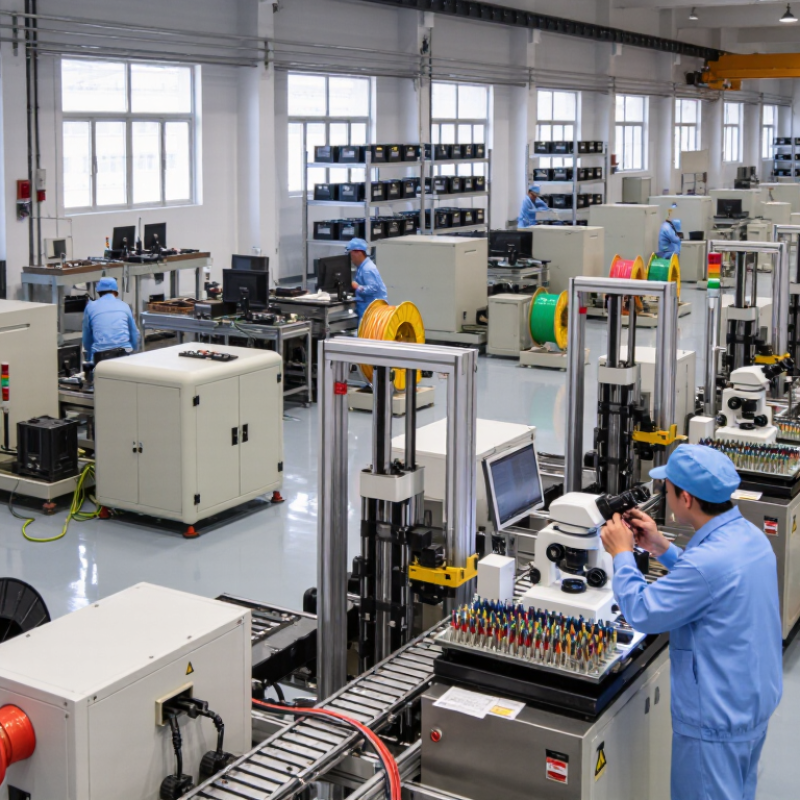
China has become a major production base for connector cable assembly, serving automotive, industrial, medical, telecommunications, and consumer electronics markets. Its advantages are visible on the factory floor: automated crimping machines, microscope inspection stations, and reels of color-coded wire. However, low pricing alone cannot prove manufacturing quality. It may even hide inconsistent materials, weak traceability, or unstable testing practices.
Grand View Research estimated the global electrical connectors market at approximately USD 84.9 billion in 2023. The report also projects continued growth through 2030, driven by vehicle electrification, data infrastructure, and industrial automation. Bishop & Associates has likewise identified automotive and electronic systems as important demand centers. Ron Bishop, founder of Bishop & Associates, has described connectors as “the unsung heroes of the electronics industry.” That phrase remains useful. A small terminal can determine whether an entire machine operates safely.
This guide examines China’s top connector cable assembly manufacturers through practical criteria. These include engineering experience, ISO and IATF certification, contact resistance testing, pull-force inspection, production capacity, and export reliability. Supplier websites are not enough. Factory audits, sample evaluations, and clear change-control records matter more. The comparison also considers custom tooling, overmolding, waterproof designs, and rapid prototyping. Some rankings may remain debatable because public data is incomplete. That limitation deserves attention. The strongest supplier is not always the largest one; it is the manufacturer that repeatedly delivers stable assemblies under real operating conditions.
What Defines a Top Connector Cable Assembly Manufacturer in China
A top connector cable assembly manufacturer in China is defined by controlled execution, not attractive catalogs. Bishop & Associates reported that the global electronic connector industry reached about US$84.5 billion in 2023. This scale increases pressure on suppliers to prove consistency, especially in automotive, industrial, and medical applications.
Qualified manufacturers follow IPC/WHMA-A-620 requirements for crimping, soldering, insulation, and visual inspection. They should also operate documented quality systems, commonly supported by ISO 9001 certification. Ask for process capability data, first-pass yield, and corrective-action records. Traceability matters. Each cable should connect to a lot number, material batch, operator, and test result.
Practical evidence is more valuable than polished presentations. A reliable factory can show crimp-height measurements, pull-force results, continuity testing, and sample inspection photos. It should explain how terminals are protected from oxidation and how cable lengths stay within tolerance. Automated cutting and stripping improve repeatability, but machines do not remove every risk. Human verification still matters.
The China Electronics Components Industry Association has repeatedly highlighted intelligent manufacturing and quality control as major industry priorities. Yet production data can look better than the workshop feels. No factory is flawless. A strong supplier admits recurring defects, investigates root causes, and improves the process openly. During an audit, inspect storage humidity, labeling discipline, tooling calibration, and operator training. Those small details often reveal whether a manufacturer can deliver stable assemblies beyond the first shipment.
Major Industries Served by Chinese Cable Assembly Suppliers
Chinese cable assembly suppliers serve diverse industries, from automotive production to renewable energy. Their work often begins with a controlled drawing, approved materials, and defined testing requirements.
Automotive manufacturers need compact harnesses for sensors, lighting, battery systems, and control units. Suppliers must manage vibration, heat, moisture, and repeated movement. Industrial automation companies order cable sets for robotic arms, conveyors, and control cabinets. In these applications, accurate pin layouts and flexible jackets prevent costly installation errors. Small details matter.
Medical equipment producers usually request clean assembly areas, consistent labeling, and strong traceability. Telecom and data center projects demand high-density connector assemblies with stable signal performance. Energy storage and solar equipment require cables that tolerate outdoor exposure, temperature changes, and continuous electrical loads. Rail and marine equipment can add stricter demands for abrasion resistance and flame performance.
Reliable manufacturers normally provide sample builds before mass production. They may perform continuity checks, insulation resistance tests, crimp pull tests, and visual inspections. In my experience, clear communication prevents more problems than fast quoting. A revised drawing can still cause trouble when one connector detail is missed. This is where engineering review and production records become essential. Suppliers with practical testing experience can suggest routing changes, strain relief improvements, or safer tolerances. Yet no supplier is perfect. Buyers should verify certificates, inspect first articles, and review how nonconforming parts are handled. Cost matters, but a low unit price cannot repair a delayed production line.
How to Evaluate and Select a Suitable Manufacturer
China Top Connector Cable Assembly Manufacturers?
How to Evaluate and Select a Suitable Manufacturer
When evaluating a cable assembly manufacturer, inspect its engineering process, not only its product gallery. A suitable supplier should understand connector selection, wire specifications, shielding, crimp force, and bend-radius limits. I once trusted a polished sample too quickly. The production batch exposed inconsistent terminal crimping. The lesson was uncomfortable but useful.
Ask for samples made with your actual drawings and materials. Review pin alignment, pull-test records, insulation quality, and continuity results. Request a documented quality plan. It should identify incoming inspection, in-process checks, and final testing. Verify certifications directly, including their scope and expiration dates. A certificate without traceable records proves very little. Factory visits can reveal practical details, such as labeled bins, controlled workstations, and calibrated testing equipment.
Evaluate communication as carefully as manufacturing capacity. Can the technical team explain tolerance changes clearly? Do they report problems before shipment? Ask how they manage engineering changes, rejected parts, and supplier traceability. A reliable manufacturer should provide lot records and respond with measurable corrective actions. Do not accept vague promises. Price alone misleads. Compare tooling costs, minimum order quantities, lead times, testing fees, and packaging requirements. During a pilot order, track defect rates and delivery consistency. Look for evidence, not confidence. Some decisions still involve uncertainty, so record the assumptions behind your supplier choice.