
Robot Teleoperation Data Collection captures how people guide robots through real tasks, one movement at a time. An operator might steer a gripper toward a cup, adjust its angle, and lift it without tipping. Each demonstration can pair the robot’s actions with camera images, joint positions, and timestamps. Together, these records help researchers study which actions work in specific conditions.
This matters because robots often struggle with the small variations people handle almost automatically. A cup may be partly hidden, a handle may face away, or a surface may be unexpectedly slippery. Teleoperated examples can give learning systems practical demonstrations of how to respond. They can also reveal where a robot hesitates or repeats an unhelpful motion. The usefulness of the data depends on careful collection: sensors must be aligned, task outcomes recorded clearly, and unsafe or unusable trials excluded.
Still, demonstrations are not magic. An operator’s habits may not transfer well to a different robot, workspace, or camera angle. Poorly labeled data can make that gap harder to diagnose. Teams should document the setup and review failures, not only successful runs. Sometimes the awkward trial teaches more. With consistent procedures and honest evaluation, Robot Teleoperation Data Collection can support more capable, adaptable robots—and make the limits of their training easier to see.
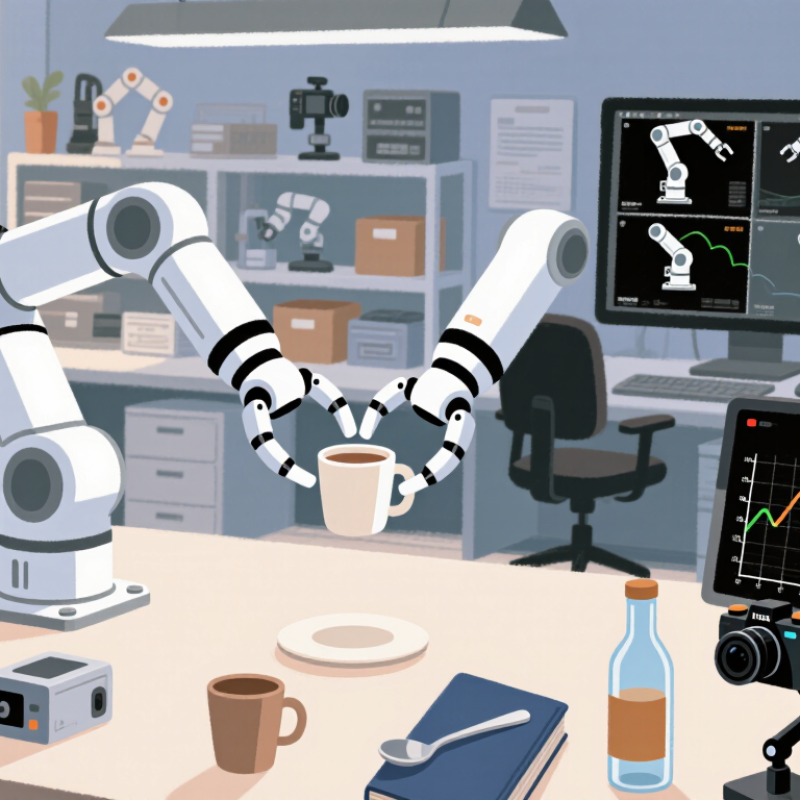
Robot teleoperation data collection involves a person guiding a physical or simulated robot through tasks using a remote interface. The operator may move a control handle, press buttons, or adjust the robot’s viewpoint. The system records these commands alongside camera images, joint positions, and sensor readings. Each record connects an action to what the robot could observe at that moment.
A useful session captures more than a perfect demonstration. An operator might guide a gripper toward a blue cup, pause, correct its angle, and lift it from a cluttered table. Those small adjustments show how people respond when a grasp is slightly off. Timing matters. So does context. Teams often review the recordings, remove unusable segments, and label task steps or outcomes. Labels can still be inconsistent, so clear instructions and spot checks help.
Collection also requires careful setup. Camera views should reveal relevant objects, while control settings should feel responsive without making the robot unstable. Operators need breaks; fatigue can change movement speed and precision. A session that looks clean may hide a poor camera angle or a missed sensor signal. That is easy to overlook. It is worth questioning whether a demonstration reflects a repeatable skill or one lucky attempt. Reliable datasets document these limits, not just successful runs.

A teleoperation session can record an operator’s motion commands alongside the robot’s measured end-effector position. Time-aligned data helps identify tracking errors and provides examples for robot learning. The values below are illustrative, not experimental results.
Example signals: commanded and measured end-effector position over time. Real systems may also record video, joint states, gripper commands, and force/torque measurements.
A teleoperation session turns an operator’s movements into examples a robot can learn from. The operator guides the robot through a task while cameras, joint sensors, and control logs record what happens. For example, a remote hand might grasp a cup, adjust its angle, and place it beside a sink. Each movement is paired with the robot’s position and the scene it sees.
Operators generate useful data by repeating tasks under varied conditions. They may approach an object from different sides, work with dimmer lighting, or handle a slightly shifted tool. Small changes matter. When a grasp slips, the operator can pause, recover, and continue, creating a record of both the mistake and the correction. Clear task labels and timestamps help teams find these moments later.
Consistency still takes work. One operator may move cautiously; another may make faster corrections. Those differences can teach flexibility, but they can also make examples harder to compare. Teams often review footage, remove unclear runs, and check whether sensor records match the video. A camera can be blocked, or a label can be wrong. That part is less tidy than it sounds. Operators also need breaks, because fatigue can change their timing and decisions.
Why Is Robot Teleoperation Data Collection Important?
What Makes Teleoperation Data Valuable
Teleoperation data captures how a robot responds to real tasks, not just ideal simulations. A trained operator guides its movements while cameras and sensors record what the robot sees and does. This links actions to conditions: a cup slips, a drawer resists, or a cable bends unexpectedly. Those details help researchers understand which movements work and where a system struggles.
Useful data needs more than volume. Its value depends on clear timing between images, sensor readings, and operator commands. Consistent labels also make later analysis more reliable. Variety matters: different object shapes, lighting, surfaces, and starting positions can expose weaknesses hidden in repetitive trials. Failed attempts can be valuable too, if the cause is recorded. Still, a dataset can be uneven, and an operator’s habits may become part of the pattern. That is worth examining, not ignoring.
Tips: Record task conditions and mark unusual events. Check a few clips by hand for missing frames or unclear labels. Keep failures, but note why they happened. Small checks help.
| Data Dimension | What Is Recorded | Why It Is Valuable | Example Use |
|---|---|---|---|
| Operator actions | Robot joint or end-effector commands, gripper actions, and action timing. | Shows how a task can be carried out, providing demonstrations that can support imitation learning and policy development. | Learning a sequence for picking up an object and placing it in a container. |
| Visual observations | Camera images or video from the robot’s viewpoint and, where available, other camera angles. | Connects actions to the scene, objects, and task progress so a learned system can interpret what it sees. | Recognizing an object’s position before reaching for it. |
| Robot state | Joint positions, velocities, gripper state, and other available robot measurements. | Provides context about the robot’s configuration and movement, helping relate observations and commands to physical behavior. | Distinguishing a reach that starts with the arm extended from one that starts at rest. |
| Timing and synchronization | Timestamps that align camera frames, robot states, and operator commands. | Keeps each action paired with the relevant observation, which is essential for learning and evaluating behavior over time. | Matching a gripper-close command to the image frame showing the object being grasped. |
| Task context and outcomes | Task instructions, completion status, success or failure labels, and relevant environment conditions. | Clarifies the goal of a demonstration and helps identify which behaviors produced the intended result. | Labeling whether an object was placed inside the target area. |
| Recovery and corrections | Operator interventions, retries, trajectory adjustments, and recovery actions after errors. | Captures how people respond to unexpected conditions, not just how they perform an ideal, uninterrupted task. | Repositioning a grasp after an object slips. |
| Variation across demonstrations | Different object poses, starting states, speeds, and valid ways of completing the same task. | Exposes a learning system to more than one narrow example and can help it handle variation in deployment settings. | Demonstrating the same pick-and-place task with objects placed in different locations. |
| Data quality and coverage | Recording completeness, sensor dropouts, labeling consistency, and coverage of task conditions. | Makes datasets easier to audit and helps reveal missing or unreliable examples before training or evaluation. | Checking that a demonstration includes synchronized observations and a clear outcome label. |
Teleoperation data is most useful when demonstrations include synchronized observations, actions, robot state, and task outcomes, with enough variation to represent realistic operating conditions.
Teleoperation turns human decisions into examples a robot can learn from. An operator guides the machine while sensors record camera images, joint positions, gripper force, and timing. A useful dataset captures more than successful motions. It shows how a gripper approaches a slippery cup, pauses, adjusts its pressure, and sets the cup down without tipping.
Not just success. Hesitation and recovery can be useful examples, too.
During training, varied demonstrations help a robot connect what it sees with what it should do next. Repeatedly picking up the same rigid block may teach a narrow routine; adding soft packaging or an off-center object reveals where that routine fails. Cleanly synchronized video and motion records make these examples easier to interpret.
Still, teleoperation data is not neutral. Operators have different habits, and a smooth demonstration may hide how much correction it took. This part is easy to underestimate. Teams can review failed attempts, note inconsistent actions, and collect new examples from unfamiliar angles. The robot’s performance should then be checked on tasks it did not copy directly.
Robot teleoperation can capture actions that autonomous systems still struggle to perform: turning a stiff handle, recovering a slipping object, or guiding a tool around clutter. But collecting useful demonstrations is harder than recording joystick movements. The International Federation of Robotics’ World Robotics 2024 reports 541,302 industrial robot installations in 2023, with 4.28 million robots in operation worldwide. These figures describe industrial robots, not teleoperation datasets. Still, they show the varied settings that reliable training data must eventually represent.
A dataset can look large yet remain fragile. Operators use different speeds and grip strategies; camera views, lighting, and sensor timing also shift between sessions. A slight delay may turn a careful placement into a collision. Small errors compound. The National Institute of Standards and Technology’s work on robot performance measurement highlights why repeatable test conditions and clearly defined metrics matter. Teleoperation teams need similar discipline: record task context, robot state, control inputs, and failures together, then check timestamps and sensor alignment before training.
Coverage is another weakness. Hundreds of successful pick-and-place clips may teach little about recovery when an object rolls, a cable snags, or a target is partly hidden. Rare failures take time to reproduce, and operators may unconsciously avoid them. I would not treat a clean demo as proof of robust behavior. Keep imperfect trials, label uncertainty, and compare performance across operators and environments. Those steps add effort, but they make a dataset more honest about what the robot has—and has not—learned.
Precision Cable Assemblies
16830 Pheasant Drive
Brookfield, WI 53005
Phone: 262-784-7887
Fax: 262-784-0681