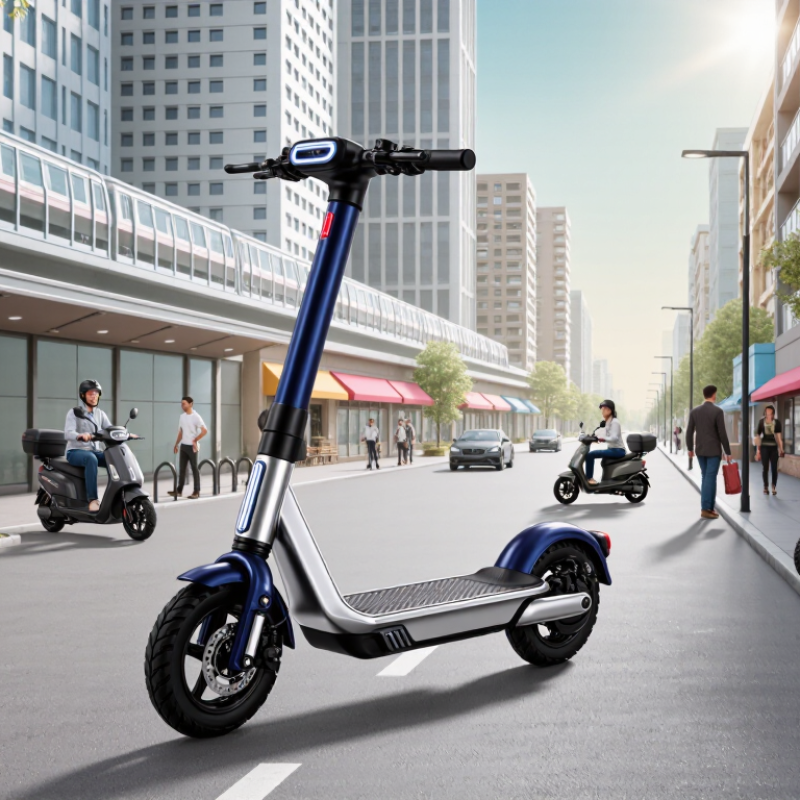
For global buyers, an Electric Bicycle Scooter is more than a convenient personal vehicle. It can connect homes, train stations, offices, and local shops with less noise and lower daily energy use. Its compact frame also helps riders move through crowded streets and store the vehicle in small apartments. However, convenience should not replace careful evaluation.
Claus Fleischer, CEO of Bosch eBike Systems, has said, “The eBike is the future of mobility.” His view reflects a wider shift toward practical, lower-impact transportation. Yet buyers should examine real specifications, not attractive slogans. Motor power, battery capacity, charging time, braking performance, tire design, and water resistance affect everyday ownership. A model used on steep roads needs different support from one used on flat urban lanes.
Small details matter.
Global purchasing also requires patience. Electrical standards, speed limits, helmet rules, certification requirements, and import conditions vary between countries. A responsible seller should provide clear technical documents and realistic range estimates. After-sales service is equally important. A damaged battery, unavailable replacement part, or weak warranty can quickly turn a low price into a costly mistake.
This article explores why an Electric Bicycle Scooter may suit international buyers, while recognizing its limitations. It cannot solve every transport problem. Weather, road quality, charging access, and rider habits still shape the experience. Some advertised benefits may feel less impressive in daily use. That is worth admitting. Buyers who compare evidence, test their routes, and confirm local requirements can make a safer, more informed decision.
An electric bicycle scooter is a compact two-wheeled vehicle combining bicycle features with scooter-style design. It usually includes pedals, a rechargeable battery, an electric motor, and a handlebar. Some models have a bicycle seat, while others use a wider standing platform.
The motor supports movement through pedal assistance or a control on the handlebar. The battery stores energy, and the controller manages motor power. These parts work together during commuting, shopping, or short urban trips. A practical inspection should check the brake response, tire condition, battery housing, and frame stability.
The riding feel differs from a traditional bicycle. Electric support can reduce effort on hills and during stop-and-go traffic. The small frame may also fit inside a storage area more easily. However, compact does not always mean light. A larger battery can make carrying difficult. This point is often overlooked.
The term is not perfectly standardized worldwide. One seller may describe a pedal-equipped model as a bicycle scooter, while another may mean a standing electric scooter with bicycle-like wheels. Buyers should examine the motor rating, battery capacity, charging time, maximum assisted speed, and included safety equipment. Local road-use and equipment rules can also differ, so product specifications should be checked against current regional requirements.
An electric bicycle scooter combines human pedaling with controlled electric assistance. At its core, the system uses a rechargeable battery, motor, controller, and sensors. The battery stores energy in cells. The controller regulates that energy before sending it to the motor.
When the rider pedals, a cadence or torque sensor detects movement. A cadence sensor measures rotation, while a torque sensor responds to pressure on the pedals. The controller reads this signal and adjusts motor output. Some models also include a throttle, if permitted by local requirements. Power then reaches the wheel through a hub motor or a motor connected to the bicycle’s drivetrain. The result feels like a steady push, especially when starting uphill.
A display usually shows speed, battery level, and assistance mode. I have found that smooth acceleration feels safer than maximum power on wet paths. The system is not magic. Heavy loads, low tire pressure, and strong headwinds reduce the practical range. Cold weather can also affect battery performance. That detail is easy to overlook. Riders should charge with the supplied equipment and keep the battery away from water, extreme heat, and visible damage. Regular checks of brakes, tires, cables, and fasteners improve daily reliability. Local rules may define speed limits, equipment requirements, and where these vehicles can operate. Understanding those requirements matters before riding in a new country.
How Does an Electric Bicycle Scooter Work? Assisted-speed limits vary by market, so buyers should check local regulations before selecting a model.
The chart compares common maximum motor-assistance speeds. EU, UK, and Australian pedelec rules commonly use 25 km/h, while U.S. Class 1 and Class 2 e-bikes use 20 mph, and Class 3 uses 28 mph. Actual requirements can differ by vehicle type and location. Electric bicycles use a battery-powered motor controller that adds assistance when the rider pedals or activates the throttle, depending on the legal category.
Reference basis: EU Regulation 168/2013, UK Electrically Assisted Pedal Cycles regulations, Australian bicycle power-assistance rules, and the U.S. three-class e-bike framework.
For global buyers, an electric bicycle scooter can turn a crowded commute into a more manageable daily trip. It combines pedal assistance, a compact frame, and a rechargeable battery for short urban journeys. A 10-kilometer ride may replace a car trip, while avoiding parking searches and fuel receipts. Some models fold beside a desk or fit inside a train. That matters in apartments with narrow lifts. Quiet operation also suits early-morning workers and residential streets.
The practical savings can be meaningful, but buyers should calculate beyond the purchase price. Electricity is usually cheaper than fuel, and routine servicing may involve tires, brakes, chains, and battery checks. A removable battery helps apartment users charge indoors. Range depends on rider weight, hills, temperature, tire pressure, and cargo. Advertised figures are not promises. A realistic test route matters more. Check charger voltage, warranty terms, spare-part access, and local equipment rules before ordering across borders. These details reduce unpleasant surprises.
Safety and comfort deserve equal attention. Wider tires can feel steadier on broken pavement, while reliable lights improve visibility after sunset. A correctly adjusted saddle and handlebar reduce wrist and knee strain. Protective equipment remains sensible, even on a slow ride. It is not perfect. Added battery weight can make stairs awkward, and charging takes planning. Some buyers may discover that folding mechanisms need regular cleaning. That small inconvenience is easy to overlook. For international users, local service support may matter more than a slightly lower online price.
Why Choose an Electric Bicycle Scooter for Global Buyers?
What Features Should Buyers Compare?
Electric bicycle scooters suit short urban trips, especially where parking and fuel costs remain difficult. The IEA’s Global EV Outlook 2024 reports that electric two- and three-wheelers represent the largest electrified road-transport segment by sales. That growth makes comparison more important, not less.
Start with usable performance, not brochure figures. Compare battery capacity in watt-hours, charging time, motor output, payload, and real-world range. A rider carrying groceries on hills needs more energy than a light rider on flat roads. Battery chemistry also affects weight, cycle life, and replacement cost. A useful warning: advertised range is not a promise. Cold weather, tire pressure, and frequent acceleration can reduce it sharply.
Safety and durability deserve equal attention. Check braking performance, lighting, frame strength, tire width, water-resistance ratings, and the stability of the folding mechanism. The European Environment Agency links transport choices with urban emissions and air-quality pressures, but lower emissions do not excuse weak engineering. Buyers should request test methods, warranty terms, spare-parts availability, and battery certification records. The UN Environment Programme also identifies two- and three-wheelers as important tools for cleaner urban mobility. Still, after-sales support is often overlooked. That is the part many buyers regret.
| Comparison Dimension | Why It Matters | Practical Benchmark to Compare | What Buyers Should Check | Global Consideration |
|---|---|---|---|---|
| Vehicle Category and Intended Use | A bicycle-style model generally offers better pedaling efficiency, while a scooter-style model may prioritize compactness and easy standing operation. | Match the design to commuting, short urban trips, mixed transport, recreation, or light cargo use. | Check seating or standing position, pedal availability, wheel size, deck or frame design, and cargo capacity. | Legal definitions differ by country; confirm whether the product is classified as an e-bike, moped, scooter, or motor vehicle. |
| Motor Rated Power and Assistance Type | Motor output affects hill climbing, acceleration, load handling, and energy consumption. | Compare rated power, peak power, torque in N·m, pedal assistance, throttle operation, and controller limits rather than power alone. | Ask for rated power, peak power, maximum torque, start-up behavior, overheating protection, and performance on inclines. | Some markets limit motor power, throttle use, or assistance speed. Local rules may determine whether registration or a license is required. |
| Maximum Assisted Speed | Speed affects travel time, riding stability, braking requirements, and legal classification. | Common regulatory reference points include 25 km/h in many European EPAC rules and 20 mph or 28 mph for different U.S. e-bike classes. | Verify the electronically limited speed, throttle speed, riding modes, and whether the speedometer displays accurate readings. | Do not compare advertised top speed alone; the permitted speed depends on destination-country regulations and road type. |
| Battery Capacity and Chemistry | Battery capacity influences usable range, charging frequency, vehicle weight, and replacement cost. | Compare watt-hours using the formula: battery voltage × amp-hours = watt-hours. Lithium-ion batteries are widely used because of their high energy density. | Check nominal voltage, rated Wh, battery management system, removable design, cell documentation, warranty, and replacement availability. | Battery transport and import requirements can vary. Confirm packaging, labeling, charger compatibility, and shipping restrictions. |
| Real-World Riding Range | Published range is highly dependent on rider weight, terrain, temperature, speed, tire pressure, wind, and assist level. | Use a range estimate based on watt-hours and energy consumption, then allow a practical reserve of approximately 20% for daily use. | Request test conditions, rider load, average speed, terrain, assist mode, ambient temperature, and battery end-point used in testing. | A model suitable for flat, warm cities may deliver less range in cold climates or hilly regions. |
| Charging Time and Charger Safety | Charging convenience affects daily availability and total ownership experience. | Charging time depends on battery capacity and charger current; a larger battery or lower-current charger normally takes longer. | Check input voltage range, output voltage and current, connector type, automatic shut-off, thermal protection, and spare-charger availability. | Verify compatibility with local electrical outlets and required plug standards. Use only the specified charger. |
| Frame, Fork, and Maximum Load | Structural quality affects safety, comfort, handling, and durability under rider and cargo loads. | Compare the permitted total system weight: rider, cargo, accessories, and vehicle combined. | Review frame material, weld quality, fork type, hinge safety on folding models, axle design, and published load limits. | Load ratings should be tested for the intended road conditions. Rough surfaces and steep slopes can increase mechanical stress. |
| Braking System | Effective braking is essential because electric models can be heavier and faster than conventional bicycles. | Compare mechanical or hydraulic disc brakes, rotor size, brake cutoff sensors, stopping performance, and parking-brake functions. | Check performance in wet conditions, pad availability, brake-light activation, lever reach, and maintenance requirements. | Local safety regulations may specify braking equipment, lighting, or mandatory roadworthiness requirements. |
| Tires, Wheels, and Suspension | Tire design influences traction, puncture resistance, comfort, rolling efficiency, and stability. | Larger wheels generally roll more smoothly over small obstacles; wider tires can improve comfort but may add rolling resistance. | Compare tire dimensions, recommended pressure, tread, inner-tube or tubeless construction, suspension travel, and spare-part access. | Select tires for local surfaces and climate, especially rain-prone roads, gravel paths, or poorly maintained urban streets. |
| Lighting, Visibility, and Controls | Good visibility helps riders be seen and improves control in low-light conditions. | Compare front and rear lights, reflectors, brake lights, turn signals where applicable, horn or bell, display visibility, and control layout. | Check whether lights are powered by the main battery, remain visible from the side, and comply with local road rules. | Lighting and reflector requirements vary by jurisdiction and may differ between daytime and nighttime riding. |
| Water and Environmental Protection | Moisture protection helps reduce failures caused by rain, splashes, dust, and humid storage conditions. | Compare the stated IP rating for the battery, controller, display, motor, and charging port separately. | Check whether charging in wet conditions is prohibited, how connectors are sealed, and whether high-pressure washing is forbidden. | An IP rating does not mean the vehicle is waterproof or suitable for submersion. Follow the operating instructions. |
| Electrical and Product Safety Compliance | Independent testing and correct documentation can reduce electrical, battery, and export-compliance risks. | Relevant examples include EN 15194 for electrically assisted cycles in applicable markets, UL 2849 for e-bike electrical systems, and UL 2272 for certain personal e-mobility devices. | Request current test reports, certificates, user manuals, battery transport documents, and conformity declarations for the destination market. | A certificate may cover a specific model, battery, charger, or configuration; verify that the documents match the exact product. |
| Folding, Portability, and Storage | Compact dimensions can make storage, apartment living, and multimodal commuting easier. | Compare folded dimensions, carrying weight, folding time, hinge locking, handle position, and whether the battery can be removed. | Measure vehicle trunks, elevators, storage spaces, and public-transport limits before purchasing. | Airline and public-transport rules often restrict or prohibit large lithium batteries, even when the vehicle is foldable. |
| Maintenance and Replacement Parts | A product is easier to keep in service when wear parts and technical support are available locally. | Compare standard tire, brake, chain or belt, connector, display, controller, and battery replacement options. | Ask for parts diagrams, repair procedures, diagnostic tools, firmware policy, and expected support response time. | Imported products may face longer lead times, customs costs, or limited service coverage. |
| Warranty and Battery Lifecycle | Warranty terms and battery aging strongly affect long-term ownership cost. | Compare coverage period, mileage or cycle limits, exclusions, labor coverage, and the method used to assess battery capacity. | Confirm who pays shipping, how warranty claims are handled internationally, and whether replacement batteries remain available. | Battery capacity gradually declines with use, age, temperature, charging habits, and storage conditions; avoid comparing warranty length alone. |
| Total Delivered Cost | The purchase price may not include shipping, duties, taxes, assembly, accessories, service, or future battery replacement. | Calculate total landed cost: product price + freight + insurance + duties + taxes + local compliance + service and spare parts. | Request packaging dimensions, shipment weight, delivery terms, tariff classification, included accessories, and after-sales costs. | Use destination-specific calculations because import taxes, certification obligations, and delivery charges vary by country. |

Note: The benchmarks above are general comparison references, not a substitute for the laws, certification requirements, transport rules, or road-use regulations of the destination country.
Choosing the right electric bicycle scooter starts with the daily route, not the advertised top speed. A short urban commute needs a lighter frame, reliable brakes, and easy storage. Long trips require a larger battery, stronger tires, and a stable riding position. The International Energy Agency’s Global EV Outlook 2024 identifies electric two- and three-wheelers as among the most electrified road vehicles, especially across Asian markets. Market growth is real, but product quality varies widely.
Check the battery’s watt-hours, not only its claimed range. A 500 Wh battery may travel far less on hills, cold roads, or with heavy cargo. A practical test includes a steep street, repeated braking, and ten minutes of standing storage. Look for documented battery protection, a certified charger, and recognized safety standards such as EN 15194 or UL 2849, where applicable. Local rules may also control speed, lighting, helmet use, and throttle operation.
Comfort is easy to underestimate. Measure handlebar reach, step-through height, deck space, and maximum payload before ordering internationally. CONEBI’s 2024 European market profile recorded about 5.1 million e-bikes sold in 2023, showing strong demand but not uniform buyer needs. A removable battery helps apartment users, yet it adds weight to every stair climb. Range figures are often optimistic. A slightly slower model with better service access may prove more dependable than a powerful one with scarce replacement parts. Perfect choices do not exist. Recheck the warranty, spare-parts process, and charging plug before payment.
Precision Cable Assemblies
16830 Pheasant Drive
Brookfield, WI 53005
Phone: 262-784-7887
Fax: 262-784-0681