
Choosing the best Brushless Electric Chainsaw is not a simple matter of comparing battery voltage or motor speed. Real performance depends on cutting control, chain braking, vibration, runtime, and service support. A saw that feels powerful in a showroom may struggle with a damp 10-inch log. That detail matters.
Grand View Research identifies cordless technology, improved batteries, and quieter operation as major forces shaping the electric chainsaw market. Its industry analysis also reflects growing interest in tools that reduce maintenance and local emissions. However, market growth does not prove that every brushless model is suitable for every user. The U.S. Consumer Product Safety Commission’s NEISS data continues to show chainsaw injuries reaching tens of thousands of emergency-department cases in many years. Safety must remain part of the buying decision.
Tim Ard, founder of Game of Logging and a widely recognized chainsaw safety instructor, offers a useful warning: “There is no such thing as a safe chainsaw; there are only safe chainsaw operators.” His point is uncomfortable, but important. Brushless motors can deliver smoother power, longer service life, and less brush wear. They cannot correct poor stance, a dull chain, or careless handling.
This guide compares leading models through practical testing factors, including hardwood cuts, oil delivery, battery balance, noise, and kickback controls. We will not pretend that one saw wins every situation. A homeowner pruning branches needs different performance from a storm-cleanup worker. The right choice should feel controlled, not merely powerful.
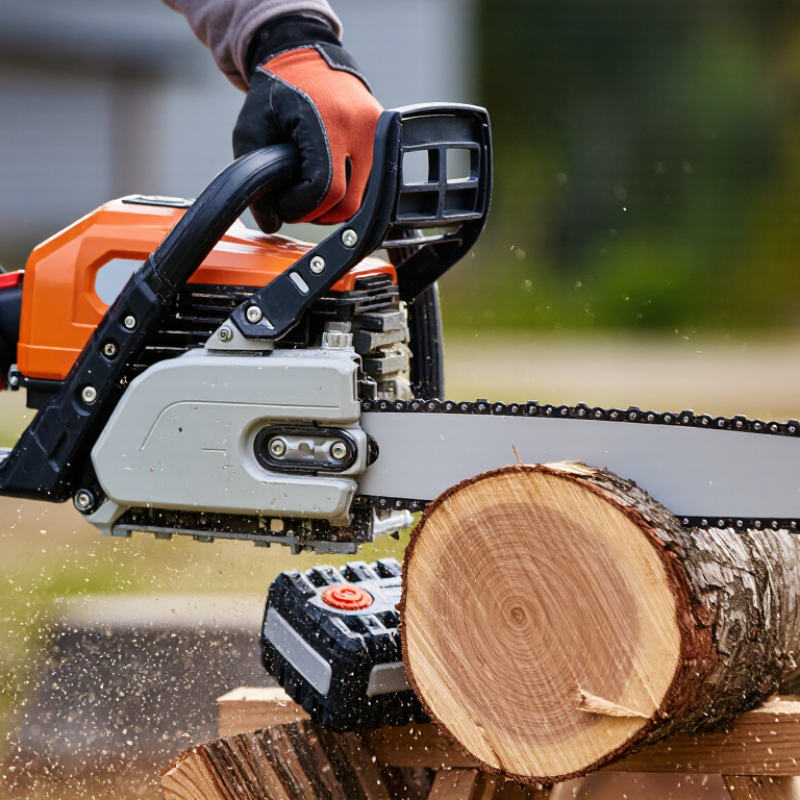
A brushless electric chainsaw uses an electronically controlled motor instead of brushes that rub against a rotating part. Without that contact, the motor can lose less energy to friction and may need less routine motor maintenance. Sensors and electronic controls adjust power as cutting resistance changes. This helps the saw respond when its chain meets denser wood, though it does not make every cut effortless.
The motor is only one part of the experience. Battery capacity, chain speed, bar length, chain sharpness, and the saw’s balance all affect cutting performance. In practical use, a well-matched saw should feel manageable while trimming branches or cutting suitable logs. A dull chain can still bind, heat up, or cut slowly. Brushless does not mean maintenance-free.
Tips: Check the chain tension and sharpness before cutting. Keep both hands on the handles, wear suitable protective equipment, and follow the saw’s manual. Let the chain do the work; forcing it can reduce control. A brushless motor may run efficiently, but battery life varies with wood thickness, cutting technique, and temperature. Don’t assume one test cut predicts a full day’s performance.

A brushless electric chainsaw uses electronic controls instead of carbon brushes to drive its motor. With fewer parts rubbing together, it can waste less energy as heat and require less routine motor maintenance. During a cut, that efficiency may help the saw maintain useful chain speed as the wood pushes back. The difference is most noticeable when cutting a steady stack of branches, not during a quick trim.
There is a trade-off. Brushless motors can deliver strong torque in a compact tool, but performance still depends on battery capacity, chain sharpness, and wood condition. A dull chain can make even a capable saw feel sluggish. Keep the chain properly tensioned, and let the motor work without forcing the bar through the cut. Listen for changes in sound; a slowing chain is a cue to ease pressure. Small details matter.
For a practical choice, compare cutting capacity, weight, battery availability, and how comfortably the saw balances in your hands. A well-balanced model feels less tiring when you make several cuts at shoulder height. Brushless does not mean maintenance-free: the chain needs oil, and debris should be cleared after use. I would not choose by motor type alone. Real performance can vary, and a heavier saw may tire you sooner than its extra power suggests.
Comparing brushless electric chainsaws starts with the motor, not the advertising label. Brushless designs usually create less friction, heat, and maintenance than brushed systems. The U.S. Department of Energy reports that electric motor systems consume over 46% of global electricity. Efficiency therefore matters, even in a compact saw. Check chain speed, cutting torque, and thermal protection. A fast chain can feel impressive, but steady torque matters more during wet, dense wood cutting.
Battery capacity needs careful interpretation. A 5.0 Ah battery stores more energy than a 2.5 Ah pack, but actual runtime depends on wood hardness, chain sharpness, and cutting pressure. The European Commission’s battery guidance emphasizes capacity, durability, and safety across battery products. Look for tool-free tensioning, clear oil-level visibility, and automatic lubrication. These details save time beside a woodpile. Claimed runtime remains imperfect.
Noise and handling deserve equal attention. NIOSH identifies 85 dBA over an eight-hour workday as a recommended exposure limit. Electric saws often feel quieter, but cutting noise can still harm hearing. Compare measured sound levels, not vague “low-noise” claims. A balanced saw should keep the battery close to the body and provide a responsive chain brake. Check total weight with the battery attached. That overlooked number changes fatigue quickly. My own preference is a slightly slower saw with predictable control, though this choice may reduce cutting speed.
| Feature | What to Compare | How It Affects Your Choice |
|---|---|---|
| Brushless motor | Check that the product specifications explicitly identify a brushless motor. Compare the manufacturer’s stated performance, runtime, and maintenance information. | Brushless motors avoid the motor brushes used in brushed designs. Actual cutting performance and runtime still depend on the saw, battery, chain, wood, and operating conditions. |
| Bar length | Compare the bar length with the diameter of the wood you expect to cut. Common cordless chainsaw bar lengths include roughly 10–18 inches, depending on the model. | A longer bar can reach through larger cuts, but it can add weight and requires suitable power and handling. Follow the saw’s specified cutting limits. |
| Battery voltage and capacity | Compare the battery voltage and amp-hour (Ah) rating, and confirm whether the battery and charger are included. | Voltage describes the battery system; Ah indicates charge capacity. Neither figure alone guarantees runtime or cutting power, which also depend on the saw and workload. |
| Cutting speed and power | Review published chain-speed figures and any manufacturer-provided cutting or performance tests. Check that comparisons use similar conditions. | Higher chain speed can support faster cutting, but results vary with chain sharpness, wood type, cutting technique, and battery charge. |
| Weight and balance | Compare the saw’s weight both with and without the battery, and consider handle position and overall balance. | Lower weight and good balance can make overhead or extended work less tiring. The battery adds weight during use, so check the complete operating weight when available. |
| Chain tensioning | Look for clear instructions and an accessible tensioning system. Some saws use tool-free adjustment; others require a wrench. | Convenient adjustment can simplify routine chain maintenance. Always follow the manual and disconnect the battery before servicing the chain. |
| Chain lubrication | Check whether the saw has automatic oiling, an oil-level window, and a refillable bar-and-chain oil reservoir. | Proper lubrication helps reduce friction and wear. Automatic oiling does not remove the need to check the oil level and maintain the saw. |
| Safety features | Check for a chain brake, hand guard, trigger lockout, and clear safety instructions. Confirm the saw complies with applicable local requirements. | Safety features help reduce risk but cannot prevent every injury. Use appropriate protective equipment and follow the operating manual. |
| Noise and emissions | Compare published noise information and consider the work setting. Battery-powered saws have no direct exhaust emissions during operation. | They may be more convenient than gasoline saws where avoiding local exhaust is useful, but they still produce hazardous cutting noise and require hearing protection as appropriate. |
| Best fit by task | For pruning and light yard work, prioritize manageable weight and suitable shorter-bar capacity. For firewood or larger cuts, assess power, bar length, battery capacity, and duty requirements together. | The best choice is the saw that matches your material, cut size, expected workload, and handling needs—not simply the model with the longest bar or largest battery. |
A compact brushless saw with a 10- to 12-inch bar suits pruning and small branches around the yard. It is easier to control near shrubs, though it may feel underpowered on thick, dense wood. For firewood and routine limb removal, a 14- to 16-inch model offers a useful balance of reach and handling. Match bar length to the wood: a longer bar is not automatically better, especially for occasional users.
For larger logs and frequent property work, consider a 16- to 18-inch saw, but check its cutting capacity, weight, and battery runtime before buying. A long cut through hardwood can drain a battery faster than trimming scattered limbs. That matters. The U.S. National Institute for Occupational Safety and Health recommends limiting occupational noise exposure to 85 dBA over eight hours; chainsaw work can be loud, so use suitable hearing protection and check the saw’s measured noise level. Its criteria document provides the exposure benchmark, not a chainsaw-specific rating. A brushless motor may improve efficiency, but it cannot replace sharp-chain maintenance, stable footing, or realistic expectations about workload. I would choose for the wood actually cut most weeks, not the biggest log imagined once a year.
Choosing the best brushless electric chainsaw starts with the work you actually do. For pruning branches and cutting small logs, a lighter saw with a shorter bar can feel easier to control. For frequent firewood cutting, consider a model with enough power and battery capacity for longer sessions. Brushless motors generally reduce friction and maintenance needs, but they do not make a saw maintenance-free. Check chain tension, lubrication, and the manufacturer’s operating instructions before use.
Pay attention to weight with the battery installed, not just the number on the box. A saw that feels manageable for five minutes may strain your arms during repeated cuts. Look for a comfortable grip, a responsive chain brake, and clear access to tension adjustments. Battery compatibility can also affect cost and convenience if you already own compatible tools. One detail is easy to overlook: cold weather and thick wood can shorten working time. Product specifications help, but they cannot predict every cutting condition.
Tips: Match bar length to the wood you usually cut, and avoid choosing a longer bar just for appearance. Wear eye, hearing, hand, and leg protection. Keep both hands on the saw, and let the chain reach full speed before cutting. Take breaks. Your judgment can get less precise when you’re tired.
How to choose a bar length that suits your cutting needs
How to use this chart: Shorter bars are generally easier to handle for pruning and smaller cuts, while longer bars can accommodate larger cuts but may add weight and require more power. Choose a bar length compatible with the saw, and follow its manual. Centimeter values are conversions of the inch measurements.
Precision Cable Assemblies
16830 Pheasant Drive
Brookfield, WI 53005
Phone: 262-784-7887
Fax: 262-784-0681