
Choosing a Robot Fence is not just a matter of enclosing a machine. The right design must suit the robot’s reach, the workpiece, and the way people enter the cell. A small welding station may need sturdy mesh panels, while a clean assembly area may call for clear panels that keep the process visible. Details matter: a misplaced gate or awkward service opening can undermine an otherwise solid layout.
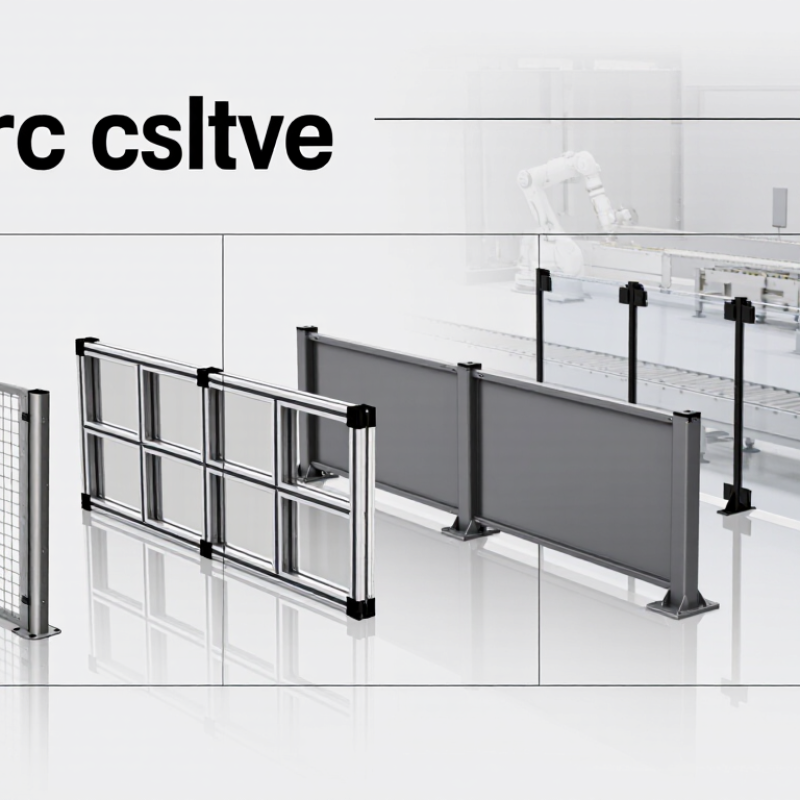
Common options include welded wire-mesh fencing, modular aluminum panels, solid-sheet barriers, and transparent polycarbonate screens. Mesh offers visibility and ventilation. Modular panels can be easier to reconfigure when production changes. Solid barriers help contain sparks or debris when the application requires them. Transparent screens keep sightlines open, but they need careful selection for impact and process conditions. No single type fits every cell.
“Good guarding should protect people without making normal work harder,” says Maya Chen, a fictional composite representing robot-cell integration experience. That is a useful principle, not a substitute for a site-specific risk assessment. Gate interlocks, access points, and stopping functions deserve as much attention as panel material. Small omissions can matter. A fence may look complete, yet leave a practical gap around a conveyor or maintenance route. This overview compares the top Robot Fence types, their strengths, and the details worth checking before choosing one.
In an industrial robot cell, welded-mesh fencing provides a visible, physical boundary around moving equipment. The open grid lets operators see the process and spot changes, such as a part sitting crooked on a fixture. Steel panels and posts can be configured around conveyors, worktables, and other cell equipment. A practical layout leaves room for maintenance access without creating unnecessary openings.
Details matter. Mesh aperture, fence height, panel strength, and distance from the robot’s reachable area should be selected through a site-specific risk assessment. Local requirements and equipment documentation also matter. A mesh panel is not automatically safe just because it looks sturdy. Gates used for access may need monitored interlocks, while the fence and its fixings must resist expected impacts.
That last point is easy to overlook.
Welded mesh has trade-offs. Dust, welding spatter, or stored items can reduce visibility, and a damaged panel may be less obvious than expected. Inspect the mesh, posts, fasteners, and gate operation during routine maintenance. Keep the area beside the fence clear. Not always easy. Operators may prefer a clear view, but observation should never replace properly designed safeguarding.

Solid-panel fences use continuous metal or composite panels to form a firm boundary around a robot’s work area. Unlike open mesh, they leave fewer gaps for tools, loose materials, or a robot arm to pass through. Their smooth surfaces also make the enclosure easier to inspect for dents, loose fasteners, and worn edges. A properly fitted gate should close securely and align with the surrounding panels.
Panel height and strength should match the robot’s reach, movement, and stopping behavior. Check the full operating area, including places where a robot might extend an arm or shift a workpiece. Solid walls can reduce visibility, though. Operators may need clear viewing windows or other ways to monitor activity without entering the enclosure. A solid wall can feel like the safest answer, but it is not automatically the right one; ventilation, maintenance access, and visibility matter too.
Tips: Measure the robot’s full working envelope before choosing panel dimensions. Keep panel joints narrow and check anchors after installation. If a panel blocks useful sightlines, revise the layout rather than relying on guesswork.
A feature comparison of common robot-cell safeguarding approaches. “Yes” and “No” indicate typical design characteristics, not a safety-performance rating.
Solid panels create a continuous physical barrier and typically block direct visibility into the cell. Mesh fencing provides a physical barrier while allowing visibility; light curtains allow visibility but do not form a physical barrier. Actual safeguarding needs depend on the application and risk assessment.
Modular robot fences use repeatable panels, posts, connectors, and access gates to shape a work cell. Instead of rebuilding a fixed enclosure, teams can move sections when a robot changes stations or a conveyor shifts. That matters. An extra panel can close a temporary gap, while a relocated gate can keep maintenance access practical.
The useful detail is in the connections. Panels should sit firmly, align without forcing, and resist movement during ordinary operation. Mesh openings need consideration too: small parts, tools, or a worker’s hand should not pass through unexpectedly. A well-planned layout keeps the robot’s working envelope inside the guarded area while preserving clear routes for servicing.
Modularity makes changes easier to stage. A cell may start with two sides, then gain panels as equipment arrives. But each change deserves a fresh risk review, including gate positions, reach distances, and new pinch points. Still, it has limits. Loose fasteners, uneven floors, or a poorly placed opening can undermine a neat-looking fence. Treat the layout as adjustable, not automatically safe; verify the installation against the robot’s actual motion and site conditions.
Aluminum-frame fences suit robot cells where panels must be moved, reconfigured, or mounted around existing equipment. Aluminum’s density is about 2.70 g/cm³, compared with roughly 7.85 g/cm³ for carbon steel, according to ASM International materials data. That difference can make individual frame sections easier to handle during installation. A lighter frame can also reduce load on some supporting structures, though the finished system still needs suitable anchors and bracing.
The International Federation of Robotics’ World Robotics 2024 report recorded 541,302 industrial robot installations worldwide in 2023. More robot cells mean more demand for practical guarding, but a light frame is not automatically a safe one. Not by itself. Panel openings, joints, door switches, and distance from moving robot parts all matter. A loose corner can undermine an otherwise solid-looking barrier. Aluminum profiles make modular layouts convenient, yet their connections and panel infill must withstand the forces expected in that specific cell. Use a site-specific risk assessment and applicable robot-safety standards when selecting the design. I would avoid choosing a fence by weight alone; it is tempting, but incomplete.
| Fence type | Typical construction | Relative weight | Visibility | Common advantages | Considerations and suitable applications |
|---|---|---|---|---|---|
| Aluminum-frame fence | Extruded aluminum framing with wire mesh, clear panels, or other infill. | Often lightweight compared with a steel-framed fence of similar layout; actual system weight depends on frame size, infill, and supports. | High with mesh; high with clear infill. | Easy to handle and reconfigure in many modular designs; aluminum is naturally corrosion-resistant because it forms a protective oxide layer. | Well suited to lightweight modular guarding and installations where frequent layout changes or easier manual handling are priorities. Check panel rigidity, anchoring, and impact resistance for the specific application. |
| Welded-wire steel fence | Welded steel mesh panels held in steel posts or frames, often with a protective coating. | Typically heavier than an aluminum-frame system with comparable infill, although panel and frame designs vary. | High; the open mesh allows operators to see equipment inside the guarded area. | Durable, rigid construction and a clear view of the robot cell; mesh openings can be selected to suit the guarding design. | A common choice for fixed industrial cells. Mesh opening, distance from hazards, and access points must be considered as part of the safety design. |
| Expanded-metal steel fence | Steel sheet cut and stretched into a mesh pattern, mounted in a frame. | Varies with sheet thickness and panel size; generally more substantial than a lightweight aluminum-frame mesh system. | Moderate; visibility depends on the mesh pattern and viewing angle. | Provides a continuous metal barrier without individually welded wire intersections. | Can suit robust fixed installations. Its pattern may make inspection less clear than open welded-wire mesh, so visibility requirements should be assessed. |
| Solid-panel fence | Opaque metal or other solid panels supported by a structural frame. | Highly dependent on panel material, thickness, and frame construction. | Low with opaque panels; transparent panels provide greater visibility. | Can separate a process area from surrounding workspaces and limit direct line of sight. | Consider when the process requires visual screening or containment beyond an open mesh barrier. Solid panels can reduce visibility and may require additional design attention for ventilation and inspection. |
| Clear-panel fence | Transparent impact-resistant sheet panels mounted in a metal frame. | Varies by panel material and thickness; the frame and panel together determine the system weight. | High when panels are clean and unobstructed. | Allows visual monitoring while creating a continuous barrier surface. | Confirm that the panel material is suitable for the identified impact, temperature, and environmental conditions. Transparent material alone does not establish safety suitability. |
| Modular post-and-rail fence | Posts and horizontal rails assembled from metal profiles, sometimes combined with mesh or panels. | Depends on profile material, rail spacing, and infill; aluminum versions can reduce handling weight. | Depends on whether mesh, clear panels, or no infill is used. | Flexible layout with components that can be adjusted or replaced individually. | Useful for configurable work areas, but the complete guarding design must prevent access to hazardous zones and account for gates, openings, and anchorage. |
| Weight descriptions are comparative, not standardized ratings. For reference, the density of aluminum is about 2.70 g/cm³, while carbon steel is about 7.85 g/cm³; finished fence weight also depends on geometry, thickness, infill, and hardware. Select and validate robot guarding based on the machinery risk assessment and applicable safety requirements. | |||||
For large-scale robotic systems, a perimeter fence does more than mark a boundary. It creates predictable separation between moving equipment and people, carts, or stored materials. Welded mesh panels are common because operators can see through them and inspect motion without entering the work zone. Solid panels may suit areas where sparks, debris, or visual distractions need more control, but they can hide developing problems. Visibility matters.
Fence height and opening size should match the robot’s reach, payload, and likely access routes, rather than a generic drawing. A robot carrying a long part may extend beyond its usual working envelope. Easy to overlook. Posts need firm anchoring, while panel joints should resist vibration and occasional contact from carts. Service gates should open only where the layout allows safe entry. Monitored interlocks can stop hazardous motion when a gate opens. Emergency exits must remain clear, even when production layouts change.
At scale, perimeter planning also means coordinating multiple cells, conveyors, and maintenance aisles. Clearly marked access points and space for inspection can reduce rushed work. Sensor coverage and fence gaps deserve a physical walk-through before commissioning; drawings rarely capture every awkward corner. No fence design stays perfect. Reassess it after equipment moves, workflows change, or near misses reveal blind spots. The practical choice is a barrier system that remains visible, secure, and maintainable under real operating conditions.
Precision Cable Assemblies
16830 Pheasant Drive
Brookfield, WI 53005
Phone: 262-784-7887
Fax: 262-784-0681