
A puppy’s first collar may look like a small choice, but it rests against a growing neck every day. The best Puppy Collar is not simply the prettiest one on the shelf. It should fit securely, feel light, and allow two fingers to slide comfortably beneath the strap. A puppy can outgrow that fit quickly. Check it often.
Veterinarian and animal-behavior author Dr. Sophia Yin emphasized reward-based teaching and careful handling in her work. A useful principle for collar selection is: “Comfort and a calm introduction matter more than appearance.” This is an editorial takeaway, not a verified quotation from Dr. Yin. That distinction matters; advice should be clear about what is sourced and what is guidance.
This guide compares flat collars, lightweight adjustable collars, and other common options for young dogs. It considers materials, buckle styles, identification tags, and fit, with practical details such as rubbing behind the ears or a strap catching on long fur. No single design suits every puppy. Some pups freeze at the faint jingle of a tag; others chew a loose strap before you notice. We’ll also cover gradual, supervised introductions and signs that a collar needs adjustment. A collar is a tool, not a substitute for supervision or patient training. The right choice may change as your puppy grows—and that is worth checking twice.
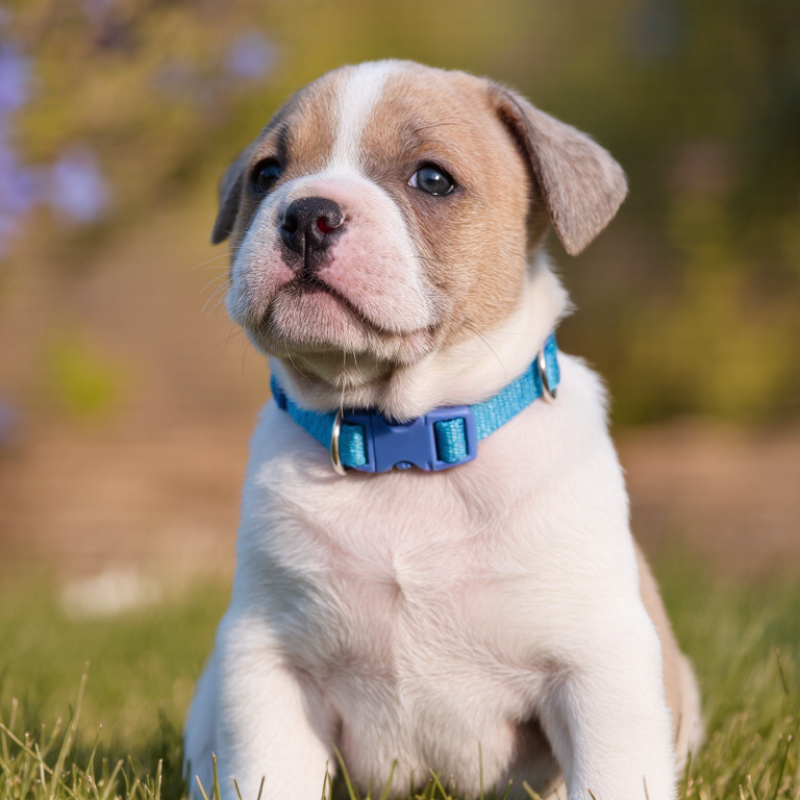
A puppy’s collar should sit securely without pressing into the throat. Use the two-finger check: slide two fingers flat between the collar and your puppy’s neck. They should fit comfortably, without forcing them in or leaving a wide gap. A little room matters. The collar should not slip over the head when gently tested.
Check the fit while your puppy is standing calmly. A curled posture can change how the collar sits. Look for rubbing, red marks, trapped fur, coughing, or repeated scratching. These signs may mean the collar is too tight, poorly positioned, or irritating. Remove it and inspect the skin. Not every puppy reacts the same way. Thick fur can hide pressure, so feel beneath the coat instead of judging by appearance alone.
Puppies grow quickly, and a fit that worked last week may not work now. Recheck the collar daily during rapid growth, and after grooming or weight changes. Check again tomorrow. If two fingers no longer fit easily, loosen or replace the collar. If it is loose enough to catch on a jaw or paw, adjust it promptly. Choose a collar with smooth edges, and supervise wear around crates or playmates, where snagging can happen.

What Are the Best Types of Puppy Collars?
Flat-Buckle Collars: Everyday Wear, Identification, and Fit Considerations
A flat-buckle collar is a practical choice for everyday wear when it fits well and stays in good condition. Look for a smooth inner surface, secure stitching, and an adjustable strap that leaves room for growth. Attach a lightweight ID tag with current contact details. The American Pet Products Association’s 2023–2024 National Pet Owners Survey estimated that 65.1 million U.S. households owned a dog. That broad ownership figure highlights how common dog identification is, but it does not measure collar safety or fit.
Tips: Slide two fingers between the collar and your puppy’s neck. It should feel snug, not tight. Check the fit weekly, and after growth spurts; puppies can outgrow a collar quickly. Inspect the buckle and stitching for wear. A loose collar can slip off, while a tight one may rub the skin. Small details matter.
A flat-buckle collar is not a perfect safety tool. It can snag during rough play or when left on in a crate, so consider removing it in snag-prone situations. Watch for redness, scratching, or fur wear beneath the strap. If irritation persists, stop using the collar and ask a veterinarian for guidance. A collar should support identification, not replace supervision or secure handling.
A breakaway collar opens when pressure pulls against its clasp, which may reduce the risk of a puppy becoming trapped on a crate bar or low branch. It is a sensible choice for supervised play, not a substitute for watching closely.
Not a guarantee. A clasp can fail to release, and a loose collar can slip over a puppy’s ears. Check the fit often: puppies grow quickly, and two fingers should fit comfortably beneath the collar. If it catches on a fence, remove the puppy calmly rather than yanking the collar.
The American Pet Products Association’s 2023–2024 National Pet Owners Survey estimated that 65.1 million U.S. households owned a dog. That broad figure shows how many homes manage dog gear, but it does not measure collar injuries or prove breakaway collars prevent them.
Keep a close eye on puppies around crates, gates, and other places where tags or straps might snag. For leash walks, use a properly fitted harness or a collar designed for leash attachment; many breakaway clasps may release under pulling.
I still find this trade-off easy to underestimate: a collar can feel secure indoors, then come off during one quick tug. Remove it when you cannot supervise, especially during crate rest.
A Martingale collar can help a puppy who backs out of a standard flat collar. It has a fabric loop that gently tightens when the leash goes taut, reducing the chance of the collar sliding over the head. The collar should rest comfortably when loose, with enough room for two fingers beneath it. When tension is applied, it should close only enough to stay in place, never choke or pinch. A careful fit matters.
Watch your puppy walk, turn, and sniff before relying on the collar outdoors. Check that the hardware stays centered and that fur or skin does not get caught in the tightening loop. Puppies grow quickly, so recheck the fit every week; yesterday’s comfortable collar may be too tight today. It is not escape-proof, and a nervous puppy may still twist free. Use a leash, supervise walks, and remove the collar when your puppy is crated or playing unsupervised. A properly fitted harness may be a better choice for some puppies, especially those who pull or have breathing concerns. The collar can help, but it is not a substitute for patient leash training. A little doubt is useful.
| Collar type | How it works | Fit and escape security | Best suited for | Important considerations |
|---|---|---|---|---|
| Martingale collar | A limited-slip loop gently tightens when the leash becomes taut, then loosens when pressure is released. | Can reduce the chance of a puppy backing out when correctly adjusted. It should tighten only enough to prevent slipping, not constrict the throat. | Puppies whose head is nearly as narrow as their neck, or those that have slipped out of a standard collar. | Check the fit regularly as puppies grow. Use a leash attachment and supervise; remove the collar during unsupervised play or when it could snag. |
| Flat buckle collar | A simple adjustable band that fastens with a buckle or snap closure. | Provides a comfortable everyday fit, but a puppy may back out if the collar is too loose or the neck and head measurements are similar. | Identification tags and everyday wear for puppies that are comfortable walking in a collar. | Keep it snug but not tight; you should generally be able to fit about two fingers between the collar and the neck. Recheck as the puppy grows. |
| Lightweight adjustable collar | A small, lightweight version of a standard collar with an adjustable strap and a simple fastening. | Security depends on correct sizing and a reliable closure; it does not provide the limited-slip action of a martingale. | Young or small puppies getting used to wearing a collar, especially for identification. | Choose a collar proportionate to the puppy’s size and check for rubbing, looseness, or signs that it is becoming too tight. |
| Breakaway collar | Uses a release mechanism designed to open if the collar catches on something. | May reduce snagging risk in some settings, but the release feature means it is not intended to stay attached under leash tension. | Situations where snag release is a priority and the collar is not being used to attach a leash. | Do not rely on it as a walking collar. Use a properly fitted harness or suitable leash collar for walks. |
Fit note: Measure your puppy’s neck and follow the collar maker’s sizing guidance. A collar should not impede breathing or movement, and its fit should be checked frequently while your puppy grows.
A puppy’s everyday collar should be lightweight, adjustable, and easy to fasten. A flat buckle collar usually works well for holding identification tags and a leash. Check the fit often as your puppy grows; you should be able to slide two fingers beneath it. A collar that fits today may be tight next week. Keep the tag small enough not to swing heavily, but large enough to read. Include a current phone number. A microchip is valuable backup, but it must be scanned to help identify a lost dog.
A 2009 JAVMA study reported that 52.2% of chipped dogs in its study were reunited with their owners. That figure is a reminder, not a guarantee for every lost puppy. A chip cannot show a finder your number at a glance. A collar tag can. It is tempting to think the microchip alone covers everything; it does not. Tags can snag, fade, or come loose, so check their condition and contact details regularly. I would not rely on a collar as a substitute for supervision, either. Even a well-fitted one deserves a quick check after muddy play or a long walk.
In a 2009 study of animals entering shelters, 52.2% of microchipped dogs and 38.5% of microchipped cats were reunited with their owners. A collar ID tag gives someone who finds a puppy a quick way to contact its owner; a microchip provides another way to identify the pet.
Source: Lord et al., Journal of the American Veterinary Medical Association (2009). Study results describe animals in the shelters examined; they are not a guarantee of an individual pet’s outcome.
Precision Cable Assemblies
16830 Pheasant Drive
Brookfield, WI 53005
Phone: 262-784-7887
Fax: 262-784-0681