The global semiconductor industry is entering another demanding equipment cycle. SEMI reported approximately USD 112.8 billion in semiconductor manufacturing equipment sales for 2024, with further growth projected for 2025. These investments strengthen demand for reliable thermal-processing systems, including Quartz Reactor equipment used in diffusion, oxidation, and chemical vapor deposition.
A Quartz Reactor is not simply a transparent tube. Its purity, wall thickness, thermal stability, geometry, and traceability can influence wafer uniformity and contamination risk. Gartner and SEMI reports consistently emphasize equipment reliability, regional supply resilience, and process control as major purchasing concerns. These factors matter when comparing manufacturers across China, Japan, Europe, and North America.
As semiconductor process expert Dr. Chris Mack has observed, “There is no single solution to every process problem.” That warning applies here. A low purchase price may hide shorter service life, inconsistent machining, or weak documentation. Conversely, the most expensive supplier may not suit every fab or laboratory. This guide evaluates ten Quartz Reactor manufacturers using practical criteria, including material purity, temperature performance, customization, quality systems, delivery capability, and after-sales support. The ranking is not absolute. Buyer requirements differ, and available market data rarely isolates Quartz Reactor sales as a separate category. That limitation deserves attention. Experienced buyers should verify certificates, test records, dimensional drawings, and customer references before ordering. Small details matter, especially when a reactor must fit an existing furnace with millimeter-level accuracy.
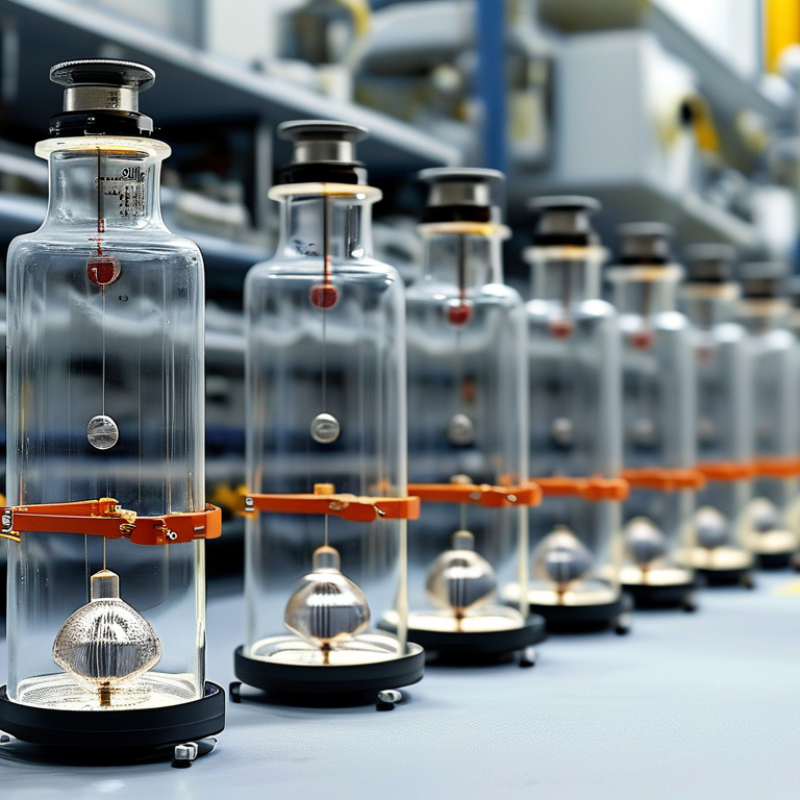
Quartz reactors are process vessels made from high-purity fused quartz. They hold materials during controlled heating, cooling, or chemical treatment. Their transparency allows operators to observe samples, gas flow, and reaction changes directly.
Quartz withstands high temperatures and resists many corrosive chemicals. It also introduces fewer metallic contaminants than ordinary glass. These qualities make quartz reactors useful in semiconductor processing, solar cell production, laboratory synthesis, and advanced materials research. Common designs include tube reactors, batch vessels, and custom chambers with gas inlets.
In semiconductor and solar facilities, quartz reactors support deposition, diffusion, oxidation, and cleaning processes. In laboratories, they help researchers test powders, films, catalysts, and small liquid batches. Size matters. A narrow tube may improve gas contact, while a wider vessel can handle larger samples.
The material is not perfect. Sudden temperature changes can crack quartz. Repeated heating may cause devitrification, which weakens its surface. Poor cleaning can also create hidden contamination. I have found that reactor performance depends on more than quartz purity. Wall thickness, joint design, temperature uniformity, and maintenance records matter just as much. Buyers should request dimensional drawings, operating limits, inspection data, and material traceability. Supplier claims need careful checking. A reactor that works well for one process may fail under another gas mixture, pressure range, or heating cycle.
Choosing among the top 10 quartz reactor manufacturers requires more than comparing prices. Reactor quality affects wafer yield, chemical stability, and maintenance frequency. SEMI reported global semiconductor manufacturing equipment sales of $117.1 billion in 2024, showing the scale of demand for reliable process hardware. Buyers should examine whether a manufacturer serves comparable temperature ranges, gas chemistries, and production volumes.
Ask for evidence. Review quartz purity grades, wall thickness, thermal uniformity, and measured leak rates. Request inspection records for bubbles, devitrification, and microcracks. A capable supplier should provide material certificates, dimensional drawings, cleaning procedures, and batch traceability. ISO’s 2023 Survey recorded more than 1.2 million ISO 9001 certificates worldwide. Certification helps, but it does not prove reactor performance. Factory acceptance testing still matters.
Evaluate engineering support after delivery. Can the manufacturer explain stress points around ports, flanges, and heating zones? Can it recommend replacement intervals based on actual process conditions? SEMI safety guidance also emphasizes documented risk controls for manufacturing equipment, so installation and maintenance procedures deserve careful review. I would not trust polished photographs alone. Ask for references from similar applications, test data, and failure examples. Some suppliers may resist sharing them. That resistance is useful information, although it should not become the only decision criterion. Personally, I would score technical transparency higher than a small initial discount.
This neutral 100-point procurement scorecard highlights the most practical criteria for comparing quartz reactor suppliers: material quality, process performance, engineering capability, compliance, delivery reliability, and lifecycle support. The percentages are recommended evaluation weights rather than manufacturer or brand claims.
Global buyers comparing the top 10 quartz reactor manufacturers need more than a polished product page. Strong suppliers show tested quartz purity, wall thickness, thermal limits, and joint quality. They explain whether reactors suit wet processing, thermal experiments, or controlled gas work. That detail signals practical experience. Ask for batch records, inspection methods, and drawings before discussing price. A reliable manufacturer should answer clearly, not hide behind broad claims. Measurement matters.
Experienced buyers also examine furnace compatibility, pressure ratings, leak testing, and replacement lead times. A reactor may look flawless yet fail after repeated heating cycles. Request sample photographs, dimensional tolerances, and documented test reports. Independent inspection can reduce uncertainty for large orders. Communication is another useful test. Technical teams should discuss cleaning, handling, and failure risks in plain language. Still, no supplier is perfect. Some specifications may remain unclear until a sample is evaluated under real operating conditions.
Tips: Compare at least three quotations using the same specification sheet. Confirm quartz grade, usable volume, ports, sealing method, and delivery terms. Keep a written record of every revision. Do not treat the lowest price as the safest choice. A higher cost may reflect better machining, stronger packaging, or traceable quality control. Visit a facility when practical, but remember that a tour cannot replace independent evidence. Ask what happens when a part arrives damaged. Their response reveals more than a sales promise.
Top 10 Quartz Reactor Manufacturers for Global Buyers
Comparing Products, Customization, Quality, and Certifications
Global buyers should compare reactor geometry before comparing prices. Tube diameter, wall thickness, flange design, and gas-flow paths directly affect temperature stability and process uniformity. According to SEMI’s 2024 World Fab Forecast, semiconductor equipment spending could reach about 112.7 billion dollars in 2025. That expansion increases demand for dependable quartz process components.
Customization shows practical manufacturing experience. Strong suppliers can adjust chamber dimensions, port locations, surface finish, and thermal zones. They should provide drawings, tolerance tables, material traceability, and sample inspection records. Ask how they control devitrification, particles, and stress near welded joints. Small details matter.
Quality needs evidence. ISO 9001 certification supports documented process control, while ISO 14001 indicates structured environmental management. The ISO Survey reports more than one million ISO 9001 certificates worldwide, but certification alone proves little about quartz performance. Request batch records, dimensional reports, cleaning procedures, and leak-test results. SEMI safety guidance can also help evaluate equipment-related risks. Good documentation is visible.
Certifications may not cover every customer specification. A supplier can meet a standard yet miss a reactor’s actual thermal profile. Buyers should validate samples under representative temperatures, gases, and cleaning cycles. This step costs time. It can prevent expensive replacement work later. A useful warning remains: polished surfaces may look perfect while hidden stress develops during repeated heating. Experienced audits should examine both appearance and long-term behavior.
Top 10 Quartz Reactor Manufacturers for Global Buyers
How to Select and Purchase the Right Quartz Reactor Supplier
Choosing a quartz reactor supplier requires more than comparing catalog prices. Define the working volume, temperature range, pressure conditions, and chemical exposure first. A reactor for high-temperature processing may need different quartz purity and wall thickness than a laboratory vessel. Small details matter.
Ask each manufacturer for material certificates, dimensional drawings, inspection records, and thermal performance data. Check how they control bubbles, surface defects, joint quality, and port alignment. Request evidence of repeatable production, not only attractive product photographs. Reliable suppliers should explain cleaning procedures, packaging methods, lead times, and replacement support. Their engineers should also review your process instead of accepting unclear specifications.
Look beyond the quotation.
A low price can hide weak documentation or poor fit. Confirm whether testing, fittings, delivery protection, and custom modifications are included. Discuss applicable safety standards and import requirements for your destination before placing an order. A site audit or video inspection can reveal practical details, such as storage conditions and measurement tools. Still, paperwork is not proof of perfect performance. Prototype testing may expose thermal stress, awkward maintenance, or unexpected leakage. That is not failure; it is useful evidence. Keep communication records, approve final drawings, and use measurable acceptance criteria. A careful supplier remains transparent when corrections are needed.
| Rank | Anonymized Supplier Profile | Typical Reactor Configuration | Quartz Material and Purity | Typical Working Volume | Operating Temperature | Customization Capability | Quality and Documentation | Best-Fit Buyer Application | Key Purchasing Check |
|---|---|---|---|---|---|---|---|---|---|
| 1 | Profile A High-volume fabricator | Single-wall and double-wall cylindrical reactors with flanged or ground-glass connections | Fused silica or high-purity quartz; commonly specified at 99.95% or higher | 1–100 L | Up to approximately 1,100 °C, depending on design and atmosphere | Strong; can usually adapt ports, wall thickness, neck geometry, and support fixtures | Dimensional inspection, material certificate, leak test, and packing inspection available by request | Laboratory synthesis, thermal treatment, and pilot process development | Confirm usable volume, heated-zone length, and connection dimensions before ordering |
| 2 | Profile B Process-system specialist | Quartz reactors integrated with gas inlet, outlet, vacuum, sampling, and thermocouple ports | High-purity transparent quartz selected for controlled-atmosphere processing | 0.5–50 L | Commonly rated for 900–1,100 °C in suitable furnace systems | Strong; suitable for gas-flow, vacuum, and multi-port process layouts | Port drawings, pressure or leak-test requirements, material traceability, and operating instructions | Atmosphere-controlled reactions and continuous or semi-continuous experiments | Verify pressure rating; quartz vessels are generally intended for low-pressure or atmospheric service |
| 3 | Profile C Small-batch specialist | Compact batch vessels, test tubes, ampoules, and jacketed laboratory reactors | Transparent fused quartz with low thermal expansion and good thermal-shock resistance | 10 mL–5 L | Approximately 800–1,000 °C for routine laboratory use | Moderate to strong; custom lengths, openings, baffles, and sintered components | Basic dimensional report, visual inspection, and optional certificate of conformity | Research laboratories, screening studies, and small-scale material preparation | Check minimum order quantity, sample availability, and closure compatibility |
| 4 | Profile D High-temperature specialist | Heavy-wall quartz reaction tubes and furnace-compatible reactor assemblies | Low-inclusion fused quartz intended for repeated high-temperature cycles | 0.2–30 L | Up to approximately 1,200 °C in controlled furnace conditions | Moderate; focuses on thermal profile, wall thickness, and furnace fit | Heat-cycle guidance, wall-thickness data, inspection records, and replacement recommendations | Calcination, annealing, oxidation, diffusion, and thermal decomposition | Match the reactor diameter and heated length to the furnace temperature uniformity zone |
| 5 | Profile E Vacuum-compatible fabricator | Quartz chambers with vacuum flanges, O-ring interfaces, and removable end sections | High-purity fused silica with carefully finished sealing surfaces | 0.5–20 L | Typically 600–1,000 °C, limited by seals, fittings, and system design | Strong; supports flange patterns, port placement, and vacuum-system integration | Vacuum leak-test results, flange drawings, surface-finish details, and packing protection | Vacuum processing, thin-film research, and controlled gas experiments | Request the complete assembly leak rate and confirm the temperature limit of every seal |
| 6 | Profile F Pilot-scale supplier | Large-diameter quartz vessels, reaction tubes, and modular pilot equipment | Industrial fused quartz selected for dimensional stability and chemical resistance | 20–500 L | Generally 700–1,000 °C, subject to size, support, and heating method | Strong; offers lifting points, support rings, custom nozzles, and protective structures | Engineering drawings, load calculations, inspection plans, and export packaging documentation | Pilot production, scale-up trials, and high-throughput thermal processing | Evaluate thermal gradients, mechanical support, shipping risk, and replacement lead time |
| 7 | Profile G Clean-process supplier | Low-particle quartz reactors for laboratory and semiconductor-related process work | High-purity quartz with controlled cleaning and surface-handling procedures | 0.1–30 L | Approximately 500–1,100 °C, depending on the cleaning and assembly specification | Moderate; emphasizes repeatable geometry and contamination control | Cleaning records, particle-control procedures, dimensional records, and certificate of conformity | Surface treatment, wet chemistry, deposition research, and contamination-sensitive processes | Define allowable contamination, cleaning chemistry, packaging class, and handling requirements |
| 8 | Profile H Chemical-resistance specialist | Quartz reactors with dip tubes, spargers, condensers, and corrosion-resistant process fittings | Fused quartz suitable for many acidic and oxidizing environments; chemical compatibility must be checked | 0.25–80 L | Typically 300–900 °C, depending on chemistry and mechanical configuration | Strong; can adapt internals, gas distribution, and condensate handling components | Chemical compatibility statement, dimensional drawings, visual inspection, and optional test documentation | Acid treatment, oxidation studies, hydrothermal-related laboratory work, and catalyst testing | Confirm compatibility with alkalis, hydrofluoric acid, pressure, and thermal cycling |
| 9 | Profile I Rapid-prototyping supplier | Standard quartz tubes and quickly modified reactors based on existing tooling | Commercial fused quartz with selectable grades according to temperature and purity needs | 50 mL–15 L | Approximately 700–1,000 °C | Moderate; efficient for minor dimensional changes and standard port additions | Quotation drawing, dimensional check, visual inspection, and standard export documentation | Prototype development, university research, and low-volume replacement orders | Ask whether the quoted dimensions are internal, external, or nominal tube dimensions |
| 10 | Profile J Replacement-parts supplier | Replacement reactor tubes, lids, liners, boats, trays, and furnace accessories | Fused quartz selected to match the original equipment geometry and temperature range | 10 mL–100 L | Commonly 600–1,100 °C, depending on the replacement part | Moderate; strongest when supplied with a sample, drawing, or original part number | Dimensional comparison, visual inspection, packaging verification, and replacement traceability | Maintenance, repair, retrofit, and reduced-downtime purchasing | Provide photographs, measured dimensions, furnace model, and failure history for accurate matching |
Precision Cable Assemblies
16830 Pheasant Drive
Brookfield, WI 53005
Phone: 262-784-7887
Fax: 262-784-0681