
Choosing a Harness Connector manufacturer is not just a price comparison. For global buyers, a small terminal or seal can affect assembly speed, reliability, and warranty costs. The right supplier should understand the application, not simply quote a part number. A connector used near engine heat has different demands from one inside a dry cabin. Small details matter. Pin count, wire gauge, locking feel, and moisture protection all deserve attention. Ask how suppliers verify these details, and request clear drawings and test information before approving a design.
This guide introduces manufacturers serving international markets and the capabilities buyers can compare. It looks at product range, customization, quality systems, production capacity, and export support. Certifications such as IATF 16949 or ISO 9001 can offer useful context, but they do not replace application-specific testing. Buyers should also check sample consistency, material traceability, lead times, and communication across time zones. A factory visit can help, though not every buyer can arrange one. That limitation matters. A polished catalog alone cannot prove long-term performance. Use documented evidence, practical questions, and fit-for-purpose samples to build a shortlist. The best choice may not be the largest name; it is the manufacturer whose process matches the project’s real requirements.
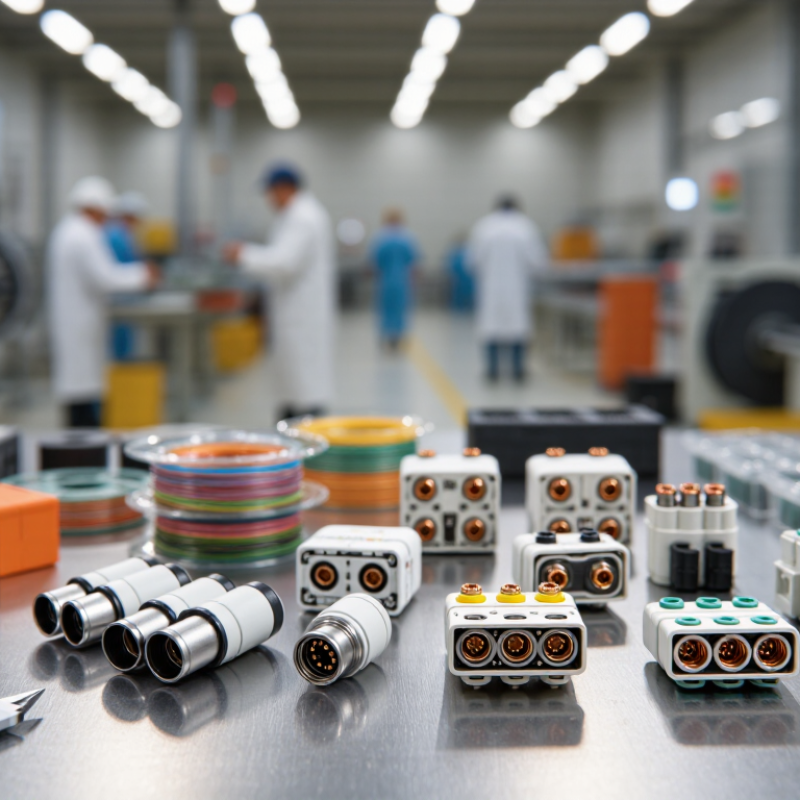
Harness connectors are the joining points in a cable assembly. They connect prepared wires to one another or to equipment, while keeping circuits organized and serviceable. A typical connector has a housing, conductive terminals, and a locking feature. Some designs also use seals to limit water or dust entry. Small details matter: a loose terminal can interrupt a signal, while a weak latch may release under vibration.
You’ll find harness connectors in vehicles, factory equipment, home appliances, and communication systems. A vehicle harness may link sensors, lamps, and control modules; an industrial machine may use connectors near motors, switches, and moving parts. The setting shapes the choice. Engineers check current and voltage ratings, wire size, operating temperature, vibration exposure, and expected mating cycles. Damp or dusty locations may call for sealed housings, but sealing alone does not guarantee a suitable connection.
Fit matters in real assembly work. A connector should match the terminal layout and wire gauge, and workers need enough room to engage its lock without bending nearby wires. A part can look correct on a drawing yet prove awkward to install. That is easy to miss. Samples, installation trials, and checks for secure terminal retention can reveal problems before production grows. Selection is rarely perfect on the first pass; requirements sometimes change once the harness meets the actual equipment.
| Connector Type | Typical Design | Common Applications | Key Selection Considerations |
|---|---|---|---|
| Sealed automotive connector | Multi-position housing with terminal locks and seals around wires or mating faces. | Vehicle engine compartments, chassis wiring, lighting, and other areas exposed to moisture, dust, or road splash. | Required ingress protection, temperature range, vibration resistance, terminal size, wire gauge, and mating compatibility. |
| Unsealed automotive connector | Housing and terminals without environmental seals; available in wire-to-wire and wire-to-device formats. | Protected vehicle interiors, instrument panels, cabin electronics, and other relatively dry locations. | Contact capacity, current and voltage ratings, retention features, available space, and protection from contamination. |
| High-voltage connector | Insulated connector system designed for higher-voltage circuits; some designs include interlock and touch-protection features. | Electric and hybrid vehicles, battery packs, inverters, electric compressors, and charging-related circuits. | Voltage and current requirements, insulation and creepage design, temperature rise, shielding needs, and applicable safety requirements. |
| Wire-to-board connector | Terminates harness wires to a circuit board through a mating housing and board-mounted header. | Control modules, appliance electronics, industrial controllers, and electronic equipment. | Board layout, pin count, pitch, current per circuit, insertion cycles, locking method, and assembly process. |
| Wire-to-wire connector | Two harness-side housings mate to join or disconnect wire groups. | Automotive sub-harnesses, machinery wiring, appliances, and serviceable electrical assemblies. | Number of circuits, wire sizes, polarity protection, locking strength, environmental exposure, and ease of servicing. |
| Circular industrial connector | Round coupling interface, often with threaded or bayonet-style locking and multiple contacts. | Industrial machinery, sensors, actuators, factory equipment, and outdoor control systems. | Contact arrangement, rated current and voltage, enclosure protection, coupling method, cable type, and operating environment. |
| Sensor connector | Compact connector or pigtail assembly designed to connect a sensor to a harness or control unit. | Automotive sensors, factory automation, measurement equipment, and process-control systems. | Signal type, contact count, shielding, sealing, cable flexibility, mounting space, and resistance to vibration or chemicals. |
| Coaxial connector | Connector with a center conductor and surrounding shield to carry high-frequency signals. | Vehicle antennas, navigation systems, communication equipment, and radio-frequency test or control systems. | Impedance matching, frequency range, shielding performance, cable compatibility, and secure mating. |