
Smartphones are now standard travel companions, but a secure, visible place for one still matters. Pew Research Center reported in 2024 that 91% of U.S. adults own a smartphone. That widespread use helps explain the appeal of the Auto Phone Holder, from quick navigation checks to hands-free calls. Yet a holder is not a safety guarantee. NHTSA recorded 3,308 deaths in distraction-affected crashes in 2022, a reminder that even brief attention shifts can carry serious consequences.
There is no single holder style that suits every dashboard or driver. In 2026, shoppers will likely compare vent clips, windshield and dashboard mounts, cup-holder designs, and magnetic or wireless-charging models. Each solves a different problem. A vent clip keeps the screen close, but may block airflow; a suction mount can offer flexible positioning, but needs a clean, stable surface. Small details matter. Case thickness, phone weight, charging access, and rough roads can change how well a mount works.
This guide compares the main types by installation, stability, visibility, and everyday convenience. It also separates useful features from marketing claims. Market forecasts vary, and product tests rarely cover every vehicle interior, so no ranking can promise a perfect fit. Check your car’s layout, follow the mount maker’s instructions, and set navigation before driving. A holder should support attention—not invite more screen interaction.
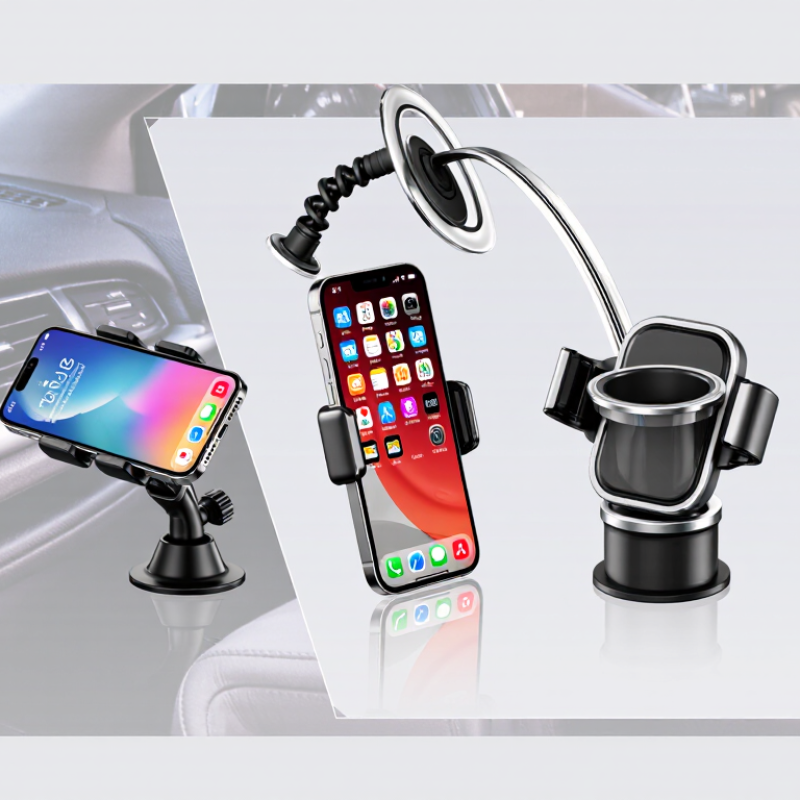
Mounting location
In 2026, auto phone holders are easiest to classify by two questions: where they attach and how they hold the phone. Mounting location is the clearest starting point. Dashboard and windshield models use suction or adhesive bases, while vent holders clip onto a grille. Cup-holder mounts sit in a vehicle’s cup well and often use an adjustable arm. That distinction matters. A vent clip may be quick to install, but it can block airflow or feel unstable on uneven roads.
Retention method
Retention method forms a second category. Spring-loaded clamps grip the phone’s sides; magnetic designs rely on a compatible plate or case. Some holders combine a clamp with a rotating joint for portrait or landscape viewing. Wireless charging is better treated as an added function, not a mounting type. It needs power and careful alignment, and charging may slow if the phone shifts. Not always.
Categories can overlap: one holder may be a vent mount, magnetic holder, and charger at once. For a practical choice, check the vent shape, dashboard texture, phone size, and view from the driver’s seat. Test the arm gently before driving; a small wobble can become distracting over bumps. I would not assume the most adjustable design is automatically the most secure. Real interiors vary, and adhesive pads may lose grip in heat or on dusty surfaces. The labels help narrow options, but fit still needs checking.

Dashboard, windshield, and vent-mounted holders suit different cabins. Dashboard mounts keep a phone near the driver’s sightline, but a tall mount can obscure low road views. Check the position from your normal driving posture before sticking it down. Textured dashboards may also weaken adhesive, especially in heat. No mount is perfect.
Windshield holders offer flexible positioning and often use suction cups. They can be handy in rental cars, though a large phone may block more glass than expected. Vent-mounted holders are compact and easy to move, but heavy phones can make vents sag or redirect airflow. NHTSA reported 3,275 deaths in distraction-affected crashes in 2023, in its Traffic Safety Facts report. A holder cannot prevent distraction; it only changes where the screen sits. Keep navigation prompts set before driving, and avoid reaching across the cabin. I still find vent placement awkward in some cars. The best choice is the one that holds the phone firmly without hiding the road or making controls harder to reach.
What Are the Top Auto Phone Holder Types in 2026?
Cup-Holder, CD-Slot, and Seat-Rail Mounts
Cup-holder mounts sit low in the cabin and use an existing console space. Many have adjustable arms or a flexible neck, so you can angle the screen toward the driver. Check the base diameter before buying; a loose fit can wobble over rough pavement. A tall mount may also crowd nearby cup holders. That matters.
CD-slot mounts use the dashboard’s disc opening, when the vehicle has one. They often place a phone closer to eye level than a cup-holder mount. However, the slot’s position varies, and a wide phone can cover climate controls or vents. Check that the mount grips without forcing the slot mechanism. It is a small detail, but easy to overlook.
Seat-rail mounts attach near the front seat’s floor track and can bring a phone within reach. Their position may suit drivers who prefer not to use the dashboard. Fit is the catch: rail shapes and available clearance differ by vehicle. Make sure the mount does not restrict seat adjustment or interfere with passengers’ feet. A secure fit is helpful, but it cannot make every location convenient. Test the viewing angle while parked, then reassess after adjusting the seat. A setup that looks tidy can still feel awkward on a long drive.
Comparison of each holder type’s defining vehicle attachment point.
A value of 100 indicates the mount’s defining attachment point; 0 indicates it is not that type’s attachment point. This compares mount designs, not sales, popularity, or performance.
Auto phone holders in 2026 mainly use magnetic attachment, adjustable clamps, or built-in wireless charging. Magnetic mounts make one-handed placement quick. A phone can snap into position with little fumbling at a red light, though drivers should set it up before moving. Check that the holder and phone case support a secure connection; some need a compatible magnetic ring. Convenient, but not universal. On rough roads, a weak connection may let the phone shift.
Clamp holders grip the phone’s edges, making them useful for heavier devices or cases that do not suit magnetic mounts. Adjustable arms can fit different phone widths, but stiff clamps may take two hands to open. That small annoyance matters during everyday use. Wireless-charging designs reduce cable clutter and keep a phone powered on longer trips. Charging depends on coil alignment and device compatibility, and heat can slow it down. A holder that blocks an air vent may also reduce cooling or heating where it matters. There is no perfect setup: compare grip, viewing angle, charging needs, and how easily the phone can be removed before choosing.
What Are the Top Auto Phone Holder Types in 2026?
How to Compare Holder Types for Different Vehicles
The best holder depends on your vehicle’s layout, not just its price. Vent clips suit compact cars with sturdy, horizontal vents, but heavy phones can make weak slats sag. Suction mounts offer flexible positioning on glass or a smooth dashboard; heat and dust can loosen the seal. Check that the phone stays clear of your view and airbags.
Trucks and SUVs often benefit from dashboard mounts with a broad adhesive base or a cup-holder arm. These can feel steadier on rough roads, though long arms may vibrate over bumps. A cradle grips the phone mechanically, while a magnetic mount is quicker to use but needs a compatible plate or case. Wireless-charging models reduce cable clutter, but confirm that your phone aligns with the charging coil.
NHTSA’s 2013 Phase 1 Visual-Manual Driver Distraction Guidelines recommend limiting individual off-road glances to two seconds and total task-related glances to 12 seconds. That’s a useful design benchmark, not a guarantee of safe use. Choose a mount you can adjust while parked, then test visibility from your normal driving position. No type fits every cabin. A mount that looks tidy in a showroom can block a vent or wobble on your commute.
| Holder type | How it mounts | Vehicle fit | Stability | Main advantages | Things to check |
|---|---|---|---|---|---|
| Air-vent clip | Clips onto a compatible dashboard air vent. | Best when vent slats are accessible, sturdy, and compatible with the clip. | Can vary with vent design; heavier phones may make some vents sag or shift. | Quick to install and remove; usually leaves the windshield and dashboard unobstructed. | Check slat shape and strength. The holder may restrict airflow or expose the phone to hot or cold air. |
| Dashboard adhesive mount | Attaches to a flat dashboard surface with an adhesive base, sometimes with an adjustable arm. | Suitable for vehicles with a smooth, accessible mounting area. | Generally steady when the surface is clean, flat, and compatible with the adhesive. | Position and viewing angle can often be adjusted; does not use an air vent. | Textured, curved, dusty, or very hot surfaces can reduce adhesion. Removal may leave residue or affect some finishes. |
| Windshield suction mount | Uses a suction cup on a clean, smooth windshield area. | Works where a suitable windshield position is available and local rules permit it. | Can hold securely on a clean, smooth surface; heat, dust, or a poor seal can loosen suction. | Offers flexible placement and often brings the phone closer to the driver. | Avoid blocking the driver’s view. Check local regulations and keep the cup and glass clean. |
| Cup-holder mount | Fits into a cup holder, often using an adjustable expanding base. | Useful when the vehicle has an accessible cup holder in a convenient position. | Often stable if the base fits snugly; a tall extension arm can increase movement. | Does not rely on vent slats, dashboard adhesive, or windshield suction. | Uses a cup holder and may sit low or far from the driver. Check fit and reach before buying. |
| CD-slot mount | Slides into a compatible built-in CD-player slot and is secured with a tightening mechanism. | Only suitable for vehicles with an unused, accessible CD slot of a compatible shape. | Depends on the slot design and how firmly the mount is secured. | Can position the phone near the center console without attaching to the windshield. | Makes the CD slot unavailable while installed; avoid forcing a mount into an incompatible slot. |
| Magnetic mount | Holds the phone with a magnet; typically attaches to a vent, dashboard, or windshield. | Vehicle fit depends on the mount’s base; the phone or case must be compatible with its magnetic system. | Depends on magnet strength, phone weight, case, and road conditions. | Allows quick attachment and removal and can have a compact design. | Check whether a metal plate or compatible case is needed and whether it affects wireless charging. |
| Wireless-charging mount | Uses a compatible vehicle mount with a wireless charging pad; the base may attach to a vent, dashboard, or windshield. | Choose a base that suits the vehicle and confirm the phone supports the mount’s charging standard. | Stability depends on the mounting base, phone alignment, and the vehicle’s surfaces. | Can charge a compatible phone while it is mounted, reducing the need for a separate charging cable connection. | Usually needs power from a vehicle outlet or USB port. Thick or unsuitable cases and poor alignment may interfere with charging. |
Comparison note: Fit and stability vary by vehicle interior, mount design, phone size, and installation. Choose a position that keeps the phone secure without obstructing the driver’s view or access to vehicle controls.
Precision Cable Assemblies
16830 Pheasant Drive
Brookfield, WI 53005
Phone: 262-784-7887
Fax: 262-784-0681