A Mouthpiece Adapter may look like a small connector, but its fit can affect comfort, airflow, durability, and compatibility. Global buyers therefore need more than a low quotation. They need clear dimensions, material specifications, repeatable production, and traceable quality checks. Small parts matter.
The World Health Organization’s Global Atlas of Medical Devices documents major differences in device resources and access across countries. Grand View Research’s Respiratory Care Devices Market report also tracks demand across product categories and regions. Neither report ranks adapter suppliers directly. Still, both help explain why buyers should check intended use, regional availability, and supporting documentation before placing an order. For adapters used in respiratory equipment, buyers can also review applicable connector requirements, including ISO 5356-1 where relevant. Confirm the exact application with qualified technical staff.
This guide to the Top 10 Mouthpiece Adapter Manufacturers for Global Buyers focuses on practical sourcing signals: published specifications, material options, sample quality, production capacity, and export support. Ask for drawings. Compare tolerances. Request evidence for quality claims. A polished catalog is not proof of consistent output; samples can reveal sharp edges, loose fits, or uneven finishes. Rankings can simplify a search, but they cannot replace application testing. That distinction is easy to miss. Manufacturers may describe similar products differently, so buyers should compare verified details rather than labels alone.
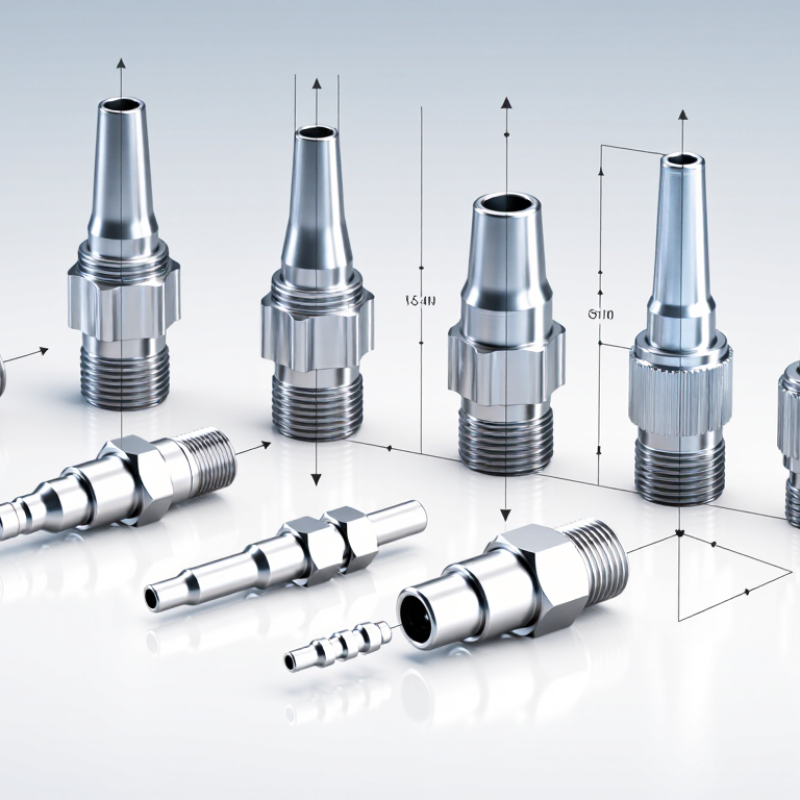
Mouthpiece adapters form the small connection between a patient interface and respiratory equipment. They can link mouthpieces to nebulizers, spacer devices, or breathing circuits, depending on the prescribed setup. Common designs include straight, angled, swivel, and size-reducing connectors. Each serves a practical purpose: an elbow can ease positioning, while a swivel joint may reduce tubing strain. A secure fit matters. Even a slight leak can disrupt treatment delivery or make breathing feel less comfortable.
The need for dependable respiratory equipment is substantial. The World Health Organization reports that asthma affected an estimated 262 million people in 2019, while COPD caused 3.5 million deaths in 2021. These figures describe disease burden, not adapter demand, but they show why interface reliability matters across care settings. Clinicians and buyers should check connector dimensions, device compatibility, material information, and cleaning instructions. Catalog photos are not enough. Small differences in internal diameter may affect fit, and reusable components require clear handling guidance.
Applications range from home nebulizer therapy to supervised respiratory care in clinics. Selection should match the device, patient needs, and intended breathing pattern, rather than relying on a “universal” label alone. A practical check is to assemble the parts and inspect for looseness, obstruction, or sharp edges before use. It is easy to overlook comfort. Yet a connector that presses against the lips or twists the tubing may reduce cooperation, especially during longer treatments. WHO data are useful context, but local clinical protocols should guide device choice.

ISO 5356-1 defines conical connectors used in breathing equipment, including nominal 15 mm and 22 mm sizes. These connections rely on carefully shaped male and female ends, not just a matching number on a product sheet. A 15 mm connector is common in smaller breathing circuits, while 22 mm connections are often used for larger circuit components. Fit matters. A loose joint may leak; an overly tight one can be difficult to separate during routine handling.
For global buyers comparing mouthpiece adapters, check the connector size, end configuration, and stated standard edition before requesting samples. Then inspect how the parts seat together by hand and confirm performance using an appropriate leak test. Small details count: a rough rim, molding flash, or slight ovality can affect connection quality. Catalog descriptions can be unclear, and I would not assume that two parts fit simply because both say “22 mm.” Ask suppliers for dimensional information and compatibility details for the intended setup. That extra check can feel tedious. It is still worthwhile. A sample may reveal issues that a drawing does not.
Compare manufacturers by evidence, not polished catalog photos. Ask for the exact material grade, supplier certificate, and batch identification for each adapter. For polymer parts, check heat tolerance and chemical compatibility; for metal parts, review corrosion resistance and surface finish. Request dimensional inspection records for critical fits, such as the bore and connection diameter. A sample that fits once is not enough.
Testing should match the intended use. Look for documented methods, acceptance limits, calibration records, and test results tied to production lots. ISO’s 2022 Survey reported more than 1.2 million valid ISO 9001 certificates worldwide. That shows how widely quality systems are used, not that any specific adapter is defect-free. Ask whether failed results trigger corrective action, and how long records are retained. Traceability can feel tedious, but it helps identify affected batches when a defect appears.
Tips: Request a sample batch record, not just a certificate. Check that material, inspection, and shipment documents share the same lot number. Small gaps matter. A supplier may have strong paperwork yet inconsistent measurements; verify a few parts independently before placing a large order.
Top 10 Mouthpiece Adapter Manufacturers: Products and Global Market Reach
For global buyers, comparing ten manufacturers means looking beyond catalog size. Mouthpiece adapters vary by instrument fit, taper, dimensions, and material. A small mismatch can leave the connection loose or change how the instrument responds. Product ranges may include standard adapters, custom sizes, and replacement parts. Some suppliers publish detailed drawings; others provide only basic measurements. That gap matters. Buyers should check tolerances, finish quality, and whether dimensions are measured in millimeters or inches. A polished catalog is useful, but it cannot replace clear fit specifications.
Market reach is more than a list of export destinations. Check whether a manufacturer supports international shipping, offers stable lead times, and answers technical questions across time zones. Ask about sample orders and packaging, especially for small parts that can be scratched or misplaced in transit. Certifications and quality records are worth reviewing, but their relevance depends on the product and destination. One weak point in many comparisons is treating broad distribution as proof of consistent service. It is not always so.
Tips: Send the supplier your instrument model and exact measurements. Request a drawing before ordering in volume. Compare the adapter’s inner and outer diameters, then confirm the return terms. A quick fit check saves trouble.
This market-orientation table compares ten manufacturer specializations rather than ranking named companies. Standards and specifications are included where applicable; regional availability, regulatory status, and product compatibility must be confirmed with each supplier.
| No. | Manufacturer specialization | Typical adapter products | Relevant interface or specification | Common material options | Global buyer considerations |
|---|---|---|---|---|---|
| 1 | Respiratory and breathing-circuit components | Adapters connecting masks, breathing tubes, and respiratory equipment | ISO 5356-1 covers conical connectors used in anaesthetic and respiratory equipment, including 15 mm and 22 mm connector sizes | Medical-grade polypropylene, polycarbonate, or silicone, depending on product design | Confirm connector size, intended use, sterilization method, and applicable medical-device registration in the destination market |
| 2 | Anesthesia-system accessories | Breathing-system and anesthesia-circuit mouthpiece adapters | Check compatibility with the relevant ISO 5356 connector type; threaded connectors are addressed by ISO 5356-2 | Medical-grade polymers and, where specified, metal components | Buyers should verify equipment compatibility, labeling, traceability, and local requirements for anesthesia accessories |
| 3 | Nebulizer and aerosol-therapy components | Mouthpieces, tubing adapters, and connectors for aerosol-delivery assemblies | Connection geometry is product-specific; confirm the dimensions and fit with the intended nebulizer or tubing system | Polypropylene, polyethylene, silicone, or other materials specified for the device | Request drawings, sample-fit testing, cleaning instructions, and documentation for the destination market |
| 4 | Oxygen-therapy accessories | Adapters used with oxygen masks, tubing, and related delivery equipment | Interface and flow-path requirements depend on the connected device; do not assume all oxygen connectors are interchangeable | Medical-grade polymers and flexible elastomers | Confirm intended oxygen use, connector dimensions, leakage performance, and any country-specific product requirements |
| 5 | Airway-management accessories | Adapters for airway devices and breathing-circuit connections | Where a conical breathing-system connection is used, check the applicable ISO 5356-1 dimensions and configuration | Medical-grade polypropylene, polycarbonate, or elastomers | Review the exact device combination, patient-contact classification, single-use or reusable status, and labeling |
| 6 | Dental and oral-care equipment components | Mouthpiece adapters for suction, air, or water equipment | Often equipment-specific; verify tubing inside diameter, outside diameter, and retention method against technical drawings | Polypropylene, PVC, silicone, or stainless steel, as specified by the application | Check cleaning and disinfection compatibility, local dental-device requirements, and replacement-part availability |
| 7 | Speech, voice, and assistive-device components | Adapters linking mouthpieces to tubes or assistive communication devices | Fit is generally defined by the device design; request dimensional drawings and test the assembled interface | Silicone, thermoplastic elastomers, or rigid engineering plastics | Confirm user-specific fit, skin-contact material information, cleaning guidance, and supply continuity |
| 8 | Musical-instrument mouthpiece accessories | Adapters that connect mouthpieces to instrument necks, receivers, or practice equipment | Instrument-specific dimensions and taper profiles apply; a universal fit should not be assumed | Brass, stainless steel, aluminum, or engineered plastics | Specify instrument model or measured interface dimensions, finish, tolerances, and packaging requirements |
| 9 | Protective and industrial breathing equipment | Adapters for respirator, breathing-apparatus, or industrial air-supply mouthpieces | Connection standards vary by equipment system; verify the exact approved interface and intended configuration | Durable polymers, silicone, rubber, or metal, depending on service conditions | Check equipment approval, chemical and temperature compatibility, sealing performance, and destination-country certification |
| 10 | Custom and OEM adapter molding | Made-to-drawing adapters, prototypes, and contract-manufactured components | Specification is buyer-defined; drawings should state dimensions, tolerances, material, surface finish, and inspection criteria | Material selected for the application, including polymers, elastomers, and metals | Assess tooling ownership, quality controls, change management, export documentation, minimum order quantity, and lead time |
Fit should be verified before price comparisons. Ask manufacturers for interface drawings, dimensional tolerances, and compatible device models. Check insertion depth and connection security against the intended equipment. A mismatch may cause leakage or poor performance. Small gaps matter. Request samples and test them with the actual device, tubing, and cleaning process.
The WHO Global Atlas of Medical Devices reports more than two million device types across over 7,000 generic groups. This breadth makes clear why buyers should confirm intended use and applicable requirements for each destination market. Ask for an ISO 13485 certificate, its current scope, and the issuing body. Certification supports confidence in a quality management system; it is not product approval. I still find this distinction easy to overlook. Request traceability records, material specifications, and evidence that the adapter’s labeling and technical documentation match its intended use.
Tips: Record the connector dimensions, test method, and acceptance criteria in the purchase specification. Check lot identification on samples and production units. Ask how the supplier controls design or material changes. Confirm local registration or conformity documentation where required, rather than assuming one certificate covers every market.
Precision Cable Assemblies
16830 Pheasant Drive
Brookfield, WI 53005
Phone: 262-784-7887
Fax: 262-784-0681