
Ethernet Gateway selection is no longer a simple port-count exercise. Global networks now connect factories, cameras, vehicles, retail systems, and remote offices. Each site brings different latency, security, power, and environmental demands.
IoT Analytics reported nearly 19 billion connected IoT devices worldwide in 2024 in its State of IoT report. That growth increases pressure on gateways to translate protocols, filter traffic, and keep local operations running. Cisco’s Annual Internet Report 2018–2023 also projected billions of networked devices, highlighting the importance of scalable edge connectivity. These figures support a practical conclusion: buyers need more than a familiar brand name.
This guide examines ten Ethernet Gateway types for international purchasing decisions. It considers industrial gateways, cellular gateways, fiber gateways, PoE gateways, VPN gateways, SD-WAN devices, protocol converters, cloud-managed models, edge gateways, and ruggedized units. IEEE 802.3 Ethernet standards help define physical connectivity, while IEEE 802.1Q supports VLAN segmentation. IEC 62443 guidance also provides a useful reference for industrial cybersecurity planning.
Details matter.
A dusty production floor may need DIN-rail mounting and a wide temperature range. A temporary site may need 5G failover instead of fixed broadband. A retail branch may value centralized cloud management more than advanced protocol conversion.
Still, a ranked list can mislead. “Best” depends on traffic patterns, local regulations, certification requirements, and technical support. Vendor datasheets may also hide integration effort. Buyers should verify throughput under real workloads, not only laboratory figures. This review offers a practical framework, but each recommendation deserves careful testing before deployment.
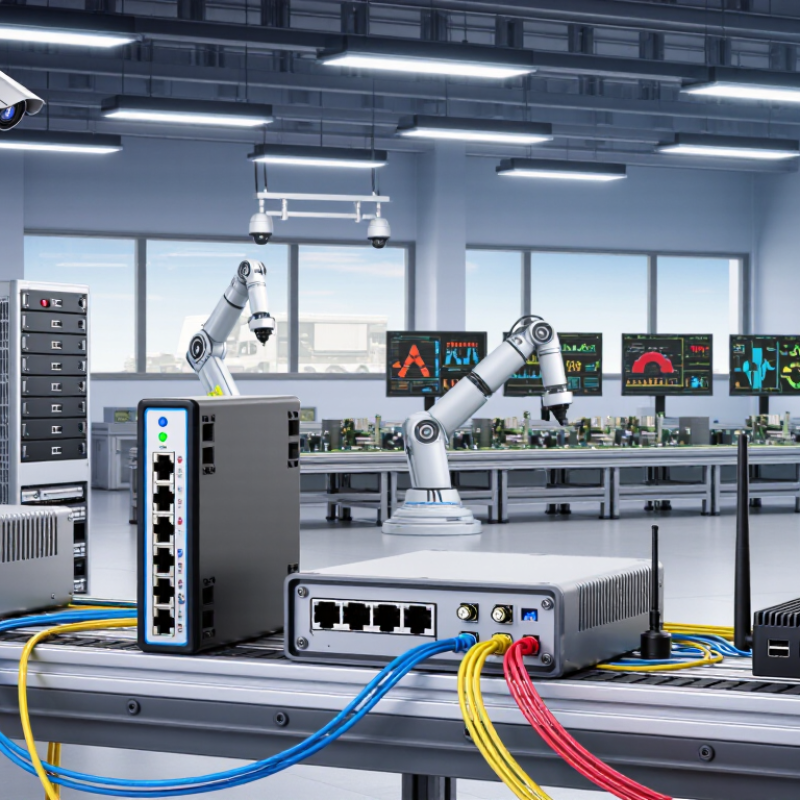
Top 10 Ethernet Gateway Types for Global Buyers
An Ethernet gateway connects networks that use different protocols, addressing methods, or transmission media. Unlike a basic switch, it can interpret data before forwarding it. A gateway may link Ethernet devices with serial equipment, wireless sensors, cellular networks, or cloud platforms. In practical installations, this translation prevents older machines from becoming isolated.
The ten common types include industrial protocol gateways, serial-to-Ethernet gateways, cellular gateways, wireless gateways, IoT gateways, cloud gateways, edge gateways, secure remote-access gateways, media-conversion gateways, and residential gateways. Each type solves a different connection problem. For example, an industrial gateway can translate machine data into a standard Ethernet format. A cellular model can provide network access where fixed cabling is unavailable. An edge gateway can filter readings locally, reducing unnecessary cloud traffic.
The choice depends on more than port numbers. Check protocol support, throughput, latency, power requirements, enclosure protection, and management features. Security also matters. Look for access control, encrypted communication, firmware updates, and event logging. In field deployments, stable recovery after power loss is often more valuable than impressive peak speed. Small details matter.
A gateway can simplify a complicated network. It can also create a difficult failure point. A neat diagram may hide poor compatibility or weak configuration. Testing with real devices is essential, because datasheets rarely show every timing issue. Even experienced engineers sometimes select a gateway too quickly. The network may work, but not reliably.

An Ethernet gateway connects networks that use different protocols, media, or communication architectures. The chart compares common gateway categories by a representative Ethernet link rate used in relevant deployments. These figures describe standardized link speeds, not market share or a universal limit for every device.
How to read the chart: Gateway selection depends on protocol compatibility, data volume, latency, security, environmental requirements, and the required Ethernet speed. Serial, fieldbus, and sensor gateways often prioritize protocol conversion, while industrial edge, data-center, and high-speed media gateways prioritize bandwidth and traffic management.
Ethernet gateways connect networks that were never designed to communicate. In factories, protocol gateways translate Modbus RTU, CAN, PROFIBUS, or other fieldbus data into Ethernet messages. Serial-to-Ethernet gateways remain practical for older machines, especially where replacement costs are high. Industrial media converters link copper Ethernet with fiber, supporting longer distances and reducing electromagnetic interference.
Commercial projects often use wireless Ethernet gateways, cellular gateways, and secure remote-access gateways. Wireless models suit warehouses, temporary sites, and moving equipment. Cellular units help connect remote pumps, kiosks, and monitoring cabinets without local broadband. Remote-access gateways allow authorized technicians to inspect equipment without standing beside the control panel. Security settings matter here. Weak passwords and outdated firmware can expose an entire network.
Other important categories include CAN-to-Ethernet gateways, edge-computing gateways, PoE gateways, and IoT aggregation gateways. Edge devices can filter sensor readings before sending them to cloud platforms, saving bandwidth. PoE gateways combine data and power for cameras, access points, or industrial sensors. IoT gateways collect data from mixed devices and standardize it for analysis. However, product descriptions sometimes promise easy integration. Field testing may reveal timing delays, limited protocol support, or unstable wireless performance. Buyers should check connector types, operating temperature, data rates, enclosure protection, and maintenance access before installation. A gateway that works in a quiet office may fail beside a hot motor cabinet.
Ethernet gateways vary less by appearance than by the language they translate. Industrial Ethernet/IP gateways suit controller networks and often use dual RJ45 ports for line or ring layouts. PROFINET gateways prioritize cyclic data and predictable timing. EtherCAT gateways can deliver very low latency, but their network design demands careful synchronization. Modbus TCP gateways remain practical for meters, drives, and building devices, using familiar TCP port 502.
Other types solve different conversion problems. Serial-to-Ethernet gateways connect RS-232 or RS-485 equipment to IP networks, often supporting several isolated ports. CAN-to-Ethernet gateways handle short control messages and benefit from strong noise resistance. OPC UA gateways organize structured machine data, certificates, and access permissions. MQTT edge gateways publish lightweight telemetry through TCP, commonly with encrypted transport. Wireless Ethernet gateways reduce cabling, yet interference can lower performance. Security gateways add filtering, VPN functions, and network segmentation, but inspection may increase latency.
Port count is not a simple quality score. A two-port gateway may provide redundant paths, while an eight-port unit may only expand local connections. Throughput also depends on packet size, polling intervals, buffering, and protocol conversion rules. During field testing, I have seen a fast interface perform poorly because its serial devices responded slowly. That result is easy to overlook.
A realistic comparison should measure latency, packet loss, recovery time, temperature tolerance, and configuration effort. My own evaluations are not perfect, especially when traffic patterns change. Installation records and repeated tests remain more reliable than a specification sheet alone.
Selecting an Ethernet gateway starts with the deployment environment, not the product brochure. Common options include industrial, cellular, serial-to-Ethernet, fiber, wireless, PoE, VPN, protocol-conversion, edge-computing, and rugged gateways. Each type solves a different connectivity problem. A factory may need dual Ethernet ports, isolated serial interfaces, and a wide operating-temperature range. A remote site may depend more on cellular bands, antenna placement, and stable failover.
Regional requirements can change the buying decision. Check local wireless certifications, supported frequency bands, power standards, connector styles, and cybersecurity obligations. Fiber gateways should match the installed media and transmission distance. Cellular models need SIM flexibility and reliable roaming support across target countries.
In dusty or humid locations, an appropriate IP rating matters more than a polished enclosure. Data residency and remote-management rules also deserve early review.
Field testing often reveals gaps that datasheets hide. A gateway may support a protocol but perform poorly under heavy traffic. Firmware updates can also become difficult after installation. That risk is easy to underestimate. Buyers should request lifecycle commitments, configuration backups, event logs, and clear technical support channels. Total cost includes antennas, licenses, installation time, replacement access, and training. The cheapest unit may create expensive downtime. Still, overspecifying every feature can waste budget and complicate maintenance. A small pilot with real cables, real distances, and local network conditions provides better evidence than assumptions.
Choosing an Ethernet gateway starts with the network problem, not the product label. A factory machine with an RS-485 port may need a serial-to-Ethernet gateway for stable Modbus data. A CAN gateway fits vehicles, battery cabinets, and motion systems with short control frames. For remote sites, a cellular Ethernet gateway can avoid expensive cable work, but signal strength changes by season. An industrial Ethernet gateway suits dusty cabinets, wide temperatures, and continuous traffic. The enclosure and power input matter as much as protocol support.
Match the gateway to traffic, distance, and failure consequences. A protocol-conversion gateway helps older controllers communicate with modern Ethernet software. A wireless Ethernet gateway works well for temporary sensors, mobile equipment, and hard-to-wire rooms. Use an edge IoT gateway when local filtering reduces cloud traffic and keeps alarms running during outages. A VPN security gateway supports controlled remote access for maintenance teams. Do not treat bandwidth as the only metric. Packet delay, reconnect behavior, and buffer size often decide whether a system remains usable. Test it.
For building automation, a BACnet gateway is practical when controllers already expose BACnet points. Energy systems may need Modbus, CAN, or IEC-based data support. A managed Ethernet gateway can separate devices with VLANs and monitor link faults. Check voltage range, mounting space, software updates, and protocol licensing before purchase. During field commissioning, disconnect the network briefly and observe recovery. Normal operation hides weaknesses. A gateway that looks oversized may be safer, but that assumption still deserves testing. One overlooked detail can waste a week.
| Rank | Ethernet Gateway Type | Primary Protocol or Network Conversion | Common Physical Interfaces | Typical Network Applications | Best Match When You Need To | Key Selection Considerations |
|---|---|---|---|---|---|---|
| 1 | Industrial Protocol Gateway | Converts between industrial protocols such as Modbus TCP, Modbus RTU, PROFINET, EtherNet/IP, and OPC UA. | 10/100/1000 Ethernet RS-232/422/485 Fieldbus ports | Factory automation, machine integration, production lines, process control, and supervisory systems. | Connect legacy equipment to a modern Ethernet-based control or monitoring network without replacing existing controllers. | Confirm exact protocol roles, supported data types, polling capacity, update rate, electrical isolation, and industrial temperature rating. |
| 2 | Serial-to-Ethernet Device Server | Encapsulates serial data from RS-232, RS-422, or RS-485 devices over TCP or UDP Ethernet connections. | 10/100 Ethernet RS-232 RS-422/485 | Barcode scanners, PLCs, meters, POS equipment, access-control devices, and industrial instruments. | Extend serial-device communication across a LAN, WAN, or virtual private network. | Check serial mode, baud rate, parity, flow control, transparent mode, virtual COM support, and TCP client/server behavior. |
| 3 | Cellular Ethernet Gateway | Routes Ethernet traffic through a cellular WAN using 4G LTE or 5G mobile networks. | RJ45 Ethernet SIM/eSIM Cellular modem | Remote sites, temporary installations, mobile equipment, backup WAN links, transportation, and utility assets. | Provide internet or private-network access where wired broadband is unavailable, unreliable, or too expensive to install. | Verify regional cellular bands, carrier certification, antenna configuration, data plans, IP addressing, VPN support, and failover features. |
| 4 | Secure VPN Ethernet Gateway | Establishes encrypted site-to-site or remote-access tunnels using technologies such as IPsec, SSL VPN, or WireGuard. | WAN Ethernet LAN Ethernet Optional cellular | Remote maintenance, branch connectivity, distributed industrial systems, managed services, and secure cloud access. | Connect geographically separated networks while protecting traffic over public or shared infrastructure. | Evaluate encryption standards, tunnel capacity, concurrent tunnels, firewall rules, authentication, logging, and remote-management controls. |
| 5 | CAN-to-Ethernet Gateway | Bridges CAN or CAN FD frames to Ethernet, TCP/IP, UDP, or higher-level application software. | CAN/CAN FD 10/100 Ethernet Optional USB | Vehicles, mobile machinery, battery systems, robotics, test benches, and embedded control systems. | Monitor, configure, or analyze CAN-based devices from an Ethernet-connected computer or control platform. | Check CAN bit rate, CAN FD support, frame filtering, timestamp accuracy, termination requirements, and galvanic isolation. |
| 6 | BACnet/IP Building Automation Gateway | Connects BACnet MS/TP or other building-control networks with BACnet/IP over Ethernet. | BACnet MS/TP RS-485 Ethernet Optional wireless | HVAC control, lighting, energy management, access systems, and building management systems. | Integrate field controllers using serial BACnet with an IP-based building automation backbone. | Confirm device-object limits, BBMD support, foreign-device registration, MS/TP token handling, network segmentation, and commissioning tools. |
| 7 | LoRaWAN-to-Ethernet Gateway | Receives low-power wide-area radio packets from LoRaWAN end devices and forwards them to a network server over Ethernet. | LoRaWAN radio Ethernet backhaul Optional cellular/Wi-Fi | Smart metering, agriculture, environmental sensing, asset monitoring, and large-area IoT deployments. | Aggregate long-range, low-power sensor traffic and send it to a private or public LoRaWAN network server. | Select the correct regional frequency plan, antenna design, channel plan, packet capacity, outdoor protection, and backhaul redundancy. |
| 8 | Ethernet-to-Wi-Fi Industrial Bridge | Bridges wired Ethernet devices to a Wi-Fi infrastructure or creates a wireless Ethernet link between network segments. | RJ45 Ethernet 2.4/5 GHz Wi-Fi Industrial antenna | Mobile machinery, warehouse equipment, temporary networks, hard-to-wire locations, and industrial mobility applications. | Add wireless connectivity to equipment that only provides a wired Ethernet port. | Assess wireless standard, roaming behavior, interference, security modes, environmental rating, antenna placement, and deterministic-latency needs. |
| 9 | Ethernet-to-Optical Fiber Gateway | Converts copper Ethernet signaling to fiber-optic Ethernet for longer-distance or electrically isolated network links. | RJ45 copper SFP or fiber port Single/multimode fiber | Campus networks, substations, factory floors, high-EMI areas, backbone links, and inter-building connections. | Extend Ethernet beyond copper distance limits or eliminate ground-potential and electromagnetic-interference problems. | Match fiber type, wavelength, connector, transmission distance, link speed, redundancy, surge protection, and installation environment. |
| 10 | IoT Edge Ethernet Gateway | Collects data from local sensors or controllers, performs protocol conversion or edge processing, and forwards information to cloud or local platforms. | Ethernet RS-485/serial USB or GPIO Optional wireless | Predictive maintenance, energy monitoring, environmental sensing, asset tracking, and production-data collection. | Filter, normalize, buffer, or analyze data locally before sending selected information to an MQTT, HTTP, or industrial data platform. | Review local computing capability, supported protocols, data buffering, container or application support, cybersecurity updates, and cloud compatibility. |
Precision Cable Assemblies
16830 Pheasant Drive
Brookfield, WI 53005
Phone: 262-784-7887
Fax: 262-784-0681