
Choosing an Insulation Wrapping Machine is not just a matter of comparing prices or checking a machine’s advertised speed. The right choice depends on your insulation material, product dimensions, daily output, and available floor space. A machine that handles narrow rolls neatly may struggle with bulky panels. Small details matter. Think about film tension, sealing consistency, changeover time, and how easily operators can reach routine service points. A cramped access panel can turn a quick adjustment into a frustrating delay.
This guide presents seven practical tips for evaluating machines before you buy. It covers material compatibility, production capacity, wrapping quality, controls, maintenance, safety features, and supplier support. The aim is simple: connect specifications to the work happening on your production floor. Ask to see the machine run with your actual product, not just a sample chosen for a sales demonstration. Watch the film feed around corners. Check the finished package for loose edges, wrinkles, or uneven tension. Those details can reveal more than a brochure.
No verifiable expert quotation was supplied, so the following line is clearly illustrative rather than a sourced statement. Fictional composite equipment specialist Alex Morgan puts the selection principle this way: “Choose for the product you run every day, not the ideal sample on a showroom table.” A useful reminder. Still, no checklist replaces a real trial. Each production line has its quirks, and those deserve an honest look before purchase.
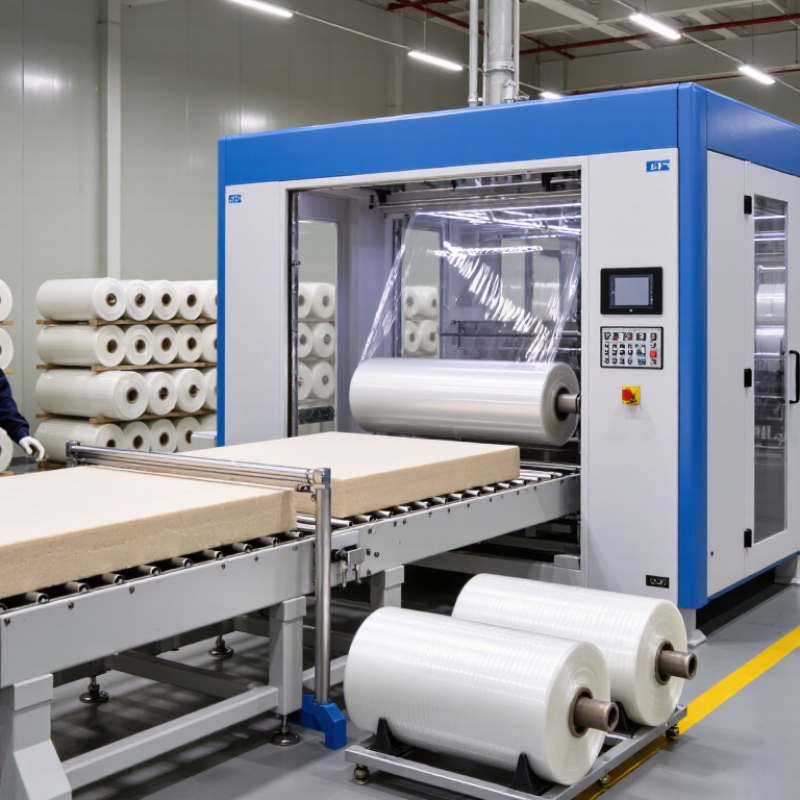
An insulation wrapping machine applies a controlled layer of insulation or facing around a product, often pipe, duct, or cable. The material unwinds from a roll and passes through guides that keep its path steady. A wrapping head then rotates the material, or the product, to create a spiral or overlapping seam. The exact motion depends on the machine design. Feed rollers regulate speed, while tension controls help prevent loose wraps, stretching, or tears. A cutter or sealing station may finish each length.
Small details matter. An uneven overlap can leave thin spots, and excessive tension can compress soft insulation. Operators should check roll alignment, material condition, and finished-wrap thickness during setup—not only at the end. The International Energy Agency’s 2024 Global Status Report for Buildings and Construction estimates that buildings and construction accounted for 32% of global energy use and 34% of global CO2 emissions in 2023. That context makes consistent insulation application useful, but it does not guarantee energy savings by itself. The product, installation quality, and operating conditions also matter. A practical test is to inspect several wrapped sections under consistent lighting and measure overlap and thickness. Real lines can behave differently than expected.
| Tip | What to Evaluate | How the Machine Works | What to Check Before Purchase |
|---|---|---|---|
| 1. Match the machine to the product | Insulation type, product dimensions, shape, weight, and surface fragility. | The product is guided through a wrapping station, where film or another wrapping material is applied around it. | Confirm the supported minimum and maximum product dimensions, product orientation, and whether the machine can handle the insulation without crushing or tearing it. |
| 2. Choose a suitable wrapping method | Required coverage, package appearance, containment, and whether the product needs a sealed or open-ended wrap. | Depending on the design, the machine may rotate the product, rotate a film-delivery assembly, or use a flow-wrapping arrangement to apply material. | Ask for a demonstration using your actual insulation and packaging material. Check overlap, tension, end treatment, and whether the wrap stays in place during handling. |
| 3. Verify material compatibility | Film width, thickness, roll dimensions, material type, and any required paper or protective layers. | Roll holders feed wrapping material into the application area; tension and feed controls help regulate how it is applied. | Compare the machine’s approved material specifications with your packaging materials. Confirm roll-change procedures and whether the specified material requires heat sealing or other finishing equipment. |
| 4. Check throughput using real production conditions | Required output per shift, product mix, upstream and downstream line speeds, and planned operating hours. | Conveyors and wrapping mechanisms move products through the wrapping cycle. Actual output depends on product size, wrapping pattern, loading, and changeovers. | Request a trial or a documented output estimate based on your product, wrap pattern, and operators. Do not compare speed figures unless the test conditions are equivalent. |
| 5. Assess changeover and adjustment needs | Number of product sizes, frequency of format changes, and adjustments to guides, film settings, and wrapping parameters. | Guides and machine settings position the product and control material feed so the wrapping process can suit different product formats. | Time a changeover during a demonstration. Check which adjustments are tool-free, whether settings can be stored, and what training operators need for routine changes. |
| 6. Review controls and operator safety | Control access, emergency stops, guarded moving parts, operating instructions, and the tasks operators perform. | Controls coordinate the conveyor and wrapping cycle; guards and safety devices help reduce access to hazardous moving areas. | Review the machine’s risk assessment and safety documentation for your installation. Confirm that guards, interlocks, and emergency stops suit the intended workflow and applicable local requirements. |
| 7. Plan installation and maintenance | Available floor space, power and air requirements, cleaning access, wear parts, and maintenance support. | Drive components, rollers, sensors, and material-feed parts require inspection and upkeep to maintain consistent operation. | Obtain utility and layout requirements before installation. Ask for a maintenance schedule, spare-parts list, troubleshooting guidance, and expected service access requirements. |