
A Small Clothes Dryer can solve a practical problem: damp towels, limited balcony space, and unpredictable weather. For global buyers, the decision involves more than drum size or advertised price. Energy use, voltage, capacity, noise, ventilation, and after-sales support can change the real cost of ownership.
The International Energy Agency’s Energy Efficiency 2023 report stresses that efficient appliances are essential for reducing household energy demand. The U.S. Department of Energy also notes that heat-pump dryers can use substantially less energy than conventional electric models. ENERGY STAR reports that certified clothes dryers use about 20% less energy than standard models when properly operated. These figures matter in regions with high electricity prices. They also matter for apartments with limited electrical capacity. Small details matter.
This guide presents seven practical buying tips for selecting a Small Clothes Dryer across different markets. It considers moisture-sensing controls, exhaust requirements, heat-pump technology, drum capacity, installation conditions, and electrical compatibility. Buyers should also check IEC 61121-related product information and confirm local plug and voltage requirements before ordering. A compact dryer may fit beside a washing machine, yet still require careful airflow clearance. That point is often missed.
The lowest purchase price is not always the lowest total cost. A smaller drum may save space but increase drying cycles. A quieter model may improve apartment living but cost more initially. This guide acknowledges an uncomfortable limitation: product labels cannot predict every household’s laundry habits. Careful comparison remains necessary. Reliability depends on verified specifications, realistic load planning, and accessible service support.
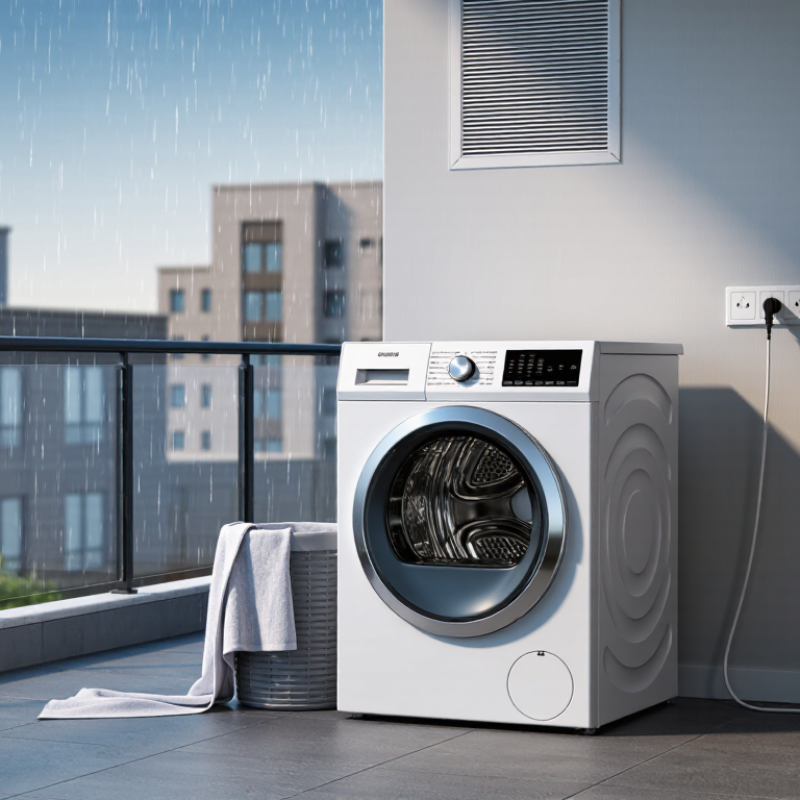
Small dryer buying starts with two numbers: available space and weekly laundry volume. A 3–8 kg capacity range suits many compact homes, apartments, and rental rooms. However, capacity is not the same as physical size. A 7 kg machine may need more depth because of its drum and rear ventilation clearance.
IEC 61121 provides standardized methods for measuring household tumble-dryer performance. It does not define a universal 3–8 kg compact-dryer category. Treat that range as a practical market guide, not a technical rule. The European Commission’s preparatory work on household tumble dryers shows why measured energy use and programme testing matter when comparing appliances. Check the rated load, cotton-cycle duration, and energy consumption per cycle. Small drum, smaller bills? Not always. Overloading reduces airflow and can extend drying time. Underloading may waste energy per garment.
A 3–5 kg model works for one or two people, light clothing, and limited weekly washing. A 6–8 kg model handles towels, bedding, and family loads more comfortably. Leave room for the open door and filter access. Measure twice. Humid climates also need reliable moisture removal and ventilation planning. The IEA’s Energy Efficiency 2023 market analysis identifies appliance efficiency as an important household energy-saving area, but actual savings depend on use, maintenance, and local electricity conditions. Capacity alone cannot predict operating cost. That is an easy mistake.
| No. | Buying Dimension | Practical Data or Range | Why It Matters | Buyer Check |
|---|---|---|---|---|
| 1 | Rated drying capacity | 3–8 kg of dry textile load; compact household models commonly fall within this range. | Capacity affects the amount of laundry that can be dried in one cycle. A larger drum does not automatically mean a larger rated load. | Compare the declared capacity in kilograms on the product specification sheet. Confirm that the rating refers to dry textile mass. |
| 2 | Load size selection | 3–5 kg: one-person or light weekly loads. 6–8 kg: small-family loads, towels, or fewer larger cycles. | Choosing capacity according to actual laundry volume can reduce under-loading, overloading, and unnecessary repeat cycles. | Estimate the usual wash load before purchase. Do not exceed the dryer’s declared maximum load. |
| 3 | Installation footprint | Measure the product width, height, and depth, then reserve additional space for doors, controls, ventilation, hoses, and service access. | A dryer may fit the floor area but still be unusable if the door cannot open fully or connections are blocked. | Measure the complete installation location, including door swing and the route for moving the appliance into the room. |
| 4 | Clearance and airflow | Use the manufacturer’s required clearances. Never cover ventilation openings or place the appliance where airflow is restricted. | Restricted airflow can increase drying time, energy use, heat accumulation, and safety risk. | Check the installation manual for rear, side, top, and front clearances before finalizing the cabinet or closet design. |
| 5 | Dryer type and space strategy | Vented: needs a suitable exhaust route. Condenser or heat-pump: does not normally require an external exhaust duct, but still needs airflow and drainage or water-container management as specified. | The available room layout and ventilation options may determine which dryer technology is practical. | Confirm whether the destination installation permits external exhaust ducting, condensate drainage, or manual tank emptying. |
| 6 | Electrical compatibility | Verify the destination country’s voltage, frequency, plug type, rated power, and circuit requirements. These values vary by market and model. | An appliance designed for one electrical system may not operate safely or correctly on another system. | Match the rating plate and installation instructions with the local supply. Use a properly earthed circuit and avoid unsuitable adapters or extension leads. |
| 7 | Standards and performance data | Use IEC 61121 as a reference for household electric tumble-dryer performance and test-method information. Review cycle time, energy consumption, noise, and moisture-control features in the applicable market documentation. | Standardized testing helps buyers compare declared performance, but actual results vary with fabric type, initial moisture, load size, ambient conditions, and selected program. | Compare products using the same capacity and test basis. Check the current local energy label and the complete technical datasheet before ordering. |
| Planning note: The 3–8 kg range is a practical compact-dryer selection range, not a universal product classification. Always follow the appliance’s official installation instructions, rated load limits, electrical requirements, and local regulations. | ||||