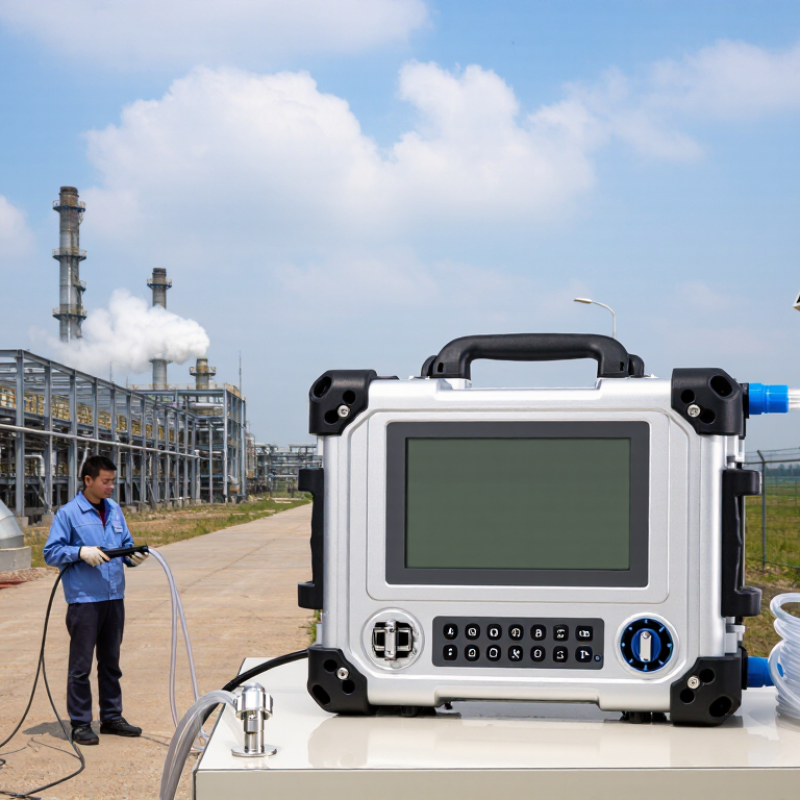
China Best IRS 2700 Series Portable FTIR Gas Analyzer
Reliable gas analysis begins with representative sampling, stable calibration, and clear reporting. The IRS 2700 Series Portable Fourier Transform Infrared Gas Analyzer brings FTIR measurement to field settings, where technicians may work beside a process line, emissions outlet, or monitoring station. Its usefulness depends on the target gases, sampling conditions, and validated calibration—not the product name alone.
The World Meteorological Organization’s Greenhouse Gas Bulletin No. 20 reported that global mean carbon dioxide reached 420.0 parts per million in 2023, an increase of 2.3 ppm from 2022. This finding underscores the need for dependable measurement across environmental and industrial monitoring programs. For emissions testing, U.S. EPA Method 320 describes extractive FTIR analysis for vapor-phase organic and inorganic compounds. It also highlights a practical point: sampling and method suitability matter as much as the instrument.
In the field, a sound evaluation should check the gas library, detection limits, response time, calibration procedure, and performance under expected temperature and humidity. Small details matter. A wet sample line, for example, can affect results. Portable does not automatically mean suitable for every application. Specifications should be confirmed against the intended gases and measurement conditions.
No traceable source was provided for a named expert’s statement about this model, so an expert quotation is not attributed here. Adding one without verification would weaken the reliability of this introduction.
Core Principles of Portable FTIR Gas Analysis
Portable FTIR gas analysis measures how gas molecules absorb infrared light at specific frequencies. A broadband infrared beam passes through a gas cell, and the instrument records the changing signal as an interferogram. A Fourier transform converts that signal into a spectrum. Each gas has a characteristic absorption pattern, much like a set of narrow fingerprints.
The spectrum is compared with reference data to identify and estimate gas concentrations. Reliable results depend on more than the analyzer itself. Cell path length, pressure, temperature, and calibration all influence the measurement. Water vapor can overlap with other absorption features, so moisture and background conditions deserve attention. Small details matter. A damp sampling line or a loose connection can distort a reading before analysis even begins.
Portable units bring this method to field locations, but portability does not remove the need for careful checks. Allow the instrument to stabilize as its instructions specify, inspect tubing, and verify calibration with suitable reference gases. Keep sampling conditions consistent when comparing readings. A clean-looking display can still hide uncertainty. It is worth asking whether the sample represents the process, especially when gas levels change quickly or the line may retain residue. FTIR offers broad, simultaneous analysis, yet interpretation should reflect instrument limits and the conditions at the sampling point.
Key Components of the IRS 2700 Series Analyzer
A portable FTIR gas analyzer depends on several components working together. The sampling probe draws gas from the measurement point, while tubing carries it toward the analyzer. If the sample cools or contains moisture, some compounds may stick to surfaces or condense. That can distort readings. Heated lines help in some applications, but they add power demand and setup time.
Inside the instrument, an infrared source sends light through an optical interferometer. The gas cell provides a controlled path for the sample, and the detector records how much infrared energy reaches it. Different gases absorb light at characteristic wavelengths. The analyzer’s software processes the resulting spectrum and estimates gas concentrations. Clean optics and a stable cell temperature matter. Small details matter.
A pump or flow-control assembly helps maintain a steady sample stream, while filters can limit dust entering the measurement path. The electronics manage signal collection, temperature checks, and data display. A battery and protective enclosure support field use, but portability has trade-offs: runtime, weight, and response time may compete. Operators should check tubing connections, flow, and calibration status before relying on results. One weak point is easy to overlook: a clean instrument cannot correct a poorly collected sample.
Gas Sampling and Measurement Workflow
A reliable gas measurement begins before the analyzer is switched on. Check the sampling line for cracks, loose fittings, or residue from earlier tests. Select a probe and filter suited to the gas stream and the instrument’s method. Keep the line short where practical. Keep it steady. Record the sample point, gas temperature, pressure, and any unusual process conditions. These details help explain differences between readings later. A clean setup matters, but it is easy to overlook when a site is busy.
Connect the line securely and allow the sample to reach the measurement cell without unnecessary delay. Watch for condensation, which can alter a sample or obstruct the path. Small leaks matter. Follow the analyzer’s procedure for background checks and calibration, using suitable reference gases and documented intervals. Wait for the signal to stabilize, then save the reading with its time and operating conditions. Compare repeated measurements rather than relying on one result. If values drift, inspect the tubing, filter, and connections before assuming the gas composition has changed. Field workflows are rarely perfect; noting a skipped check or a difficult sample point is more useful than hiding the uncertainty.
Applications in Environmental and Industrial Monitoring
Environmental and industrial monitoring often begins where emissions occur: beside a stack, process vessel, or plant boundary. A portable Fourier-transform infrared (FTIR) gas analyzer can measure several infrared-absorbing gases from one sample. This helps technicians compare process conditions with nearby ambient readings. The International Energy Agency’s Global Methane Tracker 2024 estimated that fossil-fuel operations emitted about 120 million tonnes of methane in 2023. The figure shows why timely measurements matter, but a portable reading alone cannot establish a complete emissions inventory.
In industrial settings, teams can use FTIR measurements to investigate changing gas mixtures, check ventilation performance, or locate unusual process conditions. Environmental crews may use them for screening around sites and recording changes over time. Results depend on sound sampling: a leaking connection, wet sample line, or poor calibration can distort readings. Field work is rarely tidy. A result that looks convincing may still need a repeat measurement and comparison with a reference method. Instrument response also varies by gas, concentration, and operating conditions.
Tips: Check calibration before deployment, keep sample lines short and clean, and record temperature and humidity beside each reading. Allow the instrument to stabilize. Small details matter. Note any unexpected result rather than smoothing it away; that uncertainty can guide a better follow-up measurement.
Performance Factors and Routine Maintenance
Portable FTIR gas analyzers depend on more than spectral resolution. Cell temperature, pressure, optical-path length, and moisture can shift readings or distort absorption bands. A clean spectrum matters. U.S. EPA Method 320 uses a 70–130% analyte-spike recovery range as a quality-control check. This range is a method criterion, not a guarantee of field accuracy. Operators should compare checks with the method and the instrument’s validated operating range.
Routine maintenance starts with a consistent baseline. Inspect the sampling line and cell for dust, condensation, and loose fittings. Check for leaks before measurements, and record cell temperature and pressure with each run. Keep reference spectra and calibration checks; sudden changes can reveal a dirty window or a failing seal. Replace filters and desiccant when inspection or readings show they are exhausted. Small details matter. Even a fingerprint on an optical window can weaken transmission. EPA Method 320 also emphasizes documenting calibration and quality-control checks. A missed log entry is easy to dismiss, but it makes later drift harder to diagnose. The schedule should reflect the sample matrix and operating environment, not just the calendar.