
Choosing Industrial Rigging equipment is a safety decision, not merely a purchasing exercise. The correct sling, shackle, hook, or spreader beam must match the load, lift method, and working environment. Weight alone does not determine suitability. Center of gravity, sling angles, sharp edges, temperature, abrasion, and available headroom also matter. A small angle change can increase sling tension dramatically. That detail is easy to overlook.
Mike Parnell, a respected crane and rigging educator, has stated, “Rigging is not a place for guesswork.” His warning reflects field experience. Equipment should be selected using verified working load limits, manufacturer instructions, inspection records, and applicable standards such as ASME B30 requirements. Never rely on appearance. A polished sling may still hide damaged fibers, stretched fittings, or chemical exposure. Read the tags. Check the hardware.
This guide will examine how experienced teams compare equipment before a lift begins. It will consider load weight, geometry, connection points, lift frequency, site conditions, and inspection needs. It will also explain why a qualified person should review unusual or critical lifts. Some choices seem obvious until the load shifts. That is where planning proves its value.
No selection process is perfect. Human judgment can miss subtle risks, especially under production pressure. A written lift plan helps, but it cannot replace competent supervision. The safest approach combines practical experience, technical knowledge, reliable documentation, and honest reflection after each lift. Small corrections today may prevent serious failures tomorrow.
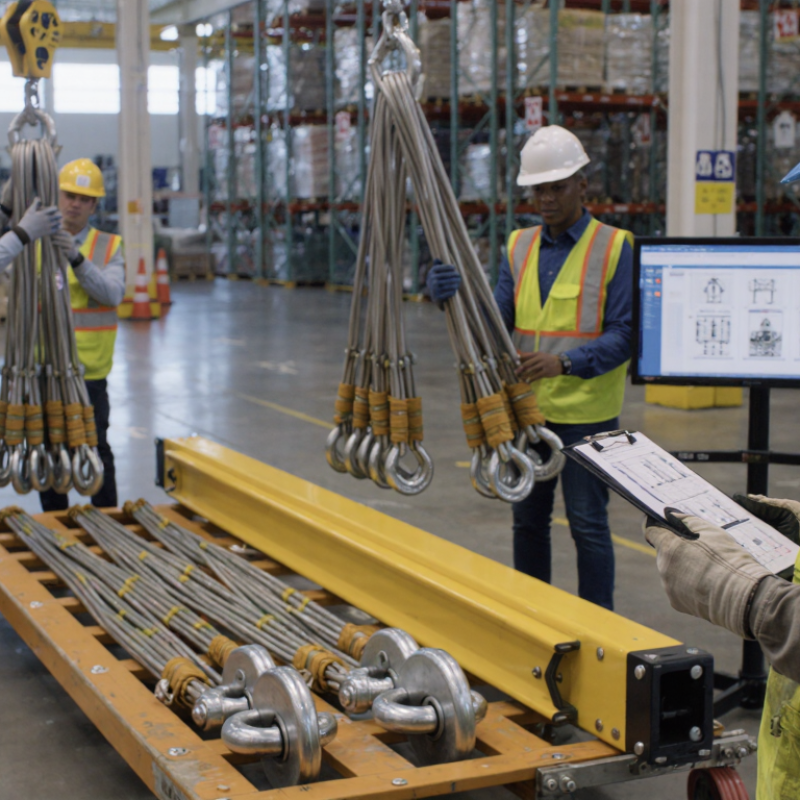
How to Choose Industrial Rigging Equipment?
Choosing industrial rigging equipment begins with a precise load definition. Record the load’s weight, dimensions, center of gravity, and lifting points. Do not trust appearance alone. A compact steel frame may weigh more than expected. Check drawings, labels, or verified measurements before selecting slings, shackles, or lifting beams. Include attachments and any material added during the lift. Weight matters.
Define the lift requirements in practical terms. Identify vertical height, travel distance, lifting speed, and required control. Note whether the load must rotate, pass through a doorway, or land on a narrow support. Calculate sling angles because angle changes leg tension significantly. A qualified lifting professional should verify capacity, configuration, and inspection status. Capacity ratings are not suggestions. They depend on correct use.
Tips: Walk the worksite before ordering equipment. Measure overhead clearance, floor strength, access routes, weather exposure, and nearby operations. Mark exclusion zones and confirm clear communication methods. Recheck the plan when conditions change. A wet surface, shifted load, or unexpected obstruction can invalidate a careful calculation. Experience helps, but it can also create blind spots. Ask another competent person to challenge the assumptions. Small details often decide whether the lift remains controlled.
Use the following planning table to match the load, lifting geometry, equipment rating, and worksite conditions before selecting industrial rigging equipment.
| Application | Load Characteristics | Load Mass | Lift Geometry | Estimated Leg Load | Recommended Rigging Arrangement | Minimum Working Load Limit (WLL) | Worksite Requirements | Critical Inspection Points |
|---|---|---|---|---|---|---|---|---|
| Balanced machinery crate | Rigid, stable load with a known center of gravity and two certified lifting points | 1,000 kg | Two-leg sling; 60° included working angle from the horizontal reference | Approximately 577 kg per leg under ideal equal loading | Two-leg synthetic web sling or wire-rope sling with compatible shackles; use edge protection where the sling contacts corners | At least 1,000 kg WLL per leg after configuration and angle factors | Firm, level ground; clear travel path; no personnel beneath the suspended load | Check lifting-point rating, sling cuts, abrasion, broken wires, deformed shackles, and leg identification tags |
| Steel frame with a high center of gravity | Rigid but top-heavy load; center of gravity must remain inside the lifting polygon | 2,000 kg | Two-leg sling; 45° angle from the horizontal reference | Approximately 1,414 kg per leg under ideal equal loading | Two-leg wire-rope or alloy-chain sling with a spreader beam if sling compression or load instability is possible | At least 2,000 kg WLL per leg; increase capacity if loading may be unequal | Control rotation with tag lines; verify overhead clearance and crane capacity throughout the lift | Inspect hooks, master links, chain elongation, wire-rope kinks, and the security of all connection points |
| Compact machine with restricted headroom | Dense load with limited overhead clearance and a low sling angle | 3,000 kg | Two-leg sling; 30° angle from the horizontal reference | Approximately 3,000 kg per leg under ideal equal loading | Short-leg chain sling or wire-rope sling; consider a lifting beam to keep sling forces more vertical | At least 3,200 kg WLL per leg; a higher rating may be required for uneven loading | Do not use a shallow sling angle unless the equipment rating is verified; maintain adequate headroom | Confirm angle-factor calculations, inspect lifting lugs, and check for side loading of hooks or shackles |
| Long steel beam | Long, flexible load that may bend or rotate during lifting | 2,500 kg | Two lifting points positioned near the ends; approximately 60° from the horizontal reference | Approximately 1,443 kg total sling-leg load for equal ideal loading | Two-leg wire-rope sling with a spreader beam to reduce bending and maintain vertical forces at the lifting points | At least 1,500 kg WLL per leg, subject to beam and connection calculations | Use tag lines; maintain a controlled lift path and prevent the beam from contacting structures | Check beam lifting points, sling seating, spreader-beam certification, and end stability |
| Bundle of smooth steel pipes | Cylindrical, rolling load with a risk of sling displacement | 750 kg | Two basket-hitch slings with the load fully supported; angle and hitch capacity must be verified | Depends on basket-hitch geometry and load distribution | Two synthetic round slings or web slings in basket configuration, with chokes, load restraints, and protective sleeves | Select a configuration-rated WLL above 750 kg with allowance for uneven loading | Chock the bundle before lifting; keep personnel away from the roll direction and use tag lines | Check sling seating, pipe contact points, protective sleeves, bundle restraints, and hitch security |
| Hot fabricated steel component | High-temperature surface with sharp edges and possible residual heat | 1,200 kg | Vertical or basket lift using two protected contact points | Determined by the selected hitch and sling angle | Alloy-chain sling or heat-rated wire-rope sling; do not use synthetic slings unless their temperature limit is confirmed | At least 1,500 kg configuration-rated WLL after temperature reduction factors | Confirm the sling temperature rating; isolate hot surfaces and prevent contact with molten material | Inspect for heat damage, discoloration, fused fibers, chain cracks, and sharp-edge protection |
| Outdoor lift near a chemical process area | Load exposed to moisture, chemicals, or corrosive vapors | 1,800 kg | Four-point lift with a certified lifting beam to control load balance | Calculated from the beam design and the actual load distribution | Corrosion-resistant hardware and a certified lifting beam; select sling material for the specific chemical exposure | Use the lowest WLL of the complete assembly, including beam, slings, shackles, and hooks | Review chemical compatibility, wind limits, ground bearing capacity, and electrical-clearance requirements | Check corrosion, pitting, coating damage, chemical attack, identification tags, and proof-test records |
| Load with an unknown center of gravity | Irregular or partially filled load with uncertain balance | 1,500 kg stated maximum | Initial low-height trial lift using adjustable or four-point lifting equipment | Cannot be reliably determined until balance is verified | Adjustable lifting beam or four-leg assembly with engineered attachment points; use a controlled trial lift | Do not select equipment from mass alone; use the engineered load distribution and the lowest component WLL | Raise only a few centimeters initially; stop immediately if the load tilts, shifts, or slips | Verify center of gravity, attachment strength, load path, sling tension, and crane stability |