Top High Temperature Thermistors for Global Buyers?
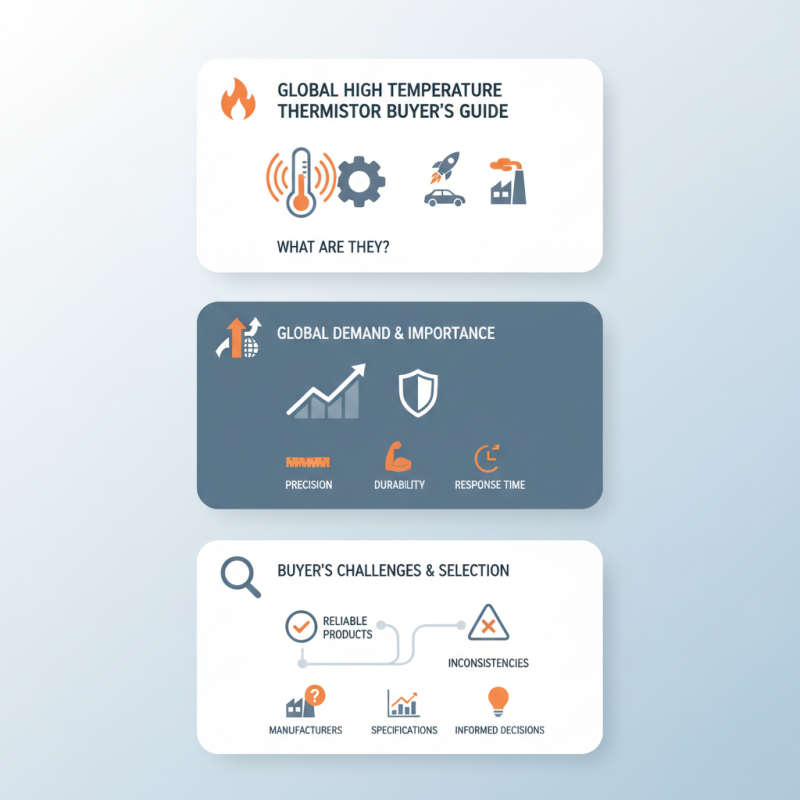
High Temperature Thermistors are essential in various applications, particularly in extreme environments. These components are designed to operate efficiently at elevated temperatures, ensuring accuracy and reliability. Many industries rely on them for temperature sensing and control, especially in automotive, aerospace, and industrial sectors.
In recent years, the demand for High Temperature Thermistors has surged globally. Buyers seek reliable products that can withstand harsh conditions. The right thermistor enhances performance in critical systems. Key factors such as precision, durability, and response time are vital when selecting these components.
Navigating the marketplace can be challenging. Buyers must consider various manufacturers and their specifications. Not all products are equal, and sometimes even minor inconsistencies can lead to significant issues. Understanding these aspects empowers buyers to make informed decisions in sourcing High Temperature Thermistors that meet their precise needs.
Overview of High Temperature Thermistors and Their Applications
High temperature thermistors are essential components in various industries. They measure temperature with high precision, even in extreme conditions. Common applications include automotive systems, aerospace, and industrial machinery. Their ability to function in harsh environments makes them invaluable.
These thermistors work on the principle of resistance change with temperature. This allows them to provide accurate readings and fast response times. However, selecting the right thermistor can be challenging. Factors such as resistance tolerance, operating range, and thermal time constant matter significantly. Users must consider their specific requirements carefully.
Despite their advantages, high temperature thermistors can present issues. For instance, manufacturing variability might lead to inconsistencies in performance. Additionally, some environments might expose thermistors to factors like humidity, which can impact their reliability. This necessitates ongoing evaluation and adjustment in real-world applications. It is crucial for engineers to continually refine their selection processes.
Key Features and Specifications of Top-Tier Thermistors
When selecting high-temperature thermistors, understanding their key features and specifications is essential. Thermistors are temperature-sensitive resistors. They change resistance with temperature variations. This makes them vital in various applications, especially in demanding environments.
One critical feature is the temperature range. The best thermistors can operate above 200°C. This high range ensures reliability in extreme conditions. Another important specification is the resistance value. A low resistance at a high temperature allows for precise measurements. Fast response times are also vital. Thermistors should react quickly to changes, ensuring real-time data accuracy.
It’s worth noting that not all thermistors perform equally. Some may lack stability at elevated temperatures. Others could degrade over time, affecting accuracy. Choosing the right thermistor requires careful consideration of these factors. Real-world testing often reveals discrepancies in claimed performance. Therefore, buyers should conduct thorough evaluations before making a decision.
Top High Temperature Thermistors Comparison
Market Trends for High Temperature Thermistors Worldwide
The demand for high temperature thermistors is rising globally. Industries like automotive, aerospace, and energy are key drivers. These thermistors are crucial for accurate temperature sensing in extreme conditions. They help in monitoring performance and ensuring safety.
Recent trends indicate a shift towards advanced materials. Manufacturers are exploring new compounds to enhance reliability. This shift aims to improve the sensors' thermal stability. Companies need to adapt. The market is moving fast.
Tips: When selecting thermistors, consider the operating range. Ensure they match your application needs. It’s essential to analyze the long-term effects, such as thermal cycling. Evaluate cost against performance. Quality should never be compromised.
With increasing temperatures in various settings, the demand is evolving. Buyers must stay informed about new technologies. Investing in research can yield better options. Look for reviews and studies that shed light on recent developments. Seek out industry publications.
Leading Manufacturers and Suppliers in the Thermistor Industry
In the thermistor industry, high temperature thermistors are vital. They play an essential role in various applications, including automotive, aerospace, and industrial machinery. Understanding the market requires knowledge of key manufacturers and suppliers. Their expertise ensures high performance and reliability in extreme conditions.
Many leading manufacturers focus on innovation and quality control. They utilize advanced materials and technologies to enhance thermistor accuracy. This commitment helps to meet the specific demands of different industries. However, buyers must research thoroughly. Not all suppliers provide the same level of quality or customer service. Evaluating their technical support and response time can significantly impact long-term success.
The manufacturing process also comes with its challenges. Some suppliers may struggle with consistency in product quality. Divergent practices can lead to variations in performance. Buyers should be cautious and consider multiple suppliers to mitigate risks. This approach fosters healthy competition, encouraging manufacturers to improve their offerings continuously.
Considerations for Selecting the Right Thermistor for Your Needs
When selecting the right thermistor, understanding specifications is crucial. High temperature thermistors must operate reliably in extreme conditions, often exceeding 150°C. Industry reports indicate that thermistors can tolerate varying resistance levels, influencing their application versatility. Recognizing how resistance changes with temperature is essential for precision in measurement.
Buyers should assess their specific requirements carefully. For instance, the thermal response time can significantly affect application outcomes. A thermistor with a quick response may be necessary in rapid temperature fluctuations, while slower variants might suffice in stable environments. According to recent data, thermistors with a Beta value greater than 3000 are widely used in sensitive applications, highlighting their reliability in critical conditions.
Moreover, environmental factors cannot be overlooked. Thermistors must withstand humidity, exposure to chemicals, and mechanical stress. Durability enhances performance and lifespan. Feedback from various industrial sectors points to the importance of choosing thermistors that meet rigorous safety standards. Integrating these considerations ensures better decision-making for those in need of high temperature solutions.