
A high speed pick and place robot moves products between defined points with remarkable repeatability. It may lift a blister pack from a moving conveyor, rotate it, and place it into a carton before the next item arrives. The motion looks simple. The engineering is not. Cycle time depends on payload, reach, gripper design, product spacing, and how well the robot integrates with cameras and conveyors. A faster arm alone does not guarantee a faster production line.
Robotics researcher Henrik Christensen has described robotics as linking perception, reasoning, and action. In paraphrase: “A robot must sense, decide, and move as one system.” That principle helps explain why choosing a high speed pick and place robot involves more than comparing advertised picks per minute. Engineers must test real products, including slippery packaging, irregular shapes, and occasional misalignment. Small variations matter. A line may run smoothly in a demonstration, then slow down when trays arrive unevenly. That is worth questioning, not glossing over. This guide explains how these robots work, where they fit, and which specifications deserve close attention. It also considers practical trade-offs, so readers can assess speed alongside accuracy, reliability, and maintenance needs.
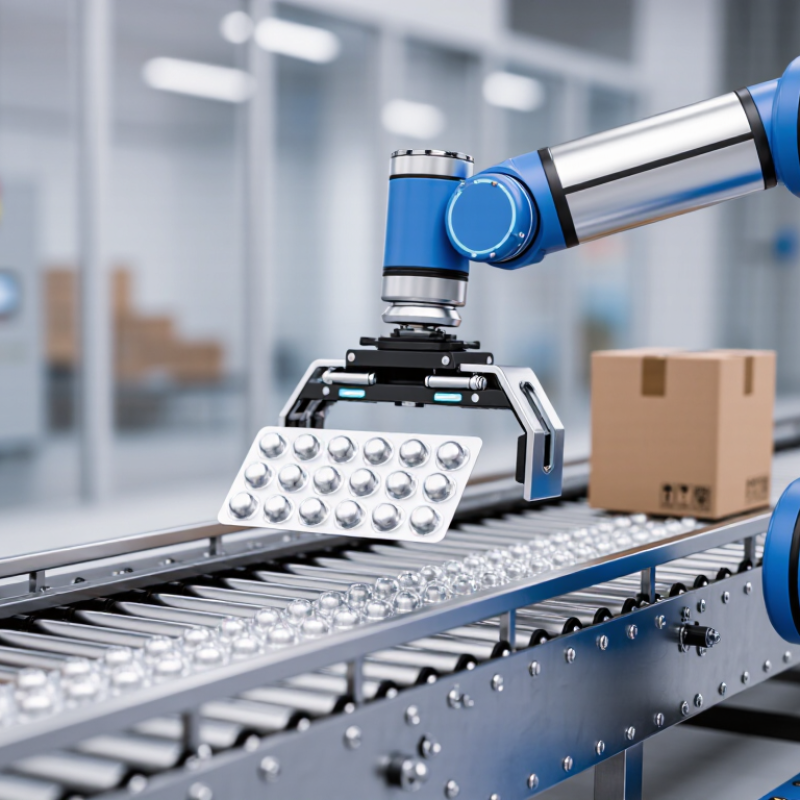
A high-speed pick-and-place robot is an automated machine that transfers items from one location to another quickly and repeatedly. Its purpose is to handle routine movements with consistent timing, especially when production lines require many small, precise transfers. A typical system combines a robotic arm, a gripping tool, motion controls, and sensors. Some setups also use cameras to locate items whose positions vary slightly on a moving belt.
The robot may sort packaged goods, place components into trays, or move products between conveyor sections. Speed is useful, but it is not the only measure of performance. The item’s weight, shape, fragility, and required placement accuracy all affect how fast the robot can work reliably. Timing matters. A gripper that closes too early can miss a part; one that closes too firmly can damage it. Real production floors are not always perfectly organized, either. Dust, changing product layouts, and worn tooling may require adjustments and regular checks. The best system is therefore designed around the actual task, not just an impressive cycle-time number.

A high-speed pick-and-place robot is a coordinated system, not just a fast arm. Its vision system locates parts and checks their orientation before pickup. A camera may capture several items on a moving belt, while controlled lighting reduces glare from shiny surfaces. Small changes in lighting can still confuse detection, so the setup needs testing with real production parts. Details matter.
The feeder presents parts in a predictable position and pace. A conveyor or vibrating track can supply components, while sensors report gaps, jams, or misplaced items. The robot arm then follows a programmed path between the pickup point and destination. Its motion controller coordinates acceleration, position, and timing. Fast movement helps, but abrupt motion can cause vibration or dropped parts.
At the end of the arm, a gripper or vacuum tool makes contact with each item. The right choice depends on its shape, weight, surface, and fragility. A suction cup may handle a flat package well, but struggle with a porous or uneven part. The tool’s weight also affects how quickly the robot can move. In practice, teams often trade a little speed for steadier placement; the best balance is not always obvious. Calibration and routine checks help keep the camera, robot, and tool working together.
What Is a High Speed Pick and Place Robot?
How the Robot Performs a Pick-and-Place Cycle
A high-speed pick-and-place robot moves an item from one defined location to another, repeatedly and with controlled timing. Its cycle starts by locating the part, using a camera, sensor, or fixed position reference. The robot approaches, closes its gripper or activates a vacuum cup, then checks whether the part was secured. It lifts clear, follows a planned path, and places the item into a tray, package, or moving process. The tool releases the part, and the arm returns for the next cycle. Small delays matter. An encoder can help the robot track a moving conveyor rather than reaching for where the item used to be.
Cycle speed depends on more than arm movement. Grip reliability, part spacing, path length, and settling time all affect output. The International Federation of Robotics reported 541,302 industrial robot installations worldwide in 2023 in its World Robotics 2024 report. That figure reflects broad industrial adoption, not a guaranteed pick rate. Real lines are messier. A tilted part or weak vacuum seal can trigger a retry, costing more time than a slightly slower, steadier motion. Engineers often test the complete cycle under real load, including pickup, placement, and recovery, before setting a production target. A clean demonstration can hide these small interruptions.
| Cycle Stage | What the Robot Does | Inputs and Equipment | Key Considerations |
|---|---|---|---|
| 1. Detect the part | The system identifies a part’s presence and, when required, estimates its position and orientation. | A sensor, camera, feeder, or known part location supplies part information to the controller. | Reliable detection depends on lighting, part presentation, sensor setup, and the application. |
| 2. Plan the motion | The controller selects a programmed path from the pickup point to the placement point, subject to the robot’s motion limits. | Robot coordinates, programmed positions, motion settings, and any detected part location. | Path length, acceleration, payload, and required settling time all affect cycle performance. |
| 3. Move to pickup | The robot moves its end effector to the pickup position and aligns it with the part. | Robot axes and a suitable end effector, such as a vacuum gripper or mechanical gripper. | Clearance, approach direction, and accurate positioning help prevent collisions or missed picks. |
| 4. Grip the part | The end effector engages the part; the control system may check that the grip has been established. | Gripper actuation, vacuum or pressure supply where applicable, and grip-status sensing if fitted. | The gripping method must suit the part’s shape, surface, weight, and handling requirements. |
| 5. Transfer the part | The robot carries the secured part along the programmed path toward the destination. | Coordinated robot motion, end-effector control, and any required interlocks with nearby equipment. | Acceleration must be controlled so the part remains secure and the motion stays within safe limits. |
| 6. Place and release | The robot positions the part at the destination, releases it, and may verify placement if the system is equipped to do so. | Destination coordinates, gripper release command, and optional placement or presence sensing. | Placement accuracy depends on robot calibration, part tolerances, fixture design, and sensing. |
| 7. Return and repeat | The robot returns to a ready position or proceeds to the next pickup as the production sequence allows. | Cycle logic, equipment-ready signals, and the next part or target location. | A cycle is repeated only when safety conditions and required machine signals are satisfied. |
A high speed pick-and-place robot is designed to repeatedly move items between locations with short, controlled motions. Actual throughput and cycle time vary with the robot design, travel distance, payload, end effector, sensing, part presentation, and required accuracy; there is no single cycle time that applies to every application.
A high-speed pick-and-place robot is only as fast as its complete motion cycle. A headline pick rate may exclude pauses for imaging, gripping, settling, and release. Payload matters: a lightweight cap can move sharply, while a heavier part needs gentler acceleration to prevent slipping. Short moves help, but repeated stops can still consume time.
Accuracy depends on more than the robot’s rated repeatability. Camera resolution, lighting, calibration, and image-processing delay all affect where a part is identified. A shiny surface or slight color variation can confuse vision systems. Stable lighting helps. So does a clean, consistent supply of parts. Conveyor tracking adds another challenge because the robot must estimate a moving target’s position before contact.
The end effector matters too. A poorly matched vacuum cup may shift a part during transfer, even when the robot’s path is precise. Gripper weight and cable drag can also change motion behavior. During setup, measure both cycle time and placement error across many cycles, not just a handful. In practice, teams sometimes tune for speed too early. That can hide small, recurring misplacements until production runs longer. A slower, repeatable motion profile may deliver more usable output.
A high-speed pick and place robot transfers items between defined positions with short, repeatable movements. Common applications include placing biscuits into trays, sorting small molded parts, and loading electronic components onto fixtures. In packaging lines, it may handle products moving along a conveyor rather than waiting for each item to stop. Small parts move fast. Their orientation still matters.
Reliable output depends on more than the robot’s rated speed. Product spacing, conveyor motion, and incoming part position all affect the real cycle time. A vision system can locate items that shift slightly, while a suitable gripper must hold them without marking or dropping them. Soft pouches, for example, may need a different contact surface from rigid caps. This detail is easy to underestimate.
Integration planning should cover reach, payload, tool weight, cable routing, and access for maintenance. Engineers should test the complete motion path with realistic products, not just an empty arm. Tight layouts can force awkward approaches, and a faster setting may increase vibration or reduce placement accuracy. Guarding and operator access also need attention during cell design. One practical lesson: a smooth, well-fed line can outperform a faster robot starved of parts. The first production test may reveal gaps that the model never showed.
Precision Cable Assemblies
16830 Pheasant Drive
Brookfield, WI 53005
Phone: 262-784-7887
Fax: 262-784-0681