
Choosing the right Oilfield Mud Pump is a field decision, not merely a catalog comparison. The pump must match the rig, hole depth, drilling fluid, pressure demand, and expected operating hours. A powerful pump can still perform poorly when the liner size, stroke rate, or suction system is unsuitable.
Drilling-fluids researcher Mohammad Amanullah has stated, “Pump performance must be judged through the whole hydraulic system, not in isolation.” That principle deserves attention. Flow rate affects cuttings removal. Pressure affects bit hydraulics and formation control. Maintenance access affects uptime. Even the pump’s weight and footprint can complicate rig-floor handling.
Look beyond horsepower.
A practical selection begins with required flow and maximum working pressure. Then, engineers should check volumetric efficiency, liner options, piston life, pulsation control, fluid compatibility, and spare-parts availability. Mud temperature, abrasive solids, and long circulation periods also matter. These details often decide whether a pump remains dependable after hundreds of operating hours.
There is no perfect choice. A triplex pump may offer smoother operation and broad application flexibility, while a duplex design may suit specific field conditions and budgets. That comparison is not always simple. Manufacturer claims can also appear impressive without complete test conditions.
This guide examines the important selection criteria, including performance calculations, lifecycle cost, service support, and safety considerations. It also recognizes an uncomfortable reality: the cheapest Oilfield Mud Pump may become the most expensive equipment on the rig when downtime begins. The final decision should combine engineering data, operator experience, and verified service records.
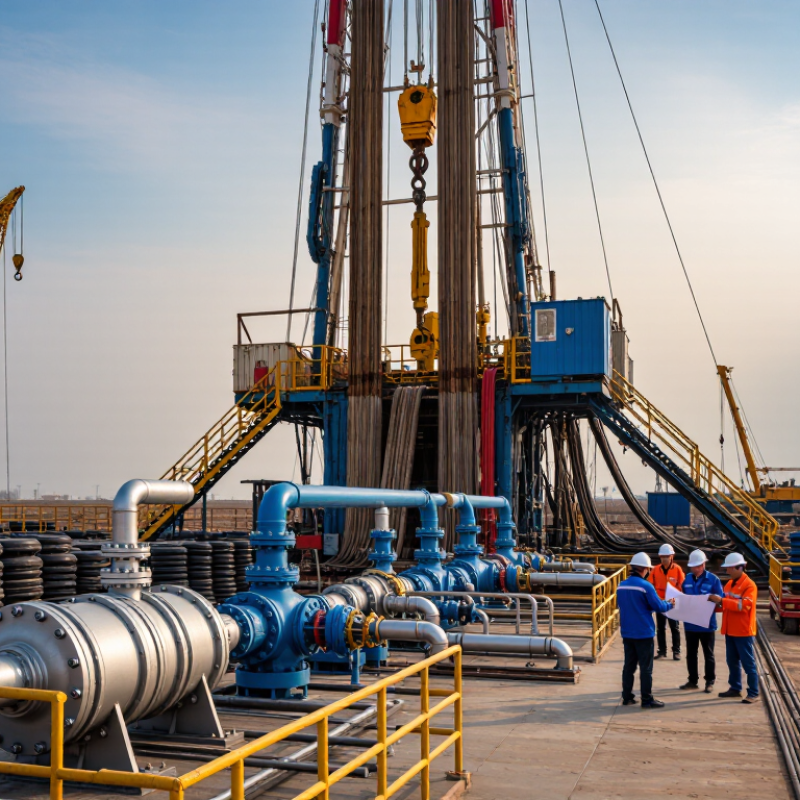
A mud pump is not merely a pressure-producing machine. It drives drilling fluid from the tanks through the standpipe, hose, swivel, and drill string. This circulation carries rock cuttings back to the surface. It also cools the bit, supports borehole stability, and helps control formation pressure. Pressure matters.
The pump’s real value depends on steady flow under changing downhole conditions. Flow rate affects hole cleaning, while pressure supports hydraulic performance at the bit. A suitable pump must match the well depth, hole size, drilling fluid density, and expected operating pressure. Engineers should also examine liner size, valve design, pulsation control, and available power. These details can determine whether circulation remains stable during long drilling intervals.
Field inspections often reveal a practical problem: a pump may meet its rated output but perform poorly in daily service. Worn valves, leaking fluid ends, and irregular maintenance can reduce effective flow. I have seen teams focus heavily on maximum pressure and overlook service access. That choice can increase downtime later. A better assessment studies the pump’s role across the entire circulation system. Review pressure records, maintenance logs, and actual flow demands before selecting equipment. Calculations help, but operating experience should challenge them when field conditions differ.

Choosing the right oilfield mud pump starts with the well plan, not a catalog rating. Depth increases hydrostatic pressure, friction losses, and the energy needed to circulate drilling fluid. Estimate flow rate from hole size, annular velocity, mud density, and expected cuttings load. Do not size by depth alone.
For deeper sections, compare the required discharge pressure with the pump’s continuous working pressure. Include pressure losses through the drillstring, bit nozzles, surface lines, and solids-control equipment. Then calculate hydraulic horsepower using actual flow and pressure, while allowing a practical operating margin. A large pump may appear safer, but excessive capacity can increase wear, vibration, and mud consumption. Too little capacity is worse. It can reduce hole cleaning and force slower drilling.
Pump selection should also match stroke length, liner size, fluid abrasiveness, and maintenance access. High-density or highly viscous mud may require lower speed and stronger fluid-end components. Review pressure charts at the planned operating speed, not only the maximum advertised rating. Often missed in practice. Leave room for surges, temperature changes, and a gradual loss of volumetric efficiency. Yet the margin should be justified; oversizing every pump wastes capital and may hide weak calculations. Expect some uncertainty. Recheck the model after pilot drilling.
| Well Depth Range | Typical Drilling Application | Recommended Pump Configuration | Typical Flow Rate | Recommended Working Pressure | Key Selection Considerations |
|---|---|---|---|---|---|
| Up to 1,500 m (4,920 ft) | Shallow exploration, water wells, geotechnical drilling, and low-pressure surface-hole sections. | Single or duplex reciprocating mud pump; compact skid-mounted configuration is often adequate. | 300–800 L/min (79–211 gal/min) | 10–20 MPa (1,450–2,900 psi) | Prioritize portability, simple maintenance, and sufficient flow for hole cleaning without excessive hydraulic power. |
| 1,500–3,000 m (4,920–9,840 ft) | Intermediate-depth oil and gas wells, directional drilling, and larger-diameter hole sections. | Duplex or triplex pump with adjustable stroke rate and replaceable fluid-end components. | 600–1,200 L/min (158–317 gal/min) | 20–35 MPa (2,900–5,075 psi) | Balance flow and pressure requirements while allowing enough operating margin for mud density, viscosity, and circulating-system losses. |
| 3,000–4,500 m (9,840–14,760 ft) | Deep vertical or directional wells with higher annular friction and more demanding cuttings transport. | Triplex pump system, commonly operated with variable-frequency or hydraulic speed control. | 900–1,800 L/min (238–476 gal/min) | 30–45 MPa (4,350–6,525 psi) | Check liner size, piston loading, pulsation control, and the pump’s ability to maintain stable pressure at the planned drilling rate. |
| 4,500–6,000 m (14,760–19,685 ft) | Deep directional, extended-reach, and high-angle wells requiring substantial hydraulic horsepower. | Heavy-duty triplex pump, often installed in a two-pump arrangement for operational flexibility and redundancy. | 1,200–2,400 L/min (317–634 gal/min) | 35–50 MPa (5,075–7,250 psi) | Evaluate continuous-duty rating, cooling, gearbox load, pulsation dampener performance, and the effect of solids content on wear. |
| More than 6,000 m (19,685 ft) | Ultra-deep, high-pressure, extended-reach, or complex well sections with demanding equivalent circulating density limits. | High-horsepower triplex or quintuplex pump system with multiple pumps and automated control. | 1,800–3,500 L/min (476–925 gal/min) | 45–70 MPa (6,525–10,150 psi) | Use a detailed hydraulic model to verify pressure margin, maximum allowable surface pressure, surge and swab effects, and total system reliability. |
| Selection note: Final pump sizing should be confirmed using well depth, hole and casing dimensions, drilling fluid density and rheology, nozzle requirements, annular velocity, expected pressure losses, solids concentration, and the required safety margin. Flow and pressure values shown are typical planning ranges rather than universal operating limits. | |||||
Triplex pumps use three single-acting pistons, while duplex pumps use two double-acting pistons. This difference affects flow smoothness, maintenance, and installation space. A triplex design usually delivers lower pulsation and a more compact frame. That can improve pressure control during demanding drilling operations.
Duplex pumps remain useful where rugged construction and straightforward servicing matter most. Their larger fluid ends may provide easier access for piston and liner replacement. However, the flow can feel less even. A discharge gauge needle may move more noticeably, especially at lower speeds. A properly sized pulsation dampener can reduce this effect, but it cannot fix poor system design.
Triplex units often suit high-pressure work with frequent rate changes. Their three-cylinder layout reduces load variation across the crankshaft. Crews may also find vibration easier to manage. Yet, more moving parts do not automatically mean lower operating costs. Small leaks around a liner or valve can grow quickly when abrasive mud keeps circulating.
Check the mud density, solids content, required flow rate, and operating pressure before choosing. Inspect the suction line design as carefully as the pump itself. A triplex pump can perform poorly with restricted suction. A duplex pump can outperform it in a simpler, well-maintained system.
There is no perfect answer. Maintenance records should influence the decision. The best design on paper may fail when replacement parts, trained technicians, or cleaning time are limited.
How to Choose the Right Oilfield Mud Pump?
Choosing the right oilfield mud pump starts with pressure and flow demands. Review drilling depth, formation pressure, mud density, and circulation losses. The pump should exceed the required working pressure by a practical margin. Excessive capacity may increase wear and operating costs. On a rig, a pressure gauge that rises sharply can indicate restrictions, thickened mud, or an undersized line.
Flow rate affects hole cleaning and solids transport. Match pump output with annular velocity, bit requirements, and measured mud properties. Laboratory data helps, but field temperature can change viscosity and actual performance. Check whether the pump maintains stable flow across different stroke rates. Pulsation matters. Strong surging can disturb readings and reduce drilling control. Request test data under comparable pressure, not only a maximum flow figure.
Power selection should account for mechanical losses, changing loads, and available engine capacity. Calculate hydraulic horsepower from pressure and flow. Then confirm that the drive system can sustain the load continuously. Efficiency includes more than a catalog percentage. Examine seal life, lubrication access, maintenance intervals, and energy use per operating hour. I would request service records and a witnessed performance test. A clean calculation can still miss real mud behavior. That uncertainty deserves careful review.
A reliable mud pump protects drilling continuity when pressure rises and operating hours accumulate. Field experience shows that reliability depends on more than rated pressure. Check fluid-end design, frame strength, sealing quality, and vibration control. Ask for documented test results, service records, and expected component life. A pump should maintain stable discharge pressure during long cycles. Small pressure fluctuations can signal wear before failure becomes obvious. Do not ignore noise.
Maintenance needs directly affect crew time and downtime. Review access to valves, liners, pistons, and lubrication points. Can technicians replace common wear parts without removing major assemblies? Clear inspection procedures matter. Check whether spare parts are readily available near the operating site. A useful maintenance plan includes daily lubrication checks, scheduled fluid-end inspections, and vibration monitoring. I once focused too heavily on purchase price. That decision overlooked labor costs and delayed repairs.
Tips: Compare total operating cost over several years. Include purchase price, energy use, routine parts, labor, transport, and unplanned downtime. Request realistic consumption data under your expected pressure and flow range. Calculate the cost of one lost operating hour. It may expose a weak choice quickly. Also, speak with maintenance teams who have used similar pump configurations. Their practical feedback can reveal inconvenient access points and recurring faults that brochures rarely mention. Never assume the cheapest pump remains economical.
Precision Cable Assemblies
16830 Pheasant Drive
Brookfield, WI 53005
Phone: 262-784-7887
Fax: 262-784-0681