
Choosing a Band Sealer is not just a matter of comparing prices or motor speeds. The right machine should suit your packaging material, daily output, product, and available workspace. A tabletop model may work well for short runs of dry goods, while a continuous band sealer can help keep pace with a busy production line. The difference becomes clear when operators seal hundreds of bags and repeat the same adjustments throughout a shift.
Start with the details of your actual packaging process. Check bag width, film thickness, and whether the material needs a particular temperature or sealing pressure. A pouch that looks simple may wrinkle if it enters the sealer unevenly. A narrow workbench can also limit how easily staff feed larger bags. Small details matter. Ask suppliers about speed control, temperature adjustment, maintenance access, and replacement parts. If possible, test the machine using your own bags and products, rather than relying only on a demonstration sample.
There is no universal best choice. A fast machine may be a poor fit if your team changes package sizes often, and a lower-cost unit may need more hands-on attention than expected. Weigh purchase price against training, upkeep, and the cost of rejected packages. Some estimates will be wrong; production conditions are rarely as tidy as a showroom. This guide explains the key factors to compare, so you can choose a Band Sealer based on the work it must do—not just the specifications on its label.
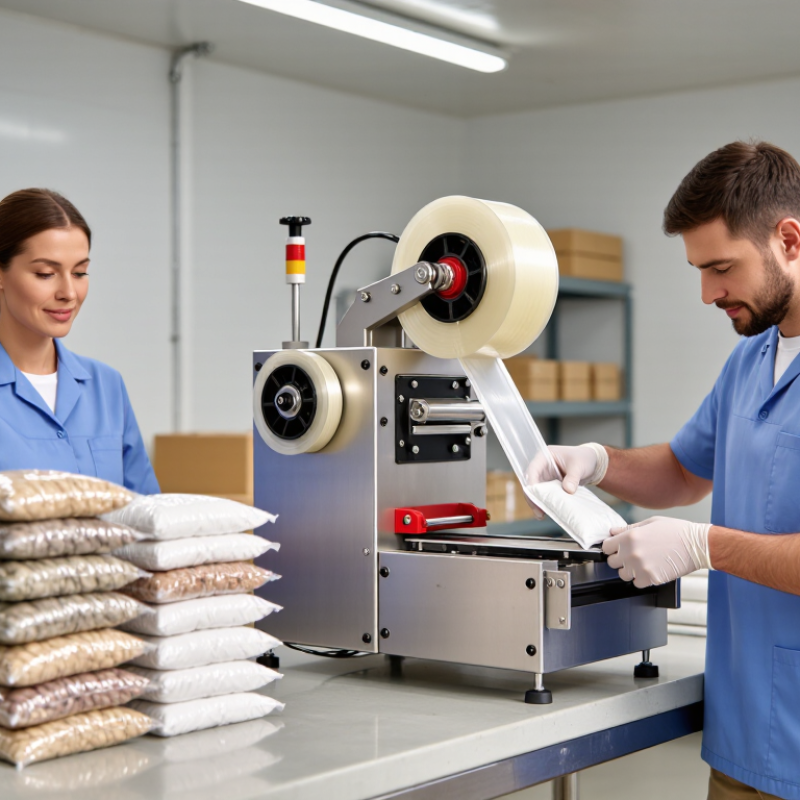
A band sealer closes bags with moving heated belts. An operator places the open mouth between the belts, and the machine draws it through continuously. Heat softens the compatible sealant layer; pressure brings the layers together. A cooling section may help the seal set before the bag exits. Simple in principle. Sensitive in practice.
Temperature, belt speed, and pressure must match the packaging material and its thickness. Too much heat can wrinkle film or weaken a seal; too little can leave channels. Product dust caught at the seal is another common problem. I would not treat a saved setting as sacred: a new film roll or faster line speed can change results.
PMMI’s 2023 State of the Industry report estimated U.S. packaging machinery shipments at about $10.9 billion in 2022, reflecting the scale of equipment investment across packaging operations.
For seal checks, ASTM F88/F88M describes a method for measuring seal strength, while ASTM F2029 covers laboratory heat-sealability testing. Test actual filled bags, not just clean film samples. That detail is easy to miss. A short trial at the intended speed can reveal uneven seals, scorching, or leaks before routine production.

Start with the complete bag structure, not its appearance. A matte pouch may contain polyethylene, foil, or several bonded layers, each responding differently to heat. The Flexible Packaging Association’s 2023 State of the U.S. Flexible Packaging Industry report valued the sector at about $42.9 billion in 2022. That variety matters: a sealer suited to one film can wrinkle or burn another. Check the supplier’s material specification, thickness, and recommended sealing range.
Then test bags from your actual production lot. Record temperature, belt speed, and pressure, changing one setting at a time. Small details matter. ASTM F2029 describes laboratory practices for assessing heat-sealability, while ASTM F88/F88M measures seal strength. These methods help compare samples, but they do not replace trials on your machine. Not always. A seal may look smooth yet peel under handling, especially at folds or gussets. Check seal continuity, width, and strength after the bag cools; repeat tests when film lots change. A short trial with filled bags can reveal leaks or weak corners that an empty pouch misses. It is easy to trust one good sample too much. Keep a record of settings and results, even when the first run seems fine.
Band sealers differ mainly in bag orientation, sealing method, and line speed. A horizontal model suits dry products that stay near the bottom of a pouch, such as grains or small hardware. A vertical setup helps keep liquids or powders away from the seal area. That distinction matters on a busy line. Some machines add cooling belts or date coding, while simpler units focus on steady heat and pressure. An impulse sealer is another option for low-volume work, but it seals one bag at a time rather than feeding bags continuously.
Check which controls operators can adjust: temperature, belt speed, conveyor height, and pressure. These settings should match the film, bag thickness, and product weight. Watch the seal. A neat-looking seam can still split after cooling, especially when powder dust or a fold gets trapped in it. Test several filled bags at normal production speed, not just an empty sample. Record the settings that produce consistent seams, then repeat the test after a shift change. I would not assume the fastest setting is best; a slower belt may reduce rework, though it can also create a bottleneck. Consider cleaning access, replacement parts, and operator training too. Small details, like a conveyor that holds a pouch level, can prevent awkward handling during long runs.
How to Choose the Right Band Sealer for Your Business?
Match Production Capacity to Your Workflow
A band sealer should fit your real packing pace, not an idealized production target. Track how many bags your team seals during a normal shift, including breaks, product changes, and brief stoppages. Check the bag width and material too; a fast machine is no help if packages need repeated adjustments. Numbers can mislead.
Compare your measured output with the sealer’s rated speed, but leave room for variation. Actual throughput can drop when operators feed bags by hand or products require careful positioning. If demand rises sharply during certain hours, consider whether the machine can handle those peaks without creating a queue. Also account for time spent cleaning and changing settings.
Watch the workflow on the floor. Is there enough space for an operator to feed bags steadily and move sealed packages onward? For mixed-size orders, a simple speed adjustment may matter more than the highest advertised rate. A short production trial can reveal jams, uneven seals, or awkward handling that a specification sheet misses. It may be tempting to buy extra capacity “just in case,” but unused speed still takes up space and budget. A small mismatch can become a daily nuisance.
| Production Workflow | Typical Sealing Setup | Indicative Conveyor Speed | Approximate Output | Best Fit | Key Checks Before Buying |
|---|---|---|---|---|---|
| Low-volume or intermittent packing | Compact tabletop continuous band sealer | About 0–12 m/min, adjustable | Roughly 5–15 bags/min, depending on bag size and handling | Small production runs, online shops, and workstations with frequent product changes | Available bench space, operator loading time, seal width, and compatibility with the packaging film |
| Steady manual packing | Floor-standing horizontal band sealer | About 0–12 m/min, adjustable | Roughly 10–30 bags/min with consistent manual feeding | Small to medium operations where an operator places and removes each pouch | Bag opening orientation, conveyor height, pouch weight, and whether date coding is required |
| Powders, liquids, or products that settle | Vertical band sealer with adjustable support conveyor | About 0–12 m/min, adjustable | Roughly 8–25 bags/min, depending on pouch size and product handling | Packages that should remain upright while traveling through the sealing area | Product fill level, pouch stability, conveyor support, and clearance for tall packages |
| Higher-volume, repeatable production | Industrial continuous band sealer integrated with a packaging line | Often around 0–16 m/min; line speed may be lower | Roughly 20–50+ bags/min when pouch spacing and automatic feeding support the rate | Long production runs with predictable bag sizes and coordinated upstream equipment | Actual line takt time, infeed spacing, coding and inspection equipment, and required uptime |
| Mixed products and frequent changeovers | Adjustable-speed band sealer with accessible temperature controls | Variable; set for each material and pouch format | Depends on changeover frequency and the slowest product configuration | Businesses sealing different pouch materials or sizes throughout the day | Recipe repeatability, adjustment range, warm-up time, cleaning access, and changeover procedure |
Planning note: Output figures are indicative ranges, not guaranteed machine ratings. Actual throughput depends on pouch length, operator or feeder speed, product handling, seal dwell time, film construction, and line layout. Confirm the required rate with representative samples of your packaging material and filled pouches.
How to Choose the Right Band Sealer for Your Business?
The purchase price is only part of a band sealer’s cost. Include expected energy use, routine cleaning, replacement belts, and the labor needed for setup. A low-cost unit may need frequent adjustments, while a more expensive model may not suit your actual production volume. Ask suppliers for maintenance schedules and the price and availability of common wear parts. Small details matter.
Maintenance needs should fit your team’s skills and schedule. Check whether operators can reach the heating elements and conveyor area without awkward tools. Ask how often temperature settings need checking, and whether routine cleaning requires a full shutdown. A machine that is easy to clean may reduce downtime, but only if its design matches your bags and work area. It is tempting to focus on speed. That can be a mistake.
Seal quality deserves a hands-on test. Run your own packaging film through the machine at realistic speeds, then inspect seals for wrinkles, gaps, or weak corners. Test after the sealer has warmed up, and again when settings change. If possible, fill sample bags and handle them as your team normally would. A neat-looking seal is not always a strong one. Results can vary with film thickness, bag alignment, and operator technique, so one successful sample proves little. Keep a record of test settings; it may save time later.
Compare upfront cost, routine maintenance, and expected seal consistency. Higher chart scores indicate a more favorable result.
Illustrative planning estimates, not universal market averages: impulse sealer ($250; 3 maintenance hours/year; seal consistency 3.2/5), continuous band sealer ($1,800; 8 hours/year; 4.2/5), and vacuum band sealer ($6,000; 12 hours/year; 4.6/5). Actual prices and maintenance needs vary by machine capacity, options, usage, and service conditions. Seal consistency ratings are comparative estimates, not a standardized test result.
Precision Cable Assemblies
16830 Pheasant Drive
Brookfield, WI 53005
Phone: 262-784-7887
Fax: 262-784-0681