10 Tips for Choosing the Best Milling Machinery?
Selecting the right Milling Machinery can shape production quality, operating costs, and workplace efficiency. The choice is rarely about buying the largest or fastest machine. It depends on material, tolerance, batch size, floor space, and operator experience.
In a busy workshop, a machine may cut aluminum smoothly but struggle with hardened steel. A compact mill may fit the budget, yet limit future production. Small details matter. Spindle speed, table travel, tool compatibility, coolant access, and control software all deserve close attention. Even noise and chip management can affect daily performance.
These ten practical tips focus on decisions that experienced buyers often examine before installation. They consider cutting accuracy, maintenance access, energy use, training needs, and the manufacturer’s technical support. Reliable documentation and available replacement parts can prevent costly downtime. That assumption can fail. A low purchase price does not always mean lower ownership costs.
Good selection also requires honest reflection. Production forecasts may change, and operators may need more training than expected. Visiting a working facility, testing sample materials, and reviewing service records can reveal problems that brochures hide. Independent specifications matter too. A confident sales claim should still be checked against measurable performance.
The goal is not to promote one machine type. It is to build a clear evaluation process. With careful comparison, Milling Machinery can support consistent output, safer workflows, and more predictable growth. Some compromises will remain. Recognizing them early is part of making a dependable decision.
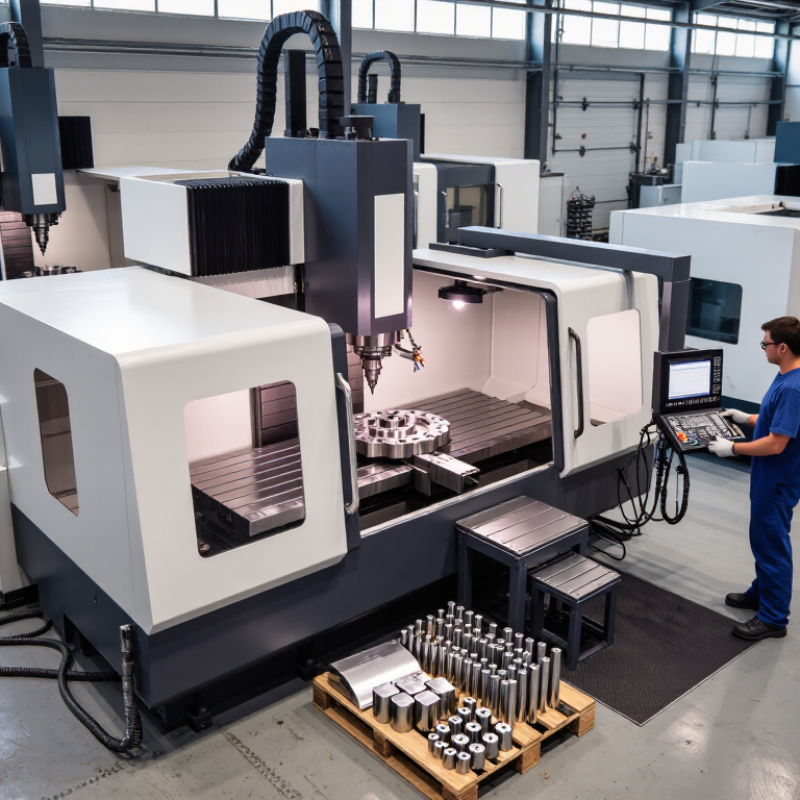
Define Your Milling Goals and Production Requirements
10 Tips for Choosing the Best Milling Machinery
Define your milling goals before comparing machines. Identify the materials, part dimensions, tolerances, surface-finish targets, and monthly production volume. A small aluminum bracket needs different capacity from a hardened steel mold. Record cycle time, setup time, and operator skill requirements. These details expose the real bottleneck.
A useful test piece should reflect your hardest routine job. Measure its cutting time, tool wear, vibration, and dimensional stability. Then compare machines using the same material and tooling. Pay attention to spindle power, torque at low speed, axis travel, coolant delivery, and chip evacuation. Automation may reduce handling time, but it can also add programming and maintenance demands. International Federation of Robotics reported 541,302 industrial robots installed worldwide in 2023, showing how strongly factories are investing in automation. Still, automation is not automatically productive for short runs.
Deloitte’s 2024 Smart Manufacturing and Operations Survey found that 86% of manufacturers view smart manufacturing as an important competitiveness driver over the next three years. That supports checking data connectivity, condition monitoring, and production reporting. However, software features should serve a defined production problem. A spreadsheet can still mislead. Include energy use, floor space, training time, spare parts, and service access in the ownership estimate. I would also challenge optimistic supplier cycle times. Real production includes tool changes, inspection pauses, rejected parts, and tired operators. A machine that looks slower on paper may perform better beside your actual workbench.
Compare Milling Machine Types for Your Material and Process
Choosing milling machinery starts with the workpiece, not the machine’s advertised power. In my workshop evaluations, aluminum cuts easily, but it can smear when tools, coolant, or spindle speed are poorly matched. Steel demands rigidity, stable clamping, and controlled heat. Plastics need sharp tools and gentle feeds to prevent melting. A vertical milling machine suits face milling, slots, pockets, and general repair work. Its open setup helps operators inspect edges closely. A horizontal machine removes material efficiently from long surfaces and deep slots. It also handles heavy cuts with better chip evacuation. Keep it practical.
A three-axis CNC machine is often enough for flat plates, brackets, and repeatable holes. Complex housings may need four- or five-axis movement. These machines reduce repositioning and protect accuracy around angled surfaces. However, extra axes increase programming demands, maintenance points, and training costs. Manual mills remain useful for prototypes, quick adjustments, and learning cutting behavior. They are less suitable for production runs requiring consistent dimensions. Match spindle speed, table size, travel, and load capacity to the actual job. Do not select by horsepower alone.
Before purchasing, test the machine with your material and intended cutter. Measure surface finish, burr formation, cycle time, and temperature. Ask how easily tools can be changed and chips removed. Check guarding, emergency controls, lubrication, and service documentation. I once prioritized maximum table travel and overlooked floor space. Installation became unnecessarily difficult. That mistake still influences my checklists. Test it honestly. A quieter spindle is pleasant, but repeatability matters more. Leave room for fixtures, maintenance access, and future work. Record those findings beside purchase cost and operator training time.
10 Tips for Choosing the Best Milling Machinery
Compare milling machine types with your material and process requirements. The chart uses a typical suitability score from 1 (limited suitability) to 5 (strong suitability), based on common machine configurations and applications.
How to read the chart: CNC machining centers provide broad capability across common materials and processes, while horizontal machines are particularly suitable for rigid, heavy steel cuts. Five-axis machines are the strongest option for complex 3D surfaces, and vertical knee mills remain practical for prototypes and general workshop work.
Check Machine Quality, Safety Features, Maintenance, and Support
10 Tips for Choosing the Best Milling Machinery?
Machine quality starts with evidence, not polished photographs. Request dimensional inspection records, spindle runout results, and a live cutting demonstration. Check castings for cracks, uneven finishing, and excessive vibration. ISO 12100 recommends risk assessment throughout machine design and operation. A reliable supplier should explain how the machine meets those principles. Ask difficult questions. Vague answers deserve caution.
Safety features must be practical, visible, and tested. Look for interlocked guards, emergency stops, chip protection, safe access points, and clear operating controls. The U.S. Occupational Safety and Health Administration identifies machine guarding as essential for preventing contact with moving parts. Operators should test every safeguard before purchase. A guard that slows production may be removed later. That risk is real. Training materials should include setup, tool changes, cleaning, and abnormal-stop procedures.
Maintenance planning often separates dependable equipment from expensive downtime. The U.S. Department of Energy reports that predictive maintenance can reduce maintenance costs by 25–30% and breakdowns by 70–75%. Ask whether the machine records temperature, vibration, alarms, and service history. Check lubricant access, filter replacement time, spare-part availability, and technician response commitments. Support should include practical training, remote diagnostics, and documented escalation times. I would also inspect a similar machine after heavy use. It may look less impressive, but wear reveals more than a showroom demonstration. No checklist is perfect. Review it with an experienced operator before signing.
Assess Total Cost, Efficiency, and Long-Term Value
Choosing milling machinery by purchase price alone is a costly mistake. The U.S. Department of Energy estimates that motor systems consume about 70% of industrial electricity. Therefore, spindle efficiency, drive performance, and idle power deserve careful measurement. Request energy data at realistic loads, not only at maximum capacity. A machine cutting aluminum for six hours daily may reveal its true cost through electricity, tooling, coolant, and operator time.
Calculate total cost over the planned service life. Include installation, foundations, training, software updates, maintenance, spare parts, and downtime. The National Institute of Standards and Technology emphasizes lifecycle thinking in manufacturing decision-making. Meanwhile, ISO 50001 guidance supports measuring energy performance through defined baselines and continuous monitoring. These methods turn vague efficiency claims into evidence. Ask for cycle-time trials using your actual material and tolerances. Small differences matter.
Long-term value also depends on reliability and flexibility. Check service response times, parts availability, calibration support, and upgrade paths. The International Energy Agency reports that industry remains one of the largest global energy-consuming sectors, making efficiency improvements commercially significant. Still, not every advanced feature pays back. I have seen buyers select automation they rarely use. That is an uncomfortable lesson. Compare five-year cost per finished part, then challenge every assumption. A cheaper machine can become expensive when accuracy drifts, maintenance waits, or production stops.