
Choosing the right Fence Machine begins with understanding the work it must perform. A machine suited to a small farm may struggle with continuous commercial production. Start by identifying the fence type, wire diameter, mesh size, and expected output. These details affect forming capacity, motor load, and setup time. They also help narrow down which models are worth comparing.
Look beyond the advertised speed. Ask how quickly operators can change settings, how easily common parts can be replaced, and whether the supplier provides clear operating guidance. If possible, inspect sample panels made with the machine. Check the welds, spacing, and finish under ordinary lighting. Small flaws are easier to spot before purchase.
A machine should fit your actual workflow, not an imagined future workload. Consider floor space, available power, operator experience, and the time required for routine maintenance. Request specific figures for production capacity and energy use, then confirm what those figures assume. A quoted maximum may not reflect steady daily output. That distinction matters.
No single specification tells the whole story. A lower purchase price can be appealing, yet downtime and difficult adjustments may cost more over time. Be honest about what you still do not know. Compare service support, warranty terms, and replacement-part availability before deciding. The best Fence Machine is the one that reliably produces the fence you need, at a pace your operation can sustain. Often, the practical choice is less impressive on paper—but better on the shop floor.
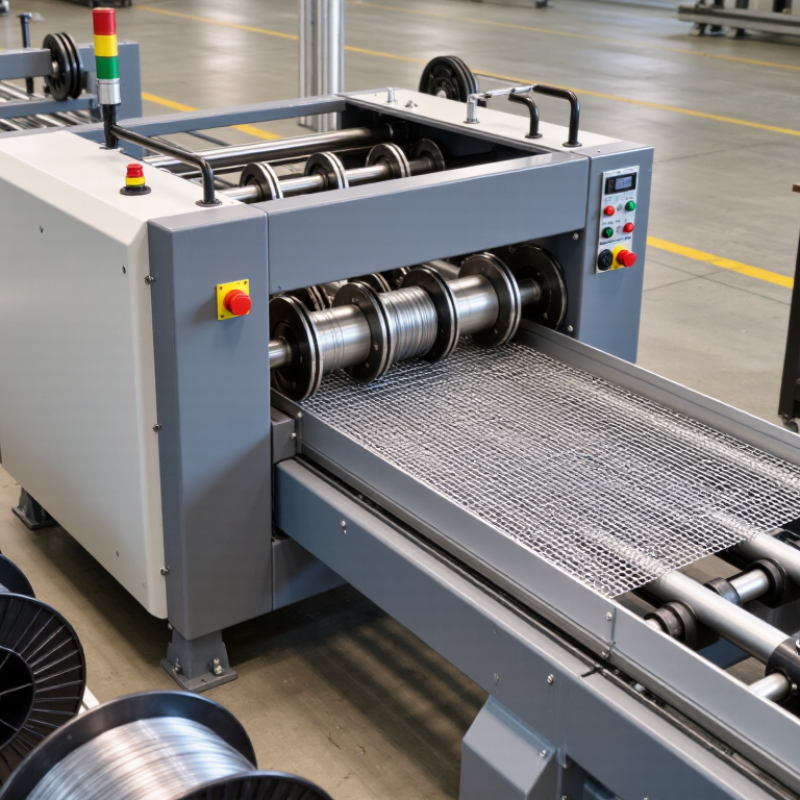
Identify the product before comparing machines. Welded mesh, chain-link fabric, and barbed or field fencing need different forming, welding, and tensioning processes. Record wire diameter, mesh opening, roll width, coating, and finished length. Measure first. A machine built for one specification may struggle with frequent product changes.
Demand also matters. MarketsandMarkets’ Fencing Market report estimated a global market of USD 32.3 billion in 2023 and projected USD 41.4 billion by 2028. That growth does not guarantee demand for every fence type, so use your own order history and sales forecasts. For steel-wire products, World Steel Association’s World Steel in Figures 2024 reports 1,888.2 million tonnes of crude steel production in 2023. This is broad material context, not a measure of fencing-wire supply.
Translate your requirements into a line specification: target output per shift, acceptable dimensional variation, changeover time, operator count, and available floor space. Ask suppliers to demonstrate your actual wire and target product, not a generic sample. Record scrap and stoppages during the trial. It is tempting to chase top speed. Yet a fast line with difficult changeovers can reduce usable output. That trade-off is easy to miss. Revisit the numbers after a pilot run; initial estimates are often imperfect.

Fence machines differ mainly in the fence styles they produce, the wire they handle, and how easily they change settings. A chain-link machine twists wire into continuous mesh, making it suitable for long, uniform runs. A welded-mesh machine joins crossing wires at regular intervals, producing rigid panels or rolls with consistent openings. For farms and uneven ground, a field-fence machine can form knots and varied spacing that help the mesh follow slopes. Each type has limits.
Match the machine to your actual product, not just its advertised output speed. Check compatible wire diameters, mesh widths, roll sizes, and adjustment requirements. Ask how long a changeover takes when switching fence specifications; frequent adjustments can reduce useful production time. Watch a sample run if possible. Listen for irregular tapping, inspect the finished mesh for loose joins, and note how much operator attention the process needs. Small details matter.
I would not choose by speed alone. That is an easy mistake. A fast line may be a poor fit if it cannot make your required opening size or handle your usual wire. Maintenance access matters, too: can an operator reach feed rollers and cutting parts without awkward disassembly? There is no perfect machine for every job, and the best comparison includes both today’s orders and the products you may realistically make next year.
Relative capability ratings on a 1–5 scale: higher scores indicate stronger typical capability. Welded mesh machines are suited to automated, standardized panel production; chain-link machines support varied mesh sizes; barbed-wire machines focus on a specialized product. Actual performance and flexibility depend on machine configuration and materials.
A fence machine should match the products you actually plan to make, not just the fastest model on a specification sheet. Check the wire diameter range, mesh opening, panel or roll width, and required output per shift. Confirm that the machine handles your common settings without frequent manual adjustment. Small details matter. A narrow working range can turn routine orders into slow changeovers.
Review motor power, feed accuracy, cutting tolerance, and the machine’s duty rating. Ask how output was measured; quoted speed may assume ideal wire and uninterrupted operation. I would not rely on a brochure figure alone. Automation features can improve consistency, but they should fit your workflow. A programmable controller can store settings, while sensors may detect wire-feed problems or missed cuts. Useful alarms are clear and specific. Too many screens, however, can make troubleshooting harder for operators.
Check how quickly one mesh size can be changed to another, and whether tension and wire straightening adjust together. Ask to see a live test using wire close to your actual material. Watch the cut edges, measure several openings, and note how often an operator intervenes. Listen for uneven feeding. Request maintenance intervals, spare-part lead times, and training details in writing. A machine with more automation may still need careful setup, and that is easy to underestimate.
Estimate operating costs against the fence you actually plan to make. Record expected meters per shift, wire use, labor hours, power consumption, and setup time. A machine’s advertised speed may assume steady production, while real jobs include adjustments and material changes. Count saleable output, not theoretical output. Small details matter.
Ask for routine maintenance intervals and the cost of common wear parts, such as cutters, rollers, and guides. Check whether operators can inspect and clean these parts safely without lengthy shutdowns. Keep a simple maintenance log during a trial run; it can reveal recurring stoppages that a quote will not show. A spreadsheet can still be wrong if it leaves out scrap or unplanned downtime, so leave room for uncertainty.
Measure the full working area, not just the machine footprint. Allow space for wire coils, loading, finished rolls, and access for repairs. Check floor strength, door width, and available electrical supply before delivery. Measure twice. It is easy to underestimate the room needed to move a heavy coil beside the machine. A floor plan marked with aisle widths and storage positions can expose that mistake early.
How to Choose the Best Fence Machine for Your Needs?
Assess Safety, Supplier Support, and Installation Requirements
A fence machine should fit the wire, mesh size, and daily output you actually need. Safety deserves equal attention. Look for fixed guards around moving parts, a clearly marked emergency stop, and an accessible way to clear jams. Check where wire coils sit and whether operators can load them without awkward lifting. Small details matter. Ask to see the machine run with material similar to yours, and listen for unusual vibration or noise.
Supplier support can shape long-term operating costs. Ask who provides installation guidance, operator training, and replacement parts. Get response times and service responsibilities in writing, rather than relying on a friendly sales conversation. Request a sample maintenance schedule. It should identify routine checks, such as inspecting fasteners and cleaning feed rollers. A machine may look simple in a showroom, but troubleshooting a jam without support is different.
Before ordering, measure the installation area, including room for coil handling and finished panels. Confirm the required power supply, floor strength, access routes, and space for maintenance. A tight layout can make ordinary servicing frustrating. It is tempting to choose the highest-capacity model, but unused speed does not help if setup is difficult. I would leave extra working clearance; it may feel excessive until a part needs replacing.
Precision Cable Assemblies
16830 Pheasant Drive
Brookfield, WI 53005
Phone: 262-784-7887
Fax: 262-784-0681