
Skin Remodeling has become a broad term for technologies designed to improve the appearance or texture of skin. In China, the market includes professional systems and home-use devices, with different designs, treatment settings, and intended users. Common technologies include radiofrequency, ultrasound, laser, microneedling, and LED light. Their mechanisms and evidence are not interchangeable.
This guide explores ten notable devices available in or associated with the Chinese market. It considers practical factors such as technology, manufacturer information, user experience, service support, and the quality of publicly available evidence. A list is not a clinical endorsement. Details matter. Product versions and specifications can vary, and advertising claims may not reflect the results every user experiences. That distinction deserves careful attention.
There is no single device that suits every skin type or concern. Results may depend on the treatment plan, operator training, device settings, and individual response. Some technologies require professional assessment; home-use products also need clear instructions and realistic expectations. Before choosing a device or treatment, readers should verify current product information and consult a qualified skin-care professional when appropriate. The market changes quickly, so this overview should be read as a practical starting point—not a final verdict on performance or suitability.
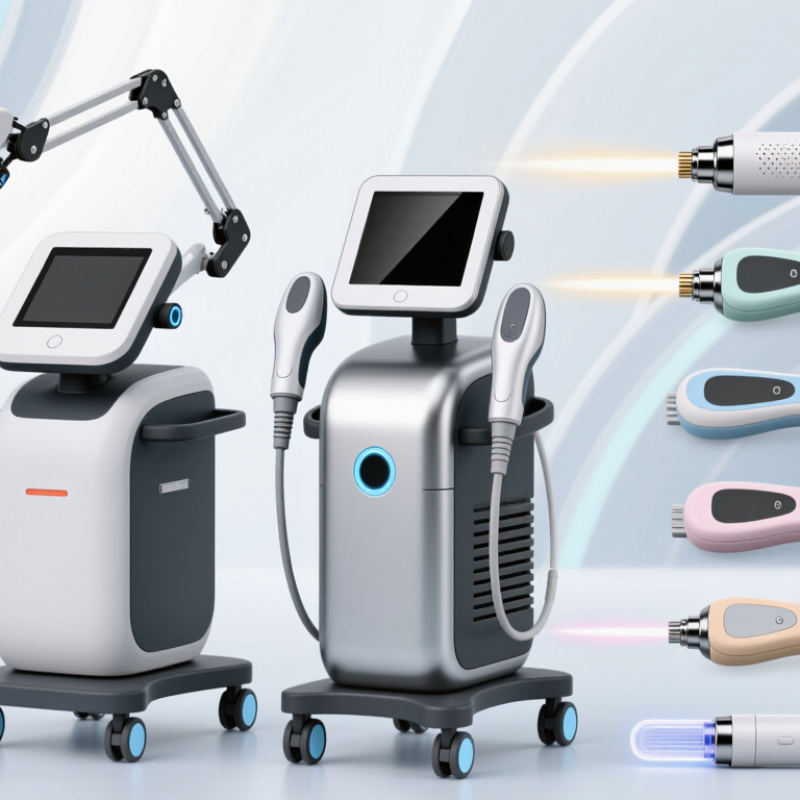
The China top 10 skin remodeling devices are often compared by energy type, but treatment depth matters just as much. A 1.5 mm setting generally targets superficial dermal tissue, where collagen-supporting structures sit close to the skin’s surface. At 3.0 mm, energy reaches deeper dermal layers. A 4.5 mm cartridge may reach deeper support tissue, depending on anatomy and device design. These numbers are not guarantees. Facial thickness varies across the cheeks, jawline, and neck, so a printed depth does not tell the whole story.
A 2023 ISAPS Global Survey estimated 19.1 million non-surgical aesthetic procedures worldwide, showing broad demand for treatments that avoid surgery. But popularity is not proof of equal results. In practice, clinicians assess tissue thickness, treatment goals, and patient history before selecting settings. Ultrasound imaging can help visualize tissue layers; published clinical studies of microfocused ultrasound also report measurable improvements in skin laxity, though outcomes vary. The neat 1.5, 3.0, and 4.5 mm map is useful, but imperfect. Energy delivery, coupling, and individual anatomy all matter. A careful consultation should explain expected benefits, discomfort, and limitations—not just the millimeter number.
Scope: The table compares 10 device technology categories used in aesthetic skin remodeling. It is not a market-share ranking, and it does not identify brands or manufacturers. Treatment availability and device specifications vary.
| No. | Device technology | Energy or mechanism | Typical treatment depth | Primary remodeling target | Important considerations |
|---|---|---|---|---|---|
| 1 | Microfocused ultrasound (MFU) | Focused ultrasound creates small thermal coagulation points at selected focal depths. | Some systems offer nominal focal depths of 1.5, 3.0, and 4.5 mm. | At 1.5 mm, treatment is generally directed toward the dermis; 3.0 mm may target deeper dermis or the dermal–subcutaneous junction; 4.5 mm may reach deeper fibromuscular support layers in suitable areas. | These are nominal focal depths, not guaranteed tissue boundaries. Anatomy, treatment area, applicator, and settings affect the actual target. |
| 2 | High-intensity focused ultrasound (HIFU) | Focused acoustic energy produces localized heating at selected depths. | Varies by transducer and intended treatment area; facial and body protocols may use different focal depths. | Selected dermal, subdermal, or deeper tissue layers, depending on the applicator and indication. | HIFU is a broad category. Its depth and effect should not be assumed to match the 1.5, 3.0, and 4.5 mm MFU cartridge convention. |
| 3 | Monopolar radiofrequency (RF) | Electrical resistance generates heat in tissue between the treatment electrode and a return electrode. | Heating can extend through the dermis and into deeper tissue; there is no single fixed focal depth. | Bulk dermal heating intended to support collagen remodeling and improve skin laxity or texture. | Heating depends on electrode design, contact, energy settings, tissue impedance, and cooling. It does not create a precise 1.5, 3.0, or 4.5 mm focal point. |
| 4 | Bipolar or multipolar RF | RF current passes between two or more electrodes in the treatment handpiece. | Generally concentrated between electrodes; effective depth varies with electrode spacing and configuration. | Dermal heating for gradual collagen remodeling and skin-texture improvement. | Depth is device- and setting-dependent. It should not be reported as a universal millimeter value. |
| 5 | RF microneedling | Insulated or non-insulated needles deliver RF energy at adjustable insertion depths. | Needle insertion depth is adjustable within the limits of the device and treatment area. | Controlled dermal heating and micro-injury to support collagen remodeling; some configurations also affect tissue near the dermal–subcutaneous junction. | Needle depth is not the same as the final thermal zone. Appropriate settings depend on anatomy, skin condition, and operator assessment. |
| 6 | Fractional ablative CO₂ laser | Fractionated ablative laser energy creates microscopic columns of tissue vaporization and surrounding thermal injury. | Depth varies with wavelength-specific settings, pulse parameters, and treatment technique. | Skin resurfacing and dermal wound-healing responses that can improve texture and selected scars or wrinkles. | Recovery time and risks, including pigment changes and scarring, depend on settings, skin type, aftercare, and clinical technique. |
| 7 | Fractional ablative Er:YAG laser | Water-absorbed laser energy removes tissue in fractional microcolumns, typically with less residual thermal spread than CO₂ at comparable ablative use. | Depth is determined by treatment settings and technique; it is not a fixed cartridge depth. | Resurfacing and controlled epidermal–dermal repair for texture and selected superficial scars or wrinkles. | Results and downtime vary with treatment intensity and individual skin characteristics. |
| 8 | Non-ablative fractional laser | Fractionated laser energy heats microscopic zones while leaving intervening skin intact. | Varies with wavelength, pulse settings, and treatment protocol; some systems target dermal water without ablating the surface. | Dermal repair and collagen remodeling for selected concerns such as texture, fine lines, and uneven tone. | Multiple treatments may be used. Wavelength and settings influence the target and the risk of post-inflammatory pigment changes. |
| 9 | Long-pulsed 1064 nm Nd:YAG laser | Near-infrared laser energy produces controlled heating in selected skin structures. | Penetration and heat distribution depend on pulse duration, spot size, fluence, and tissue properties. | May be used in selected protocols for vascular or hair-related indications and, in some settings, dermal heating. | It is not equivalent to a focused ultrasound device and does not target a standardized 1.5, 3.0, or 4.5 mm plane. |
| 10 | Red or near-infrared LED photobiomodulation | Low-intensity light is used to influence cellular signaling rather than create ablative injury or a focused thermal coagulation point. | Light penetration is wavelength- and tissue-dependent; there is no precise adjustable focal depth. | May support modest improvements in skin appearance or recovery as an adjunct, depending on the protocol. | Evidence and outcomes vary by indication, wavelength, dose, and treatment schedule; it should not be presented as a substitute for depth-targeted energy devices. |
Depth guide: The 1.5, 3.0, and 4.5 mm figures refer to nominal focal depths available in some focused-ultrasound systems. They are not universal anatomical layers: skin thickness and underlying structures differ by body site and individual. Device selection and treatment settings should be determined by a qualified clinician.