China’s Parchment Paper Roll market includes manufacturers serving bakeries, food processors, retailers, and private-label brands. Their products may look similar on a shelf. Performance can differ once a roll meets a hot tray, a greasy pastry, or repeated handling. Buyers should compare more than price. Roll width, sheet length, paper weight, coating consistency, packaging, and supply reliability all matter.
Quality expert W. Edwards Deming is widely associated with the principle, “Quality is everyone’s responsibility.” It is a useful reminder when assessing parchment paper suppliers: consistent results depend on the whole production process, not just a final inspection. That principle is not parchment-specific, so product claims still need direct verification. Request current specifications, representative samples, and clear answers about how batches are checked. Small details count. A curling edge or uneven surface can disrupt a busy packing line.
This guide introduces 10 China-based Parchment Paper Roll manufacturers and the factors buyers can use to compare them. It focuses on product range, manufacturing information, customization, and communication, rather than treating a polished catalog as proof of quality. Company details and capabilities can change; confirm them directly before making a purchasing decision. No list can replace testing a roll under real working conditions. That is an imperfect but important limit. A sample on your own tray may tell you more than a dozen broad promises.
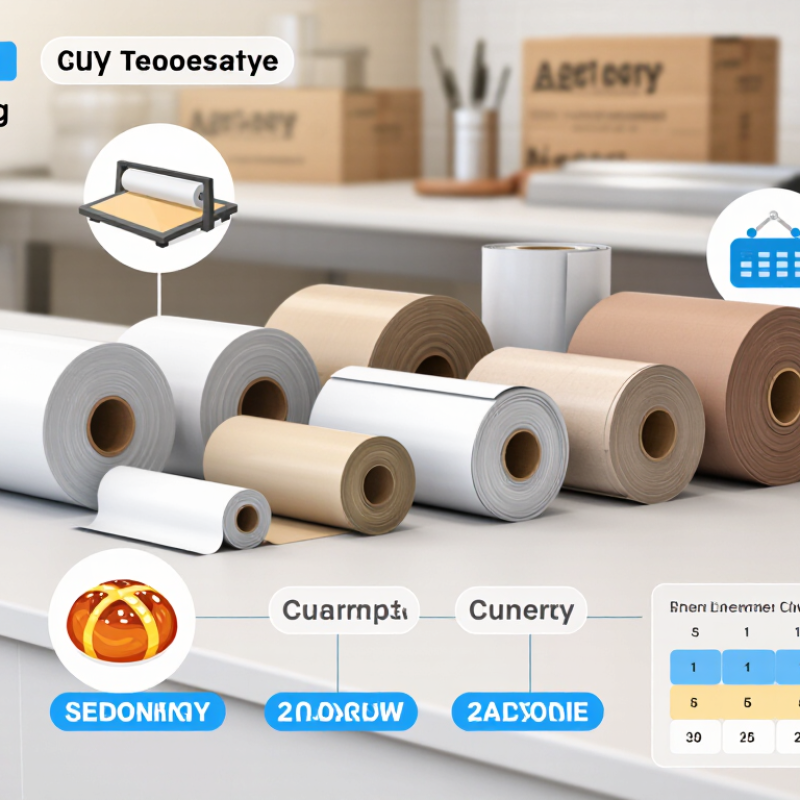
Parchment paper rolls are sheets of paper treated to resist grease and food sticking, commonly with a silicone coating. They are cut to fit baking trays, cake tins, and work surfaces. In commercial kitchens, rolls help line pans, separate baked goods, and support cleaner food handling. They are not the same as wax paper, which is generally unsuitable for oven use. Always check the product’s stated temperature limit; “heat-resistant” does not mean heat-proof.
The Food and Agriculture Organization’s 2022 forest-products statistics record roughly 401 million tonnes of global paper and paperboard production. That figure covers many paper grades, not parchment alone, but it shows the scale of the wider paper supply chain. Parchment rolls serve a smaller, specialized need: a baker can tear off a fresh piece for a tray of crisp cookies, while a food processor may use sheets to separate sticky portions. The distinction is easy to miss. Coatings and performance can vary, so a roll that works well for bread may not suit every application.
Tips: Store rolls in a dry place, away from direct heat. Cut a little extra around the tray edges, and follow the manufacturer’s temperature guidance. Small details matter. A curled edge or wrong sheet size can cause trouble; even experienced cooks sometimes overlook it.
China’s parchment paper rolls begin with a carefully controlled base sheet. Depending on the product, manufacturers may use grease-resistant paper coated with food-contact silicone, or genuine vegetable parchment made through a different treatment process. These materials are not interchangeable. China Paper Association’s 2023 annual report recorded 129.65 million tonnes of paper and paperboard production nationwide, but that broad figure does not measure parchment paper specifically. It does show the scale of the paper supply chain behind specialty converting.
At the mill, pulp is formed into a thin sheet, dried, and checked for weight and surface uniformity. Converters then apply a controlled silicone layer when the product specification calls for it. The coated sheet passes through a curing oven, where temperature and line speed affect release performance. Operators inspect coating coverage, roll edges, and winding tension before slitting wide reels into retail widths. Small defects matter. A streak or loose edge can cause uneven feeding in a bakery. I would still verify each supplier’s test methods; descriptions alone are not proof of consistent performance.
Tips: Ask for basis weight, temperature-use guidance, and release-test results. Check that samples unwind smoothly and show no visible coating gaps. Recheck roll width and core size against your dispenser. Fine details count.
China Top 10 Parchment Paper Roll Manufacturers?
Criteria for Evaluating Chinese Parchment Paper Manufacturers
When assessing parchment paper manufacturers in China, compare measurable product details rather than relying on catalog claims. Check roll width, length, sheet thickness, and basis weight against your production needs. Ask how evenly the paper releases from baked foods and whether it stays intact under your intended oven conditions. Request samples from more than one production batch. One sample can look excellent, yet reveal little about ongoing consistency.
Tips: Test a sample with greasy pastries and a damp cake. Note sticking, tearing, odor, and residue. Small details matter. Keep the test conditions consistent, including baking time and temperature.
Review the manufacturer’s quality-control process, material specifications, and available food-contact documentation. Ask how incoming pulp and coating materials are checked, and how finished rolls are inspected for uneven coating or damaged edges. Confirm packaging protects rolls from moisture and crushing during shipment. Clear answers are useful; vague promises are not. If possible, compare documented specifications with a physical sample. No checklist catches everything, and remote evaluation can leave unanswered questions, so record what you still need to verify before placing a large order.
China’s Top 10 Parchment Paper Roll Manufacturers
China’s paper industry offers a broad manufacturing base, but scale alone does not prove parchment-paper expertise. The China Paper Association reported 124.25 million tonnes of paper and paperboard production in 2022. This figure describes the wider sector, not parchment rolls specifically. That distinction matters. A shortlist of ten suppliers should therefore rely on product-level evidence, not factory size or export claims alone.
For buyers, useful checks include paper weight, roll-width consistency, coating uniformity, and resistance to grease and heat. Ask for representative samples and compare sheets after baking: curled edges, uneven browning, or residue can reveal problems quickly. Request technical specifications and relevant food-contact documentation, then confirm that the supplied roll matches the tested sample. Small details count.
Industry reports rarely separate parchment rolls from other specialty papers, so public rankings can be difficult to verify. This is an imperfect measure. A more reliable comparison records each manufacturer’s documented production capability, quality-control process, available sizes, and response to sample-test results. Check these details again before ordering; specifications can change between batches.
Company names and brands are intentionally omitted. The entries below are anonymous product profiles, not a verified ranking of individual manufacturers. Specifications are representative market options; actual availability and performance vary by supplier and product grade.
| Profile | Common Roll Widths | Common Roll Lengths | Typical Basis Weight | Surface / Treatment | Typical Applications |
|---|---|---|---|---|---|
| Profile 01 | 30 cm, 38 cm | 5 m, 10 m | Approximately 35–45 g/m² | Food-grade silicone coating; non-stick surface | Home baking, oven trays, and lining cake tins |
| Profile 02 | 30 cm, 45 cm | 10 m, 20 m | Approximately 38–45 g/m² | Single-side or double-side silicone options | Household baking and food preparation |
| Profile 03 | 38 cm, 45 cm | 20 m, 30 m | Approximately 40–50 g/m² | Silicone-treated paper, commonly supplied in cutter boxes | Frequent home use and small food-service kitchens |
| Profile 04 | 30 cm, 38 cm, 45 cm | 30 m, 50 m | Approximately 38–50 g/m² | Non-stick silicone finish; roll format for dispensing | Commercial kitchens, bakeries, and catering |
| Profile 05 | 45 cm, 50 cm | 50 m, 100 m | Approximately 40–50 g/m² | Silicone-coated roll stock; larger-format supply | Bakery production lines and food-processing use |
| Profile 06 | 30 cm, 38 cm | 5 m, 10 m, 20 m | Approximately 35–40 g/m² | Bleached paper with a non-stick silicone coating | Retail baking rolls and household cooking |
| Profile 07 | 38 cm, 45 cm | 10 m, 20 m, 50 m | Approximately 40–45 g/m² | Unbleached or brown-paper option may be available | Baking, roasting, and food-service preparation |
| Profile 08 | 30 cm, 45 cm, 50 cm | 20 m, 50 m | Approximately 38–50 g/m² | Silicone-coated paper; jumbo-roll supply options | Converting, repacking, and commercial baking |
| Profile 09 | Custom widths, commonly within 30–50 cm | Custom lengths; retail and bulk formats | Approximately 35–50 g/m² | Coating, roll dimensions, and packaging may be specified by order | Private-label sourcing and customized food-paper orders |
| Profile 10 | Custom widths, commonly within 30–50 cm | Custom lengths; small and industrial rolls | Approximately 35–50 g/m² | Product grade and coating configuration depend on the intended use | Food packaging, baking, and bulk supply applications |
When comparing parchment paper roll manufacturers, start with the material, not the sales brochure. Request samples from different production lots and inspect coating coverage, curl, tearing, and clean release after baking. Run them through your own oven and cutting equipment. A neat sample may hide uneven coating or damaged edges. Small details matter. Ask for written specifications covering basis weight, roll width, length, and recommended temperature range. Compare those figures with your test results, not just the quotation. If results vary, ask how the factory investigates and corrects the issue. Food-contact documents and traceable batch records should be available for review.
Capacity also needs evidence. Ask about active production lines, typical monthly output, minimum order quantity, and peak-season lead times. Large stated capacity does not guarantee space for your order. Request a schedule with realistic milestones and a plan for raw-material delays. Then test customer service with a specific question about custom widths, packaging, or defect handling. A fast reply helps. A clear reply is better. Look for concrete answers, named contact responsibilities, and a defined process for replacements or corrective action. One vague answer need not rule out a supplier, but repeated vagueness deserves attention. It is easy to overlook this during a rushed comparison.
Precision Cable Assemblies
16830 Pheasant Drive
Brookfield, WI 53005
Phone: 262-784-7887
Fax: 262-784-0681