Best Sheet Metal Top Cover Manufacturer in China
A reliable Sheet Metal Top Cover starts with details that are easy to overlook: flatness, clean bends, consistent holes, and edges without burrs. In electronics cabinets, machinery enclosures, and control panels, a cover must fit the mating frame without force. A small mismatch can slow assembly or leave an uneven seam. Fit is unforgiving.
The wider market offers useful context, but not a perfect measure of this product category. Grand View Research estimated the global sheet metal market at USD 265.7 billion in 2023 and projected continued growth through 2030. That figure covers many products, not top covers alone. Buyers should treat it as industry context, not proof that any supplier is qualified. Lean manufacturing expert Shigeo Shingo warned, “The most dangerous kind of waste is the waste we do not recognize.” For a top-cover project, hidden waste may mean repeated deburring, rework, or unclear inspection criteria.
When comparing manufacturers in China, ask for material traceability, process controls, dimensional inspection records, and samples made to your drawing. Check how the supplier handles coating, packaging, and design changes—not just the quoted unit price. A clear first-article inspection can reveal trouble before a full production run. Still, paperwork is not the part you install. Request a physical sample and verify its fit with the actual mating components. No single checklist guarantees a good result; careful validation does.
What Is a Sheet Metal Top Cover and What Does It Do?
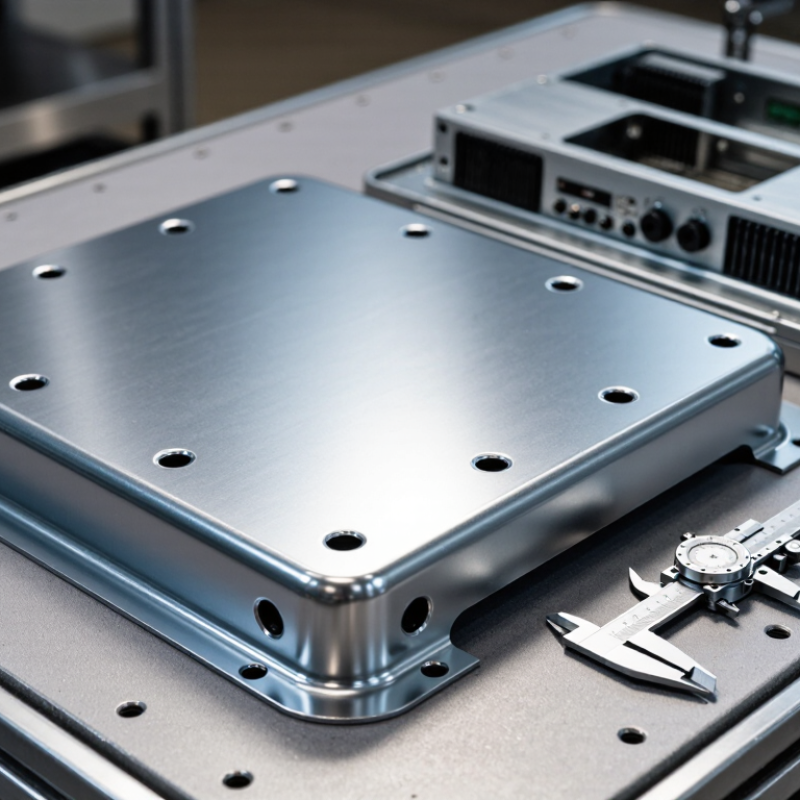
A sheet metal top cover is a formed panel fitted over the upper opening of a machine, cabinet, or equipment enclosure. It is commonly cut from steel or aluminum, then bent to create edges that add stiffness and help the cover sit securely. Depending on the design, screws, clips, or hinges allow technicians to remove it for inspection. The details matter: a small cutout may provide cable access, while a raised lip can help direct water away from a seam.
Its main job is to shield internal parts from dust, accidental contact, and light splashes. A cover is not automatically a seal. Protection depends on the material, joint design, fasteners, and any gasket used. Not always. Vent slots may reduce heat buildup, but they also create openings that need consideration when dust or moisture is a concern. In practical fabrication, flatness, bend accuracy, and hole alignment affect whether the panel fits without forcing the fasteners. Drawings can miss small clearance issues, so checking the cover against the actual enclosure is worthwhile. A well-designed top cover balances access, protection, stiffness, and airflow for its specific operating environment.
Materials and Design Options for Sheet Metal Top Covers
A sheet metal top cover starts with the environment it must face. Cold-rolled steel suits indoor equipment where cost and a smooth finish matter. Galvanized steel adds a protective zinc layer for damp settings. Stainless steel can resist corrosion, while aluminum offers lower weight. The choice is rarely universal. A coastal installation and a dry factory floor need different protection.
Scale matters, but so does specification. World Steel Association’s World Steel in Figures 2024 reports 1,892.2 million tonnes of crude steel production in 2023; broad supply does not guarantee the right grade or thickness. Ask suppliers to confirm material certificates and coating details.
For lighter covers, recycled aluminum is worth considering: the International Aluminium Institute reports that recycling can save up to 95% of the energy required for primary production.
Keep the geometry practical. A folded hem can soften sharp edges, and a shallow stiffening bead can reduce panel flex. Add ventilation slots only where airflow is needed, since openings can admit dust or moisture.
Small details matter. A poorly placed fixing hole can complicate assembly, and I have seen a neat-looking cover become awkward to service. Decide early on finish, fasteners, grounding points, and access needs.
How Sheet Metal Top Covers Are Manufactured in China
Best Sheet Metal Top Cover Manufacturer in China
How Sheet Metal Top Covers Are Manufactured in China
Manufacturing a sheet metal top cover begins with a drawing that defines its dimensions, mounting holes, bends, and finish. Engineers review the design for clearance and manufacturability before choosing a material, often cold-rolled steel, stainless steel, or aluminum. Material choice affects strength, weight, corrosion resistance, and cost. Small details matter.
The sheet is cut to shape using laser cutting or punching, depending on the geometry and production volume. Operators then form it on a press brake, checking bend angles against the drawing. Covers with joined sections may require welding, followed by grinding and deburring to remove sharp edges. Even a small bend variation can make installation difficult.
Before finishing, quality checks can include measurements, hole-position checks, and a trial fit with mating parts. Powder coating or another specified finish is applied after surface preparation. A reliable Chinese manufacturer should document material grades, inspection results, and approved revisions. Still, drawings sometimes miss real assembly conditions; a prototype can reveal interference that a screen does not. That extra check takes time, but can prevent costly rework in production.
How Material Choice Affects Sheet Metal Top Covers
Typical material densities for metals commonly used in sheet metal fabrication. Lower density can help reduce cover weight; final selection also depends on strength, corrosion resistance, and application requirements.
Density values are approximate and expressed in grams per cubic centimeter (g/cm³).
Quality Standards and Capabilities of Chinese Manufacturers
A capable sheet metal top cover manufacturer in China should control quality from raw sheet to finished part. Material certificates and batch records help confirm the grade and thickness used. Laser cutting or punching must follow the approved drawing, while bending checks should confirm flange angles and hole positions. Small errors can affect assembly. Details matter.
For practical evaluation, ask how the factory measures flatness, deburrs edges, and checks welds or coating thickness. A first-article inspection can compare key dimensions with the drawing before production continues. Request sample inspection records, not only a general quality statement. Packaging also matters: foam, separators, and dry storage can help prevent scratches and corrosion during transit. Capabilities vary between factories, so confirm machine range, inspection tools, and production capacity against your specific cover design. No process removes every variation. Even a strong supplier may need drawing clarification or a revised sample, and that is worth discussing openly before approving a larger order.
How to Evaluate a Sheet Metal Top Cover Manufacturer in China
When assessing a sheet metal top cover manufacturer in China, look beyond the quoted price and finish. Request drawings, material specifications, and stated tolerances before comparing bids. Ask how the shop controls cutting, bending, welding, and surface treatment. A reliable supplier should explain inspection points and provide records linking materials to production batches. If answers stay vague, keep evaluating.
Review a first article against the drawing, especially hole positions, bend angles, and edge alignment. Use calipers or a measurement report for critical dimensions. A sample can look good yet hide inconsistent repeatability. I would not rely on one polished sample alone. Ask for evidence from multiple production runs, plus packaging details that prevent scratches during shipping. Check whether the team can flag design risks early. Clear questions often reveal stronger process knowledge. One detail is easy to overlook: the inspection method must match the feature being measured.
Tips: Send one controlled drawing revision and ask the supplier to mark critical dimensions. Compare quoted lead time with tooling needs and approval steps. Keep notes from calls.