
China has become a major sourcing base for engineered surfaces, including quartz, solid surface, sintered stone, and other artificialstone products. Global buyers now expect more than attractive slabs. They need stable color, accurate dimensions, documented composition, and dependable export service. The opportunity is substantial. Industry estimates from Grand View Research and Fortune Business Insights place the global engineered stone market in the multi-billion-dollar range, with continued demand from kitchens, bathrooms, hotels, and commercial interiors. Their forecasts also show steady growth, although reported market values differ by product definition and research method.
That difference matters. The engineered stone industry is not perfectly transparent. A “premium” label can hide uneven thickness, resin variation, or weak quality controls. Serious buyers should examine factory experience, production equipment, inspection records, and product testing before signing contracts. Relevant evidence may include ISO 9001 systems, water absorption data, flexural strength results, stain resistance tests, and documented compliance with destination-market requirements. SGS, Intertek, and TÜV reports can support verification, but independent review remains valuable.
China’s strongest manufacturers often combine automated calibration lines with experienced finishing teams. Look closely at polished edges, sink cutouts, packaging corners, and batch consistency. These details reveal practical capability. The U.S. Geological Survey’s Mineral Commodity Summaries and UN Comtrade trade data also help buyers understand raw-material trends and international trade flows. Still, data cannot replace a factory visit or a controlled sample order. This guide evaluates China’s best artificial stone manufacturers through product quality, customization, certifications, capacity, communication, and after-sales reliability. Some rankings may remain debatable. That is honest. A responsible supplier decision requires evidence, not impressive photographs.
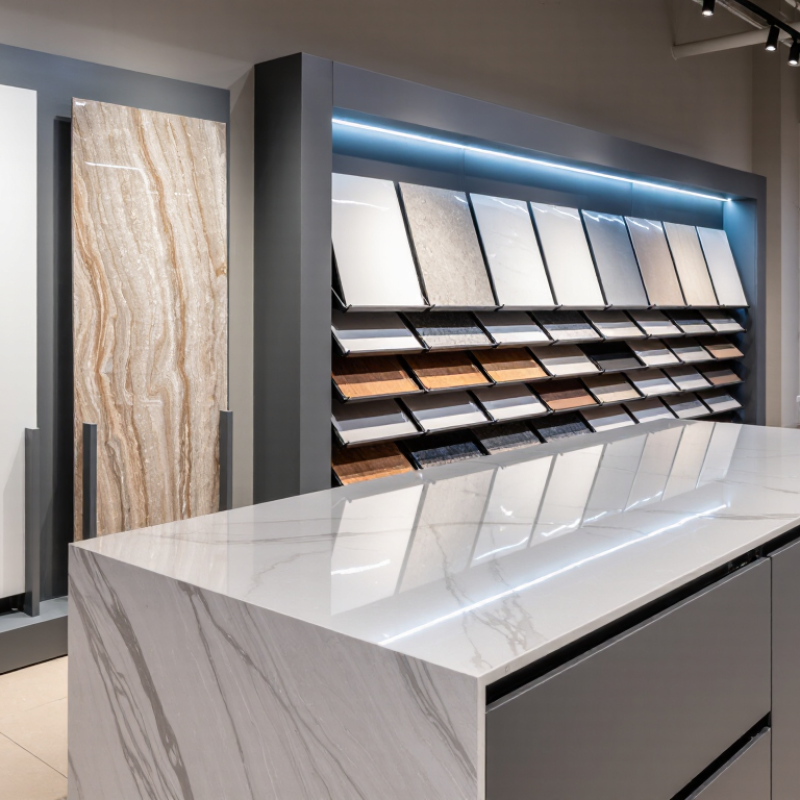
Artificial stone is a factory-made surface designed to resemble natural stone. Engineered quartz usually combines mineral aggregate with resin and pigments. Acrylic solid surface uses mineral fillers and polymer binders. These materials offer controlled color, stable thickness, and predictable fabrication. A countertop can show fewer natural variations across several rooms.
Grand View Research valued the global engineered stone market at about USD 26.88 billion in 2023. Its report forecasts a 5.6% compound annual growth rate from 2024 to 2030. Global buyers choose artificial stone for low water absorption, repeatable patterns, and simpler maintenance. Installers can cut sink openings with familiar tools. Replacements also match more easily. Yet “maintenance-free” is overstated. Heat, harsh chemicals, poor sealing, or careless installation can still damage the surface.
Tips: Request test reports for water absorption, flexural strength, stain resistance, and abrasion. Ask for samples from the actual production batch. Check applicable ASTM or EN testing methods, not only marketing claims. For quartz-containing products, review crystalline silica control documents and local compliance requirements. The cheapest slab may create higher installation costs. That trade-off deserves a real calculation.

China Best Artificial Stone Manufacturers for Global Buyers
Key Types of Artificial Stone Offered by Chinese Manufacturers
Chinese manufacturers produce several artificial stone types for residential and commercial projects. Quartz stone combines mineral aggregates with resin, creating durable kitchen worktops and vanity tops. It offers consistent color and simple maintenance. Sintered stone uses compressed minerals and high-temperature processing. It suits façades, floors, tabletops, and outdoor applications. Its large slabs can reduce visible joints.
Solid surface, often made with acrylic or polyester resin, supports seamless counters and curved designs. It can be repaired and refinished after light damage. Cultured marble usually contains mineral filler and resin. Manufacturers shape it into bathroom basins, shower panels, and wall surrounds. Some factories also produce terrazzo-style slabs with recycled-looking chips and customized patterns.
Selection should follow the project’s actual conditions. Ask for water absorption, flexural strength, stain resistance, fire performance, and slip data. Outdoor buyers should request freeze-thaw and ultraviolet testing. A physical sample matters. Digital colors can mislead. During factory evaluations, check slab thickness, backing quality, polishing consistency, and packaging protection. Poor edge protection can ruin good material during shipping.
Procurement teams should compare technical sheets from several suppliers. Confirm tolerances before approving production. A lower price may reflect thinner slabs or weaker resin. That is not always obvious. I would also inspect a random production batch, not only a polished showroom sample. Small shade differences can appear between batches, and this remains an overlooked risk. Allowing replacement stock can prevent costly installation delays.
The chart compares representative nominal slab thicknesses commonly specified for major artificial stone categories. Engineered quartz and terrazzo are frequently used for countertops and interior surfaces, while sintered stone and solid surface materials support a wider range of architectural and customized applications. Actual specifications may vary by project, production standard, and application.
Evaluating China’s artificial stone manufacturers requires more than comparing prices. Grand View Research estimated the global engineered stone market at about US$25 billion in 2023. That scale attracts capable factories, but also inconsistent suppliers. Request a live factory video, production-flow photos, and recent export references. Confirm whether the supplier actually manufactures slabs or only trades them.
Technical evidence matters. Ask for batch-specific reports covering water absorption, flexural strength, stain resistance, and dimensional tolerance. Tests should come from laboratories accredited to ISO/IEC 17025. Also check ISO 9001 procedures, raw-material records, and slab traceability. A polished sample can mislead. Compare three slabs from different batches, then inspect color, pinholes, edge chipping, and thickness with calipers. Small differences become obvious under kitchen lighting.
Mordor Intelligence projects steady growth for the quartz and engineered-surface market through the decade, driven by residential renovation and commercial construction. This makes production capacity important, but capacity claims need proof. Review monthly output, curing time, packing methods, and container-loading photographs. Ask how the factory handles replacement claims and transit damage. The answer should include dates, evidence, and responsible contacts.
No supplier passes every test. That is normal. However, vague reports, copied certificates, or pressure for full payment deserve careful reconsideration. A lower quote may hide weaker resin, unstable pigments, or poor after-sales support.
For global buyers, reliable artificial stone production starts with documented standards, not attractive samples alone. Manufacturers should control raw material ratios, pigment dispersion, curing temperature, and slab thickness. Clear records make each batch easier to trace. Production teams commonly compare results with applicable ASTM or EN testing methods. These may include water absorption, flexural strength, abrasion resistance, and stain resistance.
Quality control should continue after curing. Inspectors can check color under daylight, surface flatness with calibrated tools, and edge integrity after cutting. A 20-millimeter slab should remain consistent across its length, especially around sink openings and corners. Samples should be approved before mass production. Packaging also matters. Foam protection, corner guards, and moisture-resistant crates reduce damage during long-distance shipping.
Customization is more than changing a color code. Buyers may request concrete textures, marble-style veining, matte surfaces, unusual thicknesses, or CNC-cut panels. Experienced manufacturers confirm drawings, tolerances, radii, and installation conditions before fabrication. Small differences can still appear between sample and production batches. That point deserves honest discussion. A missed vein or uneven shade can create costly rework. Better factories retain control samples and photograph finished slabs before loading. Their teams also review complaints with production staff, rather than hiding them. That practical feedback often improves the next order.
| Evaluation Area | Production or Quality Dimension | Common Industry Standard or Requirement | Recommended Verification | Customization Options for Global Buyers |
|---|---|---|---|---|
| Material Composition | Engineered stone is commonly produced from mineral aggregates combined with a cementitious or resin-based binder, depending on the product category. | The composition should be clearly declared in the technical data sheet and should match the intended application. | Request a material composition statement, safety data information where applicable, and an approved production sample. | Aggregate type, pigment selection, surface texture, background tone, and recycled-content targets can often be specified. |
| Applicable Product Standards | Product testing should correspond to the material type and end use, such as slabs, tiles, countertops, wall panels, or architectural components. | The EN 14617 series provides test methods and requirements for many types of agglomerated stone products, with the applicable part depending on product performance. | Confirm the exact standard edition, test scope, laboratory identity, test date, and product model covered by each report. | Testing can be arranged for a specific thickness, finish, color family, or application rather than relying only on a general factory report. |
| Dimensional Accuracy | Length, width, thickness, squareness, and edge straightness are key controls for installation efficiency. | Tolerances should be agreed in the purchase specification because permissible variation differs by product type, size, and manufacturing process. | Use calibrated digital calipers, steel rules, and squareness checks; record results by batch or production lot. | Non-standard slab sizes, tile formats, cut-to-size panels, mitred edges, radius corners, and installation openings may be requested. |
| Surface Finish | Common finishes include polished, honed, matte, brushed, leathered, flamed, sandblasted, and textured surfaces, depending on the material. | The finish should be uniform, free from visible processing marks, and consistent with the approved reference sample. | Inspect under consistent lighting and compare gloss, texture, color, edge treatment, and repair marks against the approved sample. | Buyers can normally specify gloss level, tactile texture, anti-slip treatment where suitable, and edge profiles. |
| Color and Pattern Consistency | Color variation can result from aggregate grading, pigment dosage, curing conditions, and production-batch differences. | A master sample, approved color range, and batch-control procedure should be established before mass production. | Review physical samples under daylight-equivalent lighting and retain a signed reference sample for incoming inspection. | Custom colors, aggregate sizes, veining direction, terrazzo patterns, logo-free private-label designs, and project-specific palettes may be available. |
| Physical Performance | Important properties may include water absorption, flexural strength, compressive strength, abrasion resistance, impact resistance, and density. | Performance targets must be selected according to the product category, local building requirements, and intended interior or exterior use. | Obtain independent laboratory results and verify that test specimens represent the actual commercial formulation and finish. | Formulation, thickness, reinforcement, backing treatment, and surface protection can be adjusted for project-specific performance needs. |
| Water and Stain Resistance | Resistance depends on porosity, binder type, surface finish, sealing system, and maintenance practices. | Claims should be supported by product-specific absorption and stain-resistance testing rather than by material descriptions alone. | Request cleaning, sealing, and maintenance instructions together with relevant test results. | Optional sealers, protective coatings, low-porosity formulations, and application-specific care systems may be specified. |
| Cutting and Fabrication | Factory fabrication may include CNC cutting, polishing, edge profiling, sink cut-outs, drainage grooves, drilling, and bonding preparation. | Fabrication drawings should define dimensions, tolerances, edge details, openings, corner radii, and installation orientation. | Approve shop drawings before production and inspect cut-outs, edges, visible faces, and protective packaging before shipment. | Made-to-measure components, assembled countertops, waterfall edges, book-matched layouts, and numbered installation pieces can be requested. |
| Quality Control System | Effective control normally covers incoming raw materials, batching, mixing, forming, curing, finishing, final inspection, and traceability. | ISO 9001 is a quality-management-system standard; certification does not by itself prove that every product meets a particular technical specification. | Review inspection plans, corrective-action records, calibration certificates, batch codes, and production traceability. | Buyers can define inspection frequency, acceptance limits, first-article approval, third-party inspection, and pre-shipment release criteria. |
| Environmental and Indoor-Air Requirements | Indoor projects may require information about volatile organic compound emissions, recycled content, responsible sourcing, and manufacturing waste. | Requirements vary by destination, building certification system, and application; environmental claims should be supported by recognized documentation. | Request emissions test reports, environmental declarations where available, recycled-content evidence, and applicable safety documentation. | Low-emission binder systems, recycled aggregates, reduced-packaging programs, and project-specific documentation packages may be available. |
| Packaging and Export Handling | Stone products require protection from edge impact, abrasion, moisture exposure, shifting, and excessive stacking pressure during transport. | Packaging should be suitable for the selected transport method and comply with destination-country timber-packaging rules where wooden crates are used. | Check crate strength, moisture protection, corner guards, product labels, packing lists, and loading photographs. | Custom crate dimensions, container-loading plans, barcode labels, pallet layouts, moisture barriers, and installation sequencing labels can be specified. |
| Documentation for International Buyers | A complete technical package helps buyers evaluate compliance, installation suitability, maintenance, and customs requirements. | Typical documents include a technical data sheet, commercial invoice, packing list, certificate of origin where required, test reports, and installation instructions. | Ensure document details match the shipped product, purchase order, packaging marks, quantities, and declared specifications. | Bilingual manuals, project submittal files, digital product libraries, custom carton marks, and destination-specific compliance files may be prepared. |
Export performance matters as much as surface design. The World Bank’s 2023 Logistics Performance Index gave China a score of 3.7. This supports reliable logistics, but it does not guarantee every factory performs equally. Ask for commercial invoices, packing photographs, loading records, and clear Incoterms. A dependable exporter should explain port handling, container protection, customs documents, and claims procedures. Small details matter when slabs arrive with chipped corners.
Pricing depends on more than the factory quotation. Resin content, stone particles, pigments, thickness, finish, cutting, packaging, and order volume all change the final cost. Add inland transport, ocean freight, insurance, import duties, and currency movement. Reports from Grand View Research identify construction demand as a major engineered-stone market driver. That demand can raise production capacity pressure and extend lead times. The cheapest offer is often incomplete.
Supplier selection needs evidence. Request recent test reports for water absorption, flexural strength, abrasion, and stain resistance. Check whether testing follows relevant ASTM or EN methods. Review batch traceability and production inspection records. I would also examine worker-safety controls, especially during cutting and polishing. A supplier may provide attractive samples but inconsistent full-container color. That risk is easy to underestimate. Use a paid pilot order, independent inspection, and written tolerance limits before committing to large volumes.
Precision Cable Assemblies
16830 Pheasant Drive
Brookfield, WI 53005
Phone: 262-784-7887
Fax: 262-784-0681