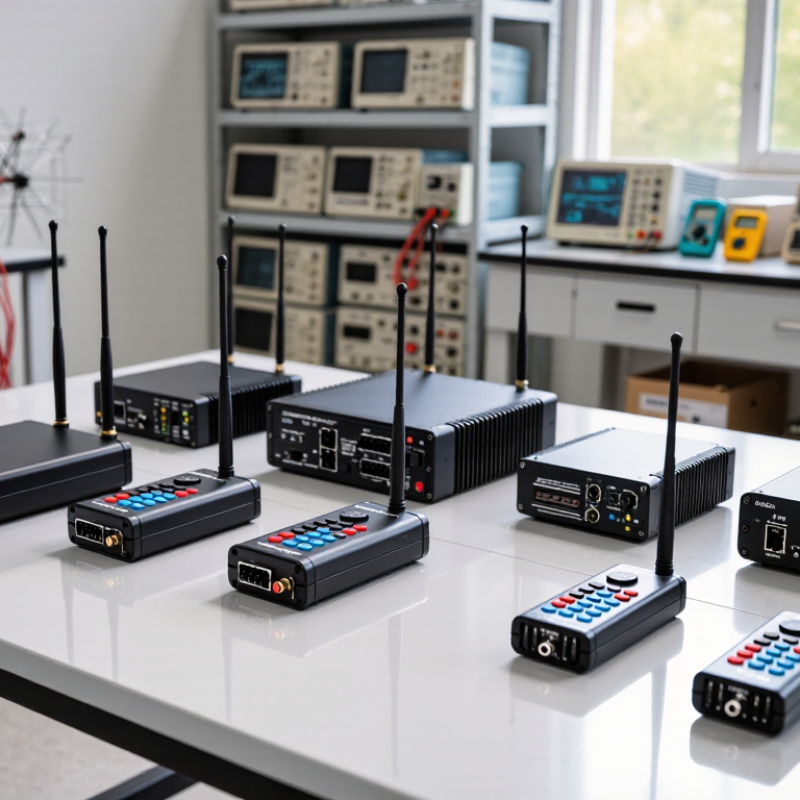
Choosing the right Rf Remote Control Kit is not simply a matter of comparing advertised distance or price. Global buyers must examine frequency compatibility, receiver sensitivity, operating environment, installation effort, and long-term reliability. A kit that performs smoothly in a quiet warehouse may struggle beside motors, metal doors, LED drivers, or dense wireless equipment.
Dr. Theodore S. Rappaport, a leading wireless-communications researcher, offers a useful warning: “The wireless channel is a hostile environment.” That principle matters here. Radio performance changes with walls, weather, antenna placement, and electrical interference. Small details matter.
This guide reviews seven practical Rf Remote Control Kit options for international purchasing decisions. Each selection should be judged by more than its product page. Look for clearly stated operating frequencies, stable coding methods, realistic range figures, protected enclosures, and replacement remote availability. Buyers should also confirm regional radio requirements before ordering. Compliance is not optional.
Some kits suit gates and barriers. Others fit lighting, pumps, shutters, alarms, or industrial switching. The best choice depends on load type and daily operating conditions. A compact two-channel kit may be enough for a garage door, while a multi-channel system may better serve a warehouse entrance.
No ranking can remove every uncertainty. Testing remains valuable. Even a reputable kit can disappoint when the antenna is hidden behind steel or the battery is weak. Use this comparison as a careful starting point, not a promise of universal performance. Reliability is built through matching, testing, and honest expectations.
An RF remote control kit uses radio frequency signals to operate equipment without a direct line of sight. Most kits include a handheld transmitter, a receiver, and relay outputs. Pressing a button sends a coded signal through the air. The receiver identifies the matching code, then switches the connected circuit. This can control lights, gates, fans, alarms, or small machines.
Inside the receiver, a microcontroller checks the signal and rejects unrelated transmissions. Pairing, rolling codes, or fixed codes affect security and convenience. A clear signal may travel through walls, but metal cabinets and reinforced concrete can reduce range sharply. The advertised distance often feels optimistic.
Test the kit in its real installation area, not only on an open workbench. Check voltage, relay capacity, antenna position, and response delay. For global buyers, confirm the operating frequency and local radio requirements before ordering. Also use suitable electrical protection and professional installation for mains-powered equipment.
Tips: Keep the receiver away from motors and heavy power cables. Extend the antenna only as the instructions allow. Label each transmitter button during installation. A failed pairing attempt may come from low battery, not a defective receiver. Test every output repeatedly, including after power loss. If the kit controls a safety-critical function, add a manual override and follow applicable technical standards. Mistakes happen, especially when product descriptions use vague range figures. Clear specifications matter more than impressive numbers.
When comparing the seven best RF remote control kits for global buyers, start with operating frequency and regional compatibility. A kit must match the receiver, antenna design, and local radio requirements. Do not trust range claims alone. A perfect range number is rarely honest.
Check the number of channels, pairing method, and signal stability around concrete walls or metal cabinets. Rolling-code or encrypted pairing can reduce accidental activation and unauthorized access. Also inspect the receiver’s voltage range, relay rating, and wiring terminals. These details matter during installation. Some kits advertise many channels but provide confusing programming steps. That is a warning sign.
Power options deserve careful attention. Battery-powered transmitters should offer clear low-battery alerts and accessible replacement cells. Receivers may need surge protection, waterproof housing, or a stable backup supply. Compare the stated indoor and outdoor range under realistic conditions. Customer support, readable manuals, spare remotes, and return policies also reveal supplier reliability. Independent test reports are useful, but they may not match your building. I would record the distance through walls, note interference from nearby devices, and test repeated commands before purchase. The cheapest kit can become expensive when wiring diagrams are incomplete or replacement parts disappear. Check again.
The best RF remote control kit depends on the device, distance, and installation environment. For room lighting, choose a compact relay kit with adjustable timing and a clear pairing process. A blind or curtain kit needs smooth switching and reliable operation through walls. For ceiling fans, select separate speed and light controls, because one relay cannot always handle both functions safely.
A garage or gate kit should use secure rolling-code transmission, protected receivers, and weather-resistant housing. A pump-control kit suits garden irrigation when it supports higher current ratings and manual override. For workshop equipment, an industrial relay kit offers multiple channels, status indicators, and stronger terminals. A vehicle accessory kit can control auxiliary lights, but it must include proper fuses and insulated wiring.
The seventh option is a universal learning kit for replacing old remotes. It is useful when compatibility matters more than advanced features. In practical testing, range often falls sharply near concrete walls, metal cabinets, and large motors.
I once trusted a quoted range and ignored interference; the result was unreliable switching.
Check operating frequency, receiver sensitivity, load limits, and local radio approvals before buying.
Keep the antenna extended, label every wire, and test the system after installation. Some kits advertise easy setup, yet their instructions remain vague. That is not a deal-breaker, but it deserves caution.
Choosing an RF remote control kit requires more than checking its advertised range. Compatibility comes first. Confirm the receiver’s input voltage, relay capacity, wiring method, and signal coding. Fixed-code remotes may pair quickly, while learning or rolling-code systems can offer stronger access control. Frequency also matters. Common options include 315 MHz, 433.92 MHz, 868 MHz, and 915 MHz. However, permitted frequencies differ by region. A kit suitable for one market may be unsuitable elsewhere.
Tips: Check the exact frequency. Confirm local radio requirements. Test through walls and metal surfaces. Keep the receiver away from motors and power cables. Range claims often use open outdoor spaces. Real buildings reduce performance. A practical test should include concrete walls, nearby electronics, and low temperatures. Small details matter.
Regional requirements extend beyond frequency. Buyers should review local conformity markings, transmission-power limits, plug standards, and installation rules. The receiver must also match the controlled device’s voltage and current. Never judge compatibility from connector shape alone. A wiring diagram is essential. In testing, a ten-meter range may become four meters indoors. That result is not unusual. It is also a reminder that manufacturer figures need careful interpretation. Some kits include spare remotes, but replacement pairing procedures may differ. Keep those instructions accessible. Mistakes happen, especially when several remotes look identical.
When comparing the seven best RF remote control kits, installation quality matters as much as advertised range. Check the working frequency, receiver capacity, antenna position, and power requirements before purchase. A receiver placed inside a metal cabinet may lose signal strength. Keep control wiring away from high-current cables. Label each terminal clearly. A small mistake can cause unreliable switching or unexpected activation.
Tips: Test the kit on a temporary setup first. Measure performance through walls, doors, and nearby equipment. Choose a system with clear pairing instructions, replaceable batteries, and a visible status indicator. Buyers should also check regional frequency requirements and electrical ratings. “Long range” is not a guarantee. Building materials, weather, and interference can change results.
For safety, disconnect power before opening the receiver enclosure. Use suitable insulation, strain relief, and grounding where required. Do not exceed the rated load. Maintenance is simple but often ignored: inspect terminals, clean dust from vents, replace weak batteries, and test every remote monthly. Keep spare transmitters secured and record pairing details. During selection, compare enclosure protection, operating temperature, warranty terms, and technical support. Low price can hide poor documentation. I have seen installations fail because the manual assumed too much. That is worth questioning.
| Kit Profile | Typical Use Case | RF Band and Range | Channel Capacity | Power and Load Guidance | Installation Difficulty | Safety Considerations | Maintenance Requirements | Global Buyer Selection Notes |
|---|---|---|---|---|---|---|---|---|
| 1. Compact Single-Channel Relay Kit | Wireless switching of one light, fan, pump, door strike, or other simple load. | Commonly 315 MHz, 433.92 MHz, or 868/915 MHz depending on market. Typical open-area range: 30–100 m. | 1 relay channel; often supports several paired transmitters. | Usually designed for low-voltage DC or a modest AC load. Confirm the relay rating and use an external contactor for motors or high inrush loads. | Easy Basic wiring and remote pairing are normally required. | Disconnect power before wiring. Use a correctly rated enclosure, fuse, strain relief, and insulation. Do not exceed the relay's voltage or current rating. | Test the remote battery, inspect terminals, and check for heat, corrosion, or loose wiring every 6–12 months. | Best for low-cost projects. Verify frequency legality, receiver input voltage, plug type, and local electrical-code requirements before purchase. |
| 2. Multi-Channel Independent Relay Kit | Independent control of several lights, valves, fans, gates, or small automation loads. | Typically 315/433 MHz or 868/915 MHz. Typical open-area range: 50–150 m, with shorter indoor range through walls. | 2, 4, 6, or 8 independent channels are common. | Each channel has a separate rating, but the total board current may be limited. Resistive loads and motor loads require different ratings. | Moderate Requires organized wiring and correct channel configuration. | Separate low-voltage control wiring from mains wiring. Add individual fuses where appropriate and ensure the enclosure prevents accidental contact with live parts. | Retighten screw terminals if vibration is present, clean dust from ventilation openings, and verify each channel under normal load. | Choose a kit with clearly documented relay ratings, momentary/toggle modes, memory behavior, and enough transmitters for all users. |
| 3. Long-Range Rolling-Code Receiver Kit | Remote operation of gates, barriers, shutters, garage doors, and access-control equipment. | Often uses 433.92 MHz or 868/915 MHz with improved coding and antenna options. Typical range: 100–300 m in open conditions. | Usually 1–4 channels; rolling-code systems may support user or transmitter enrollment. | Commonly powered by 12–24 V AC/DC. Relay outputs generally control an opener input rather than powering the motor directly. | Moderate Requires compatibility checks with the opener or control board. | Use the manufacturer's safety inputs, photoelectric sensors, emergency release, and obstruction protection. Wireless control must not bypass required safety systems. | Replace remote batteries, inspect the external antenna and cable, test safety sensors, and review enrolled remotes after personnel changes. | Prioritize rolling-code security, receiver memory capacity, operating temperature, antenna type, and compliance with local access-control regulations. |
| 4. Weather-Resistant Outdoor Relay Kit | Outdoor lighting, irrigation valves, pond pumps, ventilation equipment, and remote equipment cabinets. | Commonly 433 MHz, 868 MHz, or 915 MHz. Practical range depends heavily on walls, metal cabinets, vegetation, and antenna placement. | 1–4 channels are typical, with optional momentary or latching operation. | Usually supports low-voltage DC or AC loads. Outdoor motors, pumps, and solenoids may need surge suppression and a separate rated contactor. | Moderate Weatherproof installation and cable routing are critical. | Use an enclosure with an appropriate IP rating for the site, waterproof cable glands, grounding where required, and residual-current protection where applicable. | Inspect seals, glands, condensation, cable jackets, and corrosion at least twice a year or more often in coastal or wet environments. | Check the actual environmental rating, UV resistance, temperature range, antenna clearance, and whether the enclosure rating applies only when correctly installed. |
| 5. Battery-Powered Low-Voltage Control Kit | Wireless control of LED strips, small valves, sensors, portable equipment, and battery-powered projects. | Commonly 315/433 MHz, 868 MHz, or 915 MHz. Typical range: 20–100 m depending on antenna and battery voltage. | 1–4 channels, frequently with momentary, toggle, or timed operation. | Designed for low-voltage DC systems. Output current is usually limited; inductive loads may require a flyback diode or interface relay. | Easy Suitable for hobby, portable, and low-voltage installations. | Protect batteries against reverse polarity, overcurrent, overheating, and moisture. Use the correct battery chemistry and never mix incompatible cells. | Measure battery voltage, clean contacts, inspect for swelling or leakage, and replace batteries according to operating conditions. | Compare standby current, battery type, sleep behavior, low-voltage cutoff, and replacement-battery availability in the destination country. |
| 6. Industrial-Grade RF I/O Control Kit | Remote control of machinery signals, pumps, conveyors, lighting banks, and non-safety-critical industrial functions. | Often available in sub-GHz bands such as 433, 868, or 915 MHz. Range can reach 100–500 m with suitable antennas and clear conditions. | Common configurations range from 4 to 16 digital or relay I/O points. | May accept 12–24 V DC and provide relay, transistor, or dry-contact outputs. High-power machinery normally requires interface relays, contactors, or PLC inputs. | Advanced Requires electrical design, commissioning, and interference assessment. | Do not use a general-purpose RF kit as the sole control for emergency stops, guarding, lifting equipment, or other safety functions. Apply a documented risk assessment. | Maintain wiring records, test fail-safe behavior, inspect grounding and surge protection, review event logs where available, and verify antenna integrity. | Evaluate EMC performance, industrial temperature range, isolation, fail-safe output behavior, diagnostics, documentation, and conformity requirements for the target market. |
| 7. Programmable Timer and Receiver Kit | Scheduled lighting, timed ventilation, irrigation cycles, signs, heaters, and energy-saving control applications. | Usually operates in the 433, 868, or 915 MHz range. Wireless range is commonly 30–150 m in open conditions. | 1–8 channels, often with programmable schedules and manual override. | Power may be supplied by mains or low-voltage DC. High-load appliances should be switched through a properly rated contactor rather than a small onboard relay. | Moderate Programming, clock setup, and load verification are required. | Confirm time-zone behavior, daylight-saving settings, power-loss recovery, and default output state. Ensure scheduled operation cannot create an unsafe condition. | Check clock accuracy, review schedules seasonally, replace backup batteries if fitted, and test operation after power interruptions. | Useful for global buyers who need automation. Confirm local mains voltage, frequency, plug format, timer memory, and whether the schedule remains active after a reset. |

Precision Cable Assemblies
16830 Pheasant Drive
Brookfield, WI 53005
Phone: 262-784-7887
Fax: 262-784-0681