10 Best Plate Filter Manufacturers for Global Buyers
Choosing among the 10 Best Plate Filter Manufacturers for Global Buyers takes more than comparing prices or brochure claims. A Plate Filter must fit the process: the slurry, required throughput, filtration pressure, cake moisture, and cleaning routine. Small details matter. A leaking gasket or poorly matched cloth can slow an entire production line.
Filtration specialist Barry Perlmutter is a relevant industry voice for readers researching filtration systems. To avoid misattribution, the following is an editorial buying principle, not a verbatim quotation from him: “Choose the filter around the process, then verify the performance with real operating data.” That means asking manufacturers for material specifications, plate and cloth options, reference installations, test results, and clear service arrangements. For global buyers, also check spare-parts availability and the support response expected at your site.
Look closely. A polished brochure can still leave gaps. Request practical details, such as how operators release a filter cake, inspect seals, and clean the cloth between cycles. Compare suppliers against the same process requirements, not just headline capacity. Some manufacturers may be strong in customization; others may offer faster delivery or more accessible local service. Those differences can matter more than a small price advantage.
This guide introduces ten manufacturers for consideration and outlines what buyers should verify before requesting a quotation. Treat the shortlist as a starting point, not a final verdict. Actual performance depends on the feed and operating conditions, and a supplier’s claims deserve careful checking.
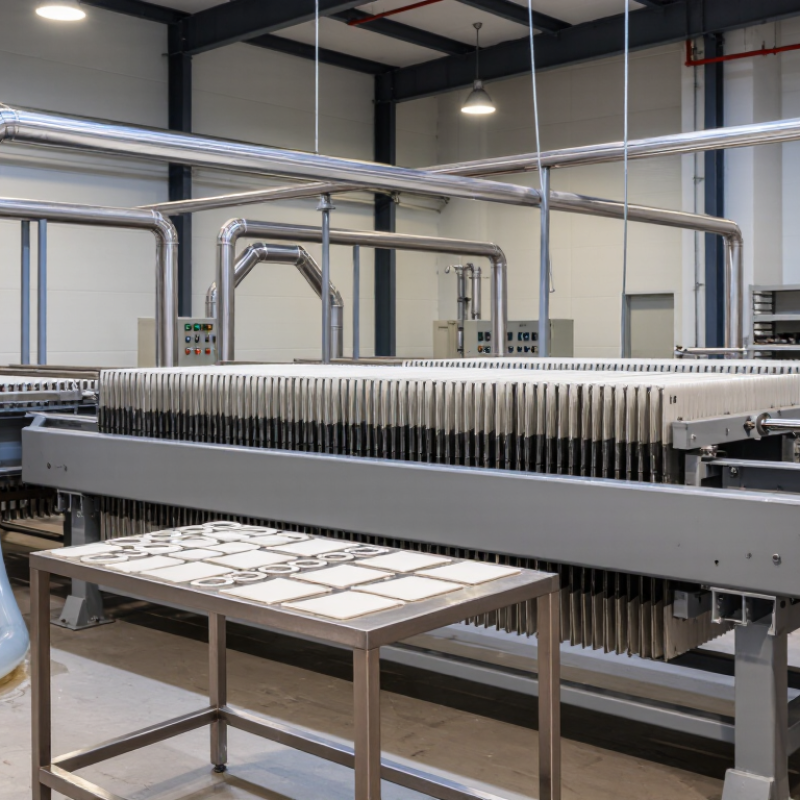
Plate Filters Explained: Design, Filtration Principles, and Key Components
Plate filters use a series of rigid plates to support filter media and create chambers for separating solids from liquids. In a common plate-and-frame design, slurry enters through a feed channel and spreads between cloth-covered plates. The plates may have recessed surfaces that form shallow chambers as the stack closes. Exact layouts vary with the process and the material being filtered.
Pressure pushes liquid through the cloth and drainage channels, while suspended solids collect as a filter cake. The liquid, or filtrate, exits through ports in the plates. As the cake thickens, flow usually slows and pressure behavior changes. That is normal, but it is not a reason to ignore operating data. Operators should track pressure, cycle time, and filtrate clarity for the specific slurry.
Key components include the plate pack, filter cloth, feed manifold, filtrate outlets, and a closing system, often hydraulic. Cloth weave and plate surface affect cake release, drainage, and cleaning effort. Small details matter. A poorly seated cloth can allow bypass, while uneven closure may cause leaks or plate damage. Drawings often make plate stacks look simple; actual performance also depends on slurry consistency, temperature, and careful maintenance. A trial with representative material can reveal issues that specifications alone may miss.
How to Evaluate Manufacturers Using Pressure, Filter Area, and Cycle-Time Data
When comparing plate filter manufacturers, request operating data from a slurry similar to yours, not just a best-case brochure figure. Pressure matters. A higher feed pressure does not automatically mean faster filtration; cake compressibility and cloth blinding can change the result. Ask for test conditions, including slurry solids, temperature, cloth type, and pressure profile.
Check the effective filter area against your required throughput. More area can increase capacity, but it may also mean a larger press and higher cloth or maintenance costs. Compare filtration time, cake discharge, washing, and cloth cleaning—not just the time under pressure. Cycle time counts. Small detail: confirm whether reported times include manual handling.
Ask for repeat tests or time-stamped cycle records, especially when results vary between batches. A pilot test using your actual feed can reveal uneven cake formation or slow discharge. The awkward part is that one test may still miss seasonal changes in the slurry. Treat the figures as evidence, not a guarantee. If a manufacturer cannot explain how pressure, area, and cycle time were measured, the comparison is not yet reliable.
10 Best Plate Filter Manufacturers for Global Buyers
For global buyers, the ten best plate filter manufacturers are not simply the largest suppliers. They are the ones that can match plate size, cloth material, operating pressure, and cake-discharge needs to a specific process. Grand View Research’s Industrial Filtration Market report estimated the global market at about US$34.5 billion in 2023, reflecting filtration’s broad role across manufacturing. That figure is useful context, not proof that any supplier will perform well in your plant.
Compare manufacturers using documented tests and site-specific evidence. Ask for filtration results with your actual slurry, including cycle time, cake moisture, and filtrate clarity. Check whether spare plates and cloths are available near your operating region, and confirm lead times in writing. ISO 16889 provides a recognized multi-pass method for evaluating hydraulic filter elements; it is not a substitute for testing a plate-filter system with process material. Details matter. A technically polished quotation can still omit cloth life or cleaning requirements. I would treat unsupported performance claims cautiously, even when the equipment looks robust on paper. Request drawings, material certificates, and references from applications with similar solids and throughput.
Typical density ranges of common plate-filter materials (g/cm³)
These approximate material-property ranges can help global buyers compare plate materials. Actual values vary by grade; this chart does not represent manufacturer-specific specifications.
Compare Filtration Accuracy (μm), Throughput (m³/h), and Cake Moisture (%)
10 Best Plate Filter Manufacturers for Global Buyers
Filtration accuracy, throughput, and cake moisture are more useful comparison points than a machine’s size alone. Check whether the stated micron rating describes nominal or absolute retention. The difference matters when fine particles must stay out of the filtrate. Ask for test conditions, including slurry concentration and filter cloth type. Otherwise, two quoted figures may not be comparable.
Throughput should be reported in cubic metres per hour, with the feed and cycle conditions clearly stated. A unit rated at 10 m³/h on thin slurry may perform differently on a dense, sticky feed. Cake moisture percentage also needs context: solids, washing, and pressing time can all shift the result. Request representative trial data, not just a best-case figure. One number can still mislead.
Tips: Compare results using your own slurry, or a sample with similar particle size and solids content. Record cycle time, filtrate clarity, and cake moisture after each run. Small variations are normal. If a supplier cannot explain the test setup, pause and ask again.
Assess Global Suppliers by Certifications, Service Coverage, and Spare-Part Lead Times
Global buyers should assess plate filter manufacturers by evidence, not catalogue claims. Request current ISO 9001 certificates, issuing-body details, scope, and expiry dates. Check whether the certificate covers the actual production and testing sites. Certification is a useful starting point, not proof of consistent performance. The World Bank’s 2023 Logistics Performance Index report estimates an average of 44 days for a shipment to travel from entry into the exporting country to arrival in the importing country. That is not a filter-plate delivery estimate, but it highlights why supplier location and logistics planning matter.
Map each supplier’s service coverage against your operating sites. Ask where trained technicians are based, what response times are contractually offered, and whether commissioning and operator training are included. For spare parts, request lead times by part number, with stock status separated from made-to-order items. Confirm shipping terms and whether the quoted timeline includes customs clearance. Keep it specific. Test the supplier’s claims with a sample urgent-order scenario, such as replacing a damaged plate during a scheduled shutdown. Compare promised and actual delivery times where references are available. A neat spreadsheet can still miss the real bottleneck: local service capacity may be limited even when parts are in stock.