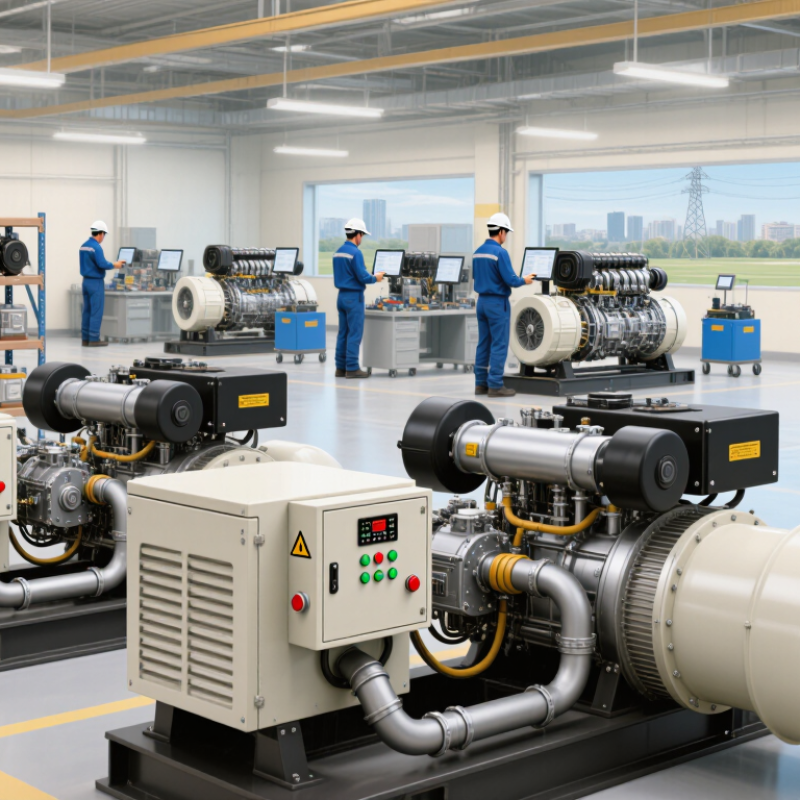
Choosing the best Gas Generator Set manufacturer in China requires more than comparing prices or attractive brochures. Buyers should examine the engine and alternator specifications, control system, cooling design, emissions data, and service coverage. A clean factory floor is encouraging. It is not proof of long-term reliability.
A dependable supplier should explain how its equipment performs under the intended load, fuel composition, ambient temperature, and operating schedule. Ask for documented test results, clear warranty terms, and examples of installations similar to yours. Check whether replacement parts and trained service technicians are available near the project site. Small details matter. A delayed sensor or unavailable filter can keep a generator offline.
An industry expert’s name and exact quotation should be verified against a reliable source before publication. No source material was provided here, so attributing a quotation would risk inventing one. A practical principle for this guide is: “Choose documented performance and responsive support, not promises alone.” Treat that as editorial guidance, not a sourced expert quote.
The sections ahead compare manufacturers through technical capability, product quality, customization, certification, and after-sales support. They also consider limitations. A capable factory may still be a poor fit if its service network cannot reach your site. The best choice is the one whose evidence matches your operating needs. There is no universal winner.
Best Gas Generator Set Manufacturer in China?
A gas generator set converts the energy in fuel into electricity. Its main parts are a gas engine, an alternator, a control panel, and cooling and exhaust systems. Depending on its design, it may run on natural gas, biogas, or another approved gaseous fuel. The right fuel matters: gas quality and supply pressure affect stable operation.
Inside the engine, a measured mixture of gas and air burns in the cylinders. This pushes pistons and turns a shaft. The shaft drives the alternator, where motion produces electrical power. The control panel monitors key readings such as voltage, frequency, temperature, and oil pressure. In practice, the set must match the site’s electrical load and operating pattern. Oversizing can waste fuel; undersizing can cause poor performance. That balance is easy to underestimate.

China’s gas generator set manufacturing industry brings together engine production, alternator integration, control systems, and acoustic enclosure work. Many factories serve different power ranges and operating conditions, from standby units for commercial buildings to continuous-duty equipment for industrial sites. This variety has encouraged specialized suppliers and a broad network of component makers. Details matter.
A capable manufacturer should explain how each set is assembled and tested, not just list its rated output. Buyers can ask for load-test records, fuel-consumption data, emissions specifications, and clear maintenance intervals. They should also confirm whether the unit is designed for natural gas, biogas, or another approved fuel, since gas composition can affect performance. Evidence matters. Service access matters, too: technicians need room to reach filters, valves, and control panels.
Manufacturing scale can support consistent production, but it does not guarantee quality by itself. Inspection practices, staff experience, and traceable component records make a real difference. Some product descriptions still leave practical questions unanswered, such as how a unit responds to changing loads or poor gas quality. That deserves closer review. A careful assessment considers installation conditions, noise limits, spare-parts availability, and local service capacity alongside price and power output.
Choosing a gas generator set manufacturer in China requires more than comparing prices and rated output. The IEA’s Electricity 2024 report says global electricity demand grew 2.2% in 2023 and was forecast to rise by an average 3.4% annually through 2026. This demand outlook makes dependable backup power important, but it does not prove any supplier’s quality. Ask for witnessed load-bank test records, fuel-consumption figures at several load levels, and noise measurements taken under stated conditions. Small details matter.
Check how the engine, alternator, controller, and cooling system perform as one set. Request component traceability, production inspection records, and service-part lead times in writing. ISO 8528 provides relevant performance and testing requirements for generating sets; certification claims should be verified against the actual factory and product scope. A site audit can reveal practical issues, such as inconsistent wiring labels or weak packing for sea transport.
I would not treat a polished brochure as evidence; that is an easy mistake. Ask for references from installations with similar duty cycles, then confirm warranty response times and commissioning support before comparing quotations.
Best Gas Generator Set Manufacturer in China?
Major Gas Generator Set Manufacturers in China
China’s major gas generator set manufacturers generally fall into three groups: engine producers, system integrators, and export-focused original equipment manufacturers. Their capabilities differ. Some build the engine and control system in-house; others assemble sets from sourced components. The IEA’s Gas 2024 report projects global gas demand to grow by about 2.3% annually through 2030, with Asia a key growth region. This supports market interest, but it does not rank Chinese suppliers.
Compare manufacturers by verified output, fuel consumption, emissions test records, and service coverage. Ask for test results using gas similar to your site’s supply. Methane content, altitude, and ambient temperature can change actual output. Check whether the quoted rating is standby or continuous duty, and confirm spare-parts lead times in writing. A polished brochure is not a load-bank test. Published comparisons are imperfect, too; specifications may use different test conditions.
Tips: Request a factory test report and a commissioning plan. Confirm who handles controls, installation, and warranty claims. Small details matter. A unit can meet its rating in a test room yet perform differently at a remote site.
Manufacturer selection checklist for comparing gas generator set suppliers. This is an evaluation framework, not a ranking of named companies.
| Evaluation dimension | What to compare | Evidence to request |
|---|---|---|
| Rated output and duty | Check the stated electrical output, operating hours, and whether the rating is for prime or standby service. These ratings are not interchangeable. | Rating plate, datasheet, and the applicable rating definitions in ISO 8528-1. |
| Fuel compatibility | Confirm the specific gas type and its allowable composition, pressure, and quality range. Natural gas, biogas, landfill gas, and other fuel gases are not automatically interchangeable. | Written fuel specifications and confirmation that the proposed engine configuration supports the project’s measured gas composition. |
| Electrical configuration | Verify the required output voltage, phase, frequency (commonly 50 Hz or 60 Hz depending on the application), and connection arrangement. | A project-specific electrical datasheet and generator alternator specifications. |
| Load response | Compare voltage and frequency response to load changes, including the proposed step-load requirements. Performance depends on the complete genset configuration and site conditions. | Applicable test results and performance data referenced to ISO 8528-5. |
| Electrical efficiency and fuel use | Compare fuel consumption or electrical efficiency at the same load points, fuel specification, and measurement basis. Avoid comparing figures stated on different bases. | Test data showing the fuel composition, ambient conditions, load, and whether auxiliary loads are included. |
| Emissions compliance | Requirements depend on the installation location, permitting rules, fuel, engine setup, and emissions-control equipment. There is no single emissions limit applicable to every project. | Applicable emissions test reports and documentation for the intended jurisdiction and project configuration. |
| Factory testing | Check that the supplier can document inspection and testing of the assembled generating set before shipment. | Factory test procedure and completed test report; ISO 8528-6 covers test methods for generating sets. |
| Noise and installation | Assess the sound measurement conditions, enclosure design, ventilation, exhaust routing, and site-specific installation constraints. | Noise test details, installation drawings, and confirmation of the measurement method, such as ISO 8528-10 where applicable. |
| Service and spare parts | Compare service coverage, response arrangements, maintenance intervals, spare-parts availability, and warranty terms for the destination country. | Written warranty, service plan, maintenance schedule, and parts-supply terms. |
| Quality documentation | Review traceability and quality-control processes for the offered equipment. A management-system certificate does not by itself prove genset performance. | Current certificates with scope and validity verified with the issuing certification body, plus product-specific test records. |
Note: Confirm the latest applicable standards, local codes, and project requirements before procurement.
Choosing a gas generator set manufacturer in China starts with the project’s actual load, not the catalogue’s headline rating. The International Energy Agency’s Electricity 2024 report estimated data centres used about 460 TWh globally in 2022, with demand potentially exceeding 1,000 TWh by 2026. That growth highlights the value of dependable backup power, but it does not justify oversizing every installation. Start with measured peak demand, motor-starting loads, operating hours, and the consequences of a failed start. Small details matter.
Ask shortlisted manufacturers for performance data at your site’s altitude and ambient temperature. Confirm the required gas pressure and composition, load-step response, emissions documentation, parts availability, and service coverage. Request a witnessed factory test and a clear commissioning plan. For critical facilities, check how the proposed set works with transfer switches and parallel controls. The IEA figures describe a broad market trend, not a sizing rule. I would still verify every assumption against the project’s load profile; early estimates can be wrong. A low purchase price means little if fuel quality varies or replacement parts take weeks to arrive.
Precision Cable Assemblies
16830 Pheasant Drive
Brookfield, WI 53005
Phone: 262-784-7887
Fax: 262-784-0681