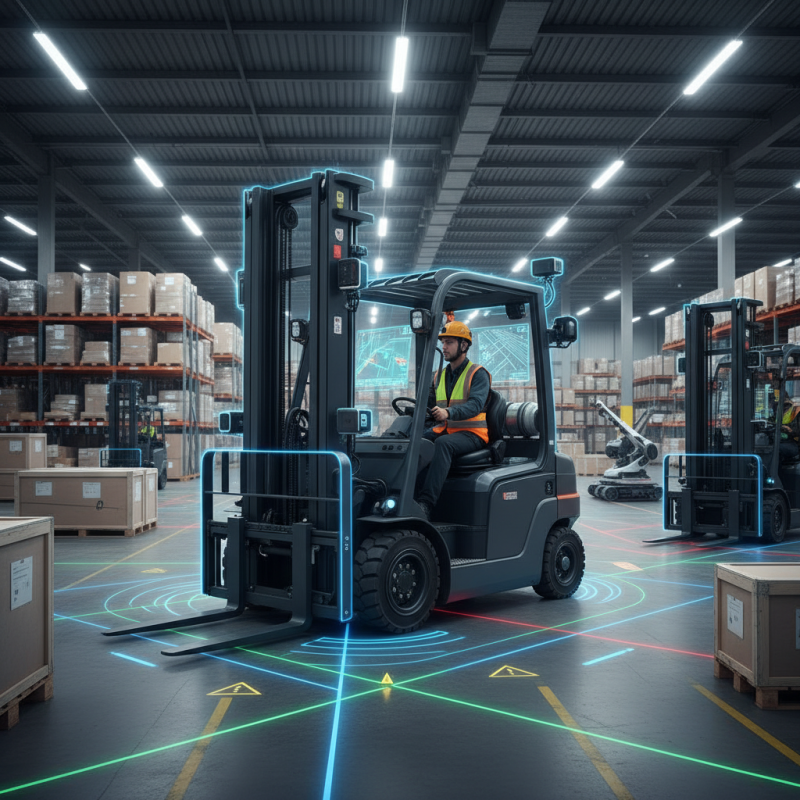
2026 Best Forklift Collision Detection System for Safety
In the bustling landscape of warehousing and manufacturing, safety is paramount. Forklift accidents can lead to severe injuries, costly damages, and operational disruptions. This urgency drives the need for an efficient Forklift Collision Detection System. Such systems integrate advanced technologies to monitor surroundings and prevent collisions.
With increasing reliance on forklifts, addressing safety concerns becomes critical. The 2026 Best Forklift Collision Detection System aims to enhance awareness and minimize risks within busy environments. These systems utilize sensors and algorithms to ensure operators are alerted to potential hazards.
However, not all systems are perfect. Some may struggle in complex environments, leading to false alarms. Continual refinement and testing are essential. The goal is to balance technology and practical application, ensuring worker safety without compromising productivity.
Overview of Forklift Collision Detection Systems
Forklift collision detection systems are becoming essential in modern warehouses. These systems help prevent accidents, protect workers, and maintain operational efficiency. They utilize various technologies, including cameras, sensors, and radar. When a potential collision is detected, the system alerts the operator. In some cases, it can even take control of the forklift to prevent impact.
Implementing these systems requires careful consideration. The effectiveness of sensors can vary based on the environment. For example, reflective surfaces may cause false alerts. Additionally, operators must be trained to understand the system alerts. Ignoring warnings could lead to accidents, negating the system's purpose.
While collision detection technology shows promise, challenges remain. Costs can be a barrier for smaller companies. Furthermore, over-reliance on automation may lead to complacency among operators. Regular training and hands-on practice are crucial to ensure that the human element is not overlooked. Balancing technology with human oversight is key to enhancing workplace safety.
Importance of Safety in Forklift Operations
Forklift operations are crucial in various industries. However, safety remains a significant concern. Statistics show that forklifts are involved in approximately 34,900 injuries annually in the United States alone. This accounts for about 10% of all workplace injuries. The need for effective collision detection systems has never been more pressing. Such systems are designed to prevent accidents by detecting obstacles and alerting operators.
Proper training and reliable technology are essential for safe forklift operations. A report from the National Institute for Occupational Safety and Health (NIOSH) highlights that training can reduce incidents by up to 60%. Yet, many companies fail to prioritize this, relying on outdated methods. Regular audits and updates to safety protocols are often overlooked. This can lead to grave errors, making safety systems inefficient.
Investing in collision detection technology can enhance safety significantly. However, it is not a cure-all. Machine failures or operator negligence can still occur. A comprehensive safety culture must be adopted within organizations. Employees should feel empowered to voice safety concerns without fear. With the right approach, the statistics can improve, significantly lowering the risks associated with forklift operations.
Key Features to Look for in Collision Detection Systems
When considering a forklift collision detection system, several key features are vital for enhancing safety. The system should offer real-time monitoring. This means it can identify potential collisions before they occur. Proximity sensors are essential. They alert operators when another object is too close. Such features help prevent accidents caused by blind spots.
Another aspect to consider is data logging. A reliable system records incidents and alerts. This data can be analyzed to improve safety protocols. Operators can learn from past mistakes. It’s also beneficial if the system can integrate with existing warehouse management software. This integration enhances overall operational efficiency.
User-friendliness cannot be overlooked. A system that is complicated might lead to errors. Operators need to understand alerts instantly. Training should be straightforward. Nonetheless, some systems may not be intuitive, leading to frustration and misuse. Regular updates to the software can improve functionality. However, not all systems prioritize this aspect, leaving gaps in performance.
Top Forklift Collision Detection Systems of 2026
In the fast-paced environment of warehouses and factories, safety is paramount. Forklift collision detection systems have evolved significantly, enhancing safety measures. These systems utilize advanced sensors to detect obstacles in real-time. They can prevent accidents before they happen, reducing injuries and damage.
The top collision detection systems of 2026 employ a combination of auditory and visual alerts. They notify operators of potential dangers, enabling quick reactions. Many systems use artificial intelligence to learn from patterns and improve over time. However, they are not foolproof. Regular maintenance is crucial for effectiveness.
Despite advancements, it’s important to recognize limitations. Some systems may struggle in complex environments. Operators must remain vigilant, as technology can't replace human awareness. Training is essential to maximize the benefits of these safety measures. Ultimately, a balance between technology and human input is necessary for optimal safety in the workplace.
2026 Best Forklift Collision Detection Systems
Future Trends in Forklift Safety Technologies
As the warehouse industry evolves, safety technologies for forklifts are set to become more advanced. Reports indicate that nearly 100,000 forklift accidents occur annually in the U.S. alone, resulting in significant injuries and fatalities. Future trends indicate a shift towards systems that integrate artificial intelligence and advanced sensors. These systems promise to detect potential collisions in real-time, significantly mitigating the risk of human error.
Tips: Regular training on new technologies can enhance safety awareness.
Innovations such as camera systems, LiDAR, and proximity sensors will be central to these advancements. Research shows that implementing these technologies can reduce accidents by up to 30%. However, companies often overlook proper maintenance of these systems. Real-world testing and industry feedback will be crucial for optimizing their effectiveness, ensuring that they work under various conditions.
Tips: Always evaluate data from safety systems to improve performance.
The focus on forklift safety technologies is a continuous journey. As the industry adopts these innovations, staying informed is essential. The discussion around best practices and ongoing training will play a significant role in shaping future approaches to forklift safety.