
Choosing a reliable Cnc Prototype supplier can determine whether a promising design reaches the market or returns to the drawing board. Global buyers must evaluate more than unit price. Material control, machining accuracy, communication, inspection records, and delivery consistency matter equally. A polished website proves little. A clear tolerance report proves more.
Dr. David A. Dornfeld, a respected manufacturing engineering scholar, observed, “Process knowledge is the foundation of manufacturing quality.” This principle shapes our selection of the 10 Best CNC Prototype Suppliers for Global Buyers. Each supplier should demonstrate practical experience with aluminum housings, stainless-steel brackets, engineering plastics, and complex five-axis parts. Look for measurable details: ±0.01 mm tolerances where appropriate, CMM inspection, surface-finish samples, and realistic lead-time promises.
Small details reveal competence. Can the supplier explain draft-free design changes? Can its engineer identify a thin wall likely to warp? Does it confirm the material grade before cutting? These moments matter.
The ranking also considers export experience, quotation clarity, engineering support, packaging, and after-sales communication. No supplier is perfect. Some may offer excellent precision but slower replies. Others may quote quickly yet provide limited process evidence. That trade-off deserves honest attention.
Our assessment is not a substitute for your own audit. Request samples, verify certifications, and test communication before placing a large order. Even experienced buyers can overlook a hidden cost, such as fixture preparation or special finishing. This guide offers a practical starting point, not an absolute verdict.
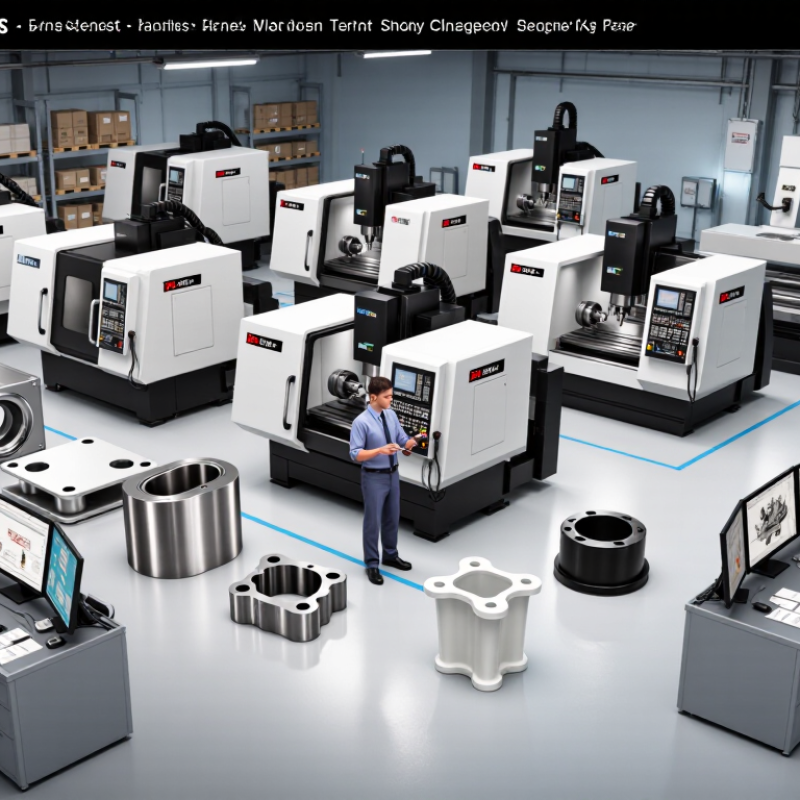
A reliable CNC prototype supplier proves capability before promising speed. The ISO Survey 2023 recorded more than 1.2 million ISO 9001 certificates worldwide, but certification alone is not enough. Buyers should request current process records, calibration dates, material certificates, and sample inspection reports. A supplier should explain how it controls burrs, warping, surface finish, and critical tolerances. Clear evidence matters.
Ask for a first-article inspection report with measured values beside drawing requirements. For complex parts, coordinate-measuring-machine data can expose errors that a visual check misses. The supplier should also show traceability from raw material to packed parts. According to the International Organization for Standardization, ISO 9001 emphasizes controlled processes, documented information, and corrective action. Those details reveal daily discipline.
Communication is another practical test. Send a demanding but realistic drawing. Watch how the supplier identifies thin walls, deep pockets, sharp internal corners, or unrealistic tolerances. Good engineers suggest manufacturable changes without silently altering the design. The 2024 Global Supply Chain Pressure Index showed that disruptions remain a serious planning risk, so credible suppliers should provide capacity updates and contingency plans. Lead time needs evidence.
Still, even experienced teams can miss something. Ask what failed in a recent prototype and how the process changed afterward. An honest answer may be more valuable than a polished presentation. Confirm packaging, inspection frequency, revision control, and ownership of design files before production begins. A dependable supplier makes quality visible, not merely promised.

This buyer-focused scorecard uses a 100-point evaluation model. Quality control and dimensional capability receive the highest weighting because dependable inspection, repeatability, and tolerance control are essential for functional CNC prototypes. Lead time, communication, and finishing or material options also influence supplier reliability for global projects.
Comparing CNC prototyping suppliers requires more than checking hourly rates. Grand View Research estimates the global CNC machine market reached USD 83.9 billion in 2023. It may exceed USD 128.8 billion by 2030. That growth expands choice, but not necessarily consistency. Ask which processes are available: three-axis, five-axis, turning, Swiss turning, milling, and wire EDM. Then check material experience. Aluminum, stainless steel, engineering plastics, and heat-resistant alloys need different cutting strategies. Capability claims mean little without sample inspection reports.
Review tolerances by feature, not by one headline number. A supplier should explain achievable tolerances for holes, flatness, threads, and thin walls. Request a CMM report, calibrated-gauge records, and a clear datum scheme. The ISO Survey 2023 recorded more than 1.2 million ISO 9001 certificates worldwide. Certification helps, but it does not prove prototype accuracy. Verify the certificate and ask how nonconforming parts are handled. That question exposes process maturity.
Compare lead time in stages: engineering review, programming, machining, finishing, inspection, and shipping. Ask whether the quoted date includes rework. It often does not. Evaluate DFM feedback, revision control, minimum order rules, and packaging for delicate edges. A useful quote lists machine type, material grade, tolerance assumptions, finish, inspection level, and delivery terms. Beware vague “production quality” language. It sounds reassuring. It is not measurable. One weak point remains: online reviews rarely reveal repeatability across batches. Order a small test piece, measure critical features independently, and record the results before releasing a larger prototype lot.
| Supplier Profile | Primary Buyer Region | Typical Prototype Lead Time | Standard Machining Tolerance | Maximum Part Envelope | Supported Processes | Common Materials | Surface Finishing Options | Inspection Capability | Quality Documentation | Typical Prototype Quantity | Low-Volume Production | Engineering Support | Best-Fit Application |
|---|---|---|---|---|---|---|---|---|---|---|---|---|---|
| Profile 01 | North America and Europe | 3–7 working days | ±0.05 mm | 400 × 300 × 200 mm | 3-axis and 5-axis milling; CNC turning | Aluminum, stainless steel, brass, POM, ABS, nylon | Bead blasting, anodizing, powder coating, polishing | CMM available | Dimensional report and material certificate | 1–50 pieces | Yes, up to 10,000 pieces | DFM review | Fast functional prototypes |
| Profile 02 | Europe and the United Kingdom | 5–10 working days | ±0.03 mm | 600 × 400 × 300 mm | 3-axis milling; CNC turning; Swiss turning | Aluminum, tool steel, stainless steel, PEEK, Delrin | Anodizing, electroless nickel, passivation, laser marking | CMM available | FAI report, inspection report, material traceability | 1–100 pieces | Yes, up to 25,000 pieces | Tolerance review | Precision mechanical assemblies |
| Profile 03 | Asia-Pacific and Australia | 4–8 working days | ±0.05 mm | 500 × 350 × 250 mm | 3-axis milling; 4-axis milling; CNC turning | Aluminum, copper, brass, mild steel, ABS, PC | Brushing, anodizing, powder coating, painting | Optical inspection | Inspection report available on request | 1–200 pieces | Yes, up to 15,000 pieces | Material selection | Consumer product development |
| Profile 04 | North America | 7–12 working days | ±0.02 mm | 300 × 250 × 150 mm | 5-axis milling; CNC turning; micro-machining | Stainless steel, titanium, Inconel, aluminum, PEEK | Passivation, electropolishing, anodizing, heat treatment | CMM and optical | FAI, PPAP support, material and process records | 1–30 pieces | Yes, up to 5,000 pieces | Application review | Aerospace and medical prototypes |
| Profile 05 | Europe and Asia-Pacific | 6–14 working days | ±0.03 mm | 800 × 500 × 400 mm | 3-axis milling; 5-axis milling; large-part turning | Aluminum, steel, stainless steel, brass, engineering plastics | Powder coating, plating, anodizing, brushing | Portable CMM | Dimensional report and certificate of conformity | 1–75 pieces | Yes, up to 20,000 pieces | Assembly support | Large housings and equipment parts |
| Profile 06 | Europe | 8–15 working days | ±0.02 mm | 450 × 300 × 200 mm | 5-axis milling; CNC turning; wire EDM | Tool steel, stainless steel, titanium, aluminum, copper | Heat treatment, passivation, polishing, black oxide | CMM available | FAI, material traceability, calibration records | 1–40 pieces | Yes, up to 8,000 pieces | Process planning | Tooling and high-precision components |
| Profile 07 | Global export markets | 3–6 working days | ±0.08 mm | 350 × 250 × 180 mm | 3-axis milling; CNC turning | Aluminum, brass, mild steel, POM, ABS, acrylic | Bead blasting, painting, polishing, simple anodizing | Calipers and gauges | Basic inspection report | 1–500 pieces | Yes, up to 30,000 pieces | Basic DFM | Cost-sensitive early prototypes |
| Profile 08 | North America and Europe | 10–18 working days | ±0.02 mm | 250 × 200 × 150 mm | 5-axis milling; Swiss turning; micro-machining | Titanium, stainless steel, cobalt alloys, PEEK, PPSU | Electropolishing, passivation, laser marking, sterilization support | CMM and optical | FAI, full traceability, process validation support | 1–25 pieces | Yes, up to 3,000 pieces | Regulated-product support | Medical and laboratory devices |
| Profile 09 | Asia-Pacific | 5–9 working days | ±0.05 mm | 700 × 450 × 300 mm | 3-axis milling; 4-axis milling; CNC turning | Aluminum, stainless steel, brass, carbon steel, nylon | Anodizing, powder coating, plating, silk screening | Optical inspection | Material certificate and dimensional report | 1–300 pieces | Yes, up to 50,000 pieces | Production scaling | Automotive and industrial prototypes |
| Profile 10 | Global project delivery | 7–14 working days | ±0.03 mm | 500 × 400 × 250 mm | 3-axis and 5-axis milling; CNC turning; EDM | Aluminum, stainless steel, tool steel, brass, PEEK, nylon | Anodizing, nickel plating, powder coating, bead blasting | CMM available | FAI, inspection report, certificate of conformity | 1–100 pieces | Yes, up to 20,000 pieces | Full DFM review | Complex multi-part prototypes |
Global buyers need more than a low quote when choosing CNC prototype suppliers. Grand View Research reports that the global CNC machine market reached about USD 83 billion in 2022. It also projects roughly 10% annual growth through 2030. This growth creates more supplier options, but comparison becomes harder.
An effective shortlist of ten suppliers should examine material traceability, machine capability, inspection methods, delivery control, and communication. Request CMM reports, first-article samples, and clear tolerance notes. Certification helps. However, certification alone does not prove prototype consistency. The ISO Survey 2023 recorded more than 1.26 million ISO 9001 certificates worldwide, yet certificates cannot measure surface finish or packaging quality. Recent inspection records provide stronger evidence.
Freight planning matters for global buyers. The World Bank’s Logistics Performance Index 2023 shows significant differences in customs efficiency, tracking, and delivery reliability between economies. Ask each supplier about export documents, production updates, and replacement procedures. One weakness in my own evaluations is overvaluing polished websites. A factory with slower replies may still deliver better parts. Test the relationship with a small paid batch. Real evidence beats promises.
Selecting a CNC prototype supplier requires more than comparing hourly rates. In practical sourcing reviews, quality starts with traceable inspection data, not attractive photographs. Ask for material certificates, dimensional reports, calibration records, and sample tolerances. ISO’s 2023 Survey recorded more than one million ISO 9001 certificates worldwide, yet certification alone cannot prove machining capability. Request a first-article inspection report for critical holes, threads, and surface finishes. Ask for evidence.
Cost needs a complete view. A low unit price may exclude programming, tooling, finishing, packaging, inspection, or customs handling. Compare identical drawings and quantities across written quotations. Include revision charges and remake policies. Material waste also matters, especially for aluminum blocks or engineering plastics. The 2024 Manufacturing Outlook from Deloitte highlights continuing pressure from labor, material, and supply-chain costs. A cheaper quote can become expensive after one failed batch. I have seen that gap underestimated.
Lead time should be measured from drawing release to accepted delivery, not from purchase order to machining. The World Bank’s 2023 Logistics Performance Index reports an average 44-day journey from port entry to final destination, showing how transport can outweigh production time. Ask suppliers to separate programming, machining, inspection, and shipping days. Confirm capacity during peak periods. A realistic schedule includes one approval loop and a small buffer. Still, forecasts can fail. That uncertainty deserves a visible contingency, not a hidden promise.
Selecting a CNC prototype supplier should begin with engineering fit, not the lowest quotation. Ask for machine specifications, tolerance capability, material certificates, and inspection samples. For an aluminum housing, a capable supplier should explain datums, tool access, and wall thickness before cutting. The ISO Survey 2023 recorded 1,265,216 ISO 9001 certificates worldwide. Certification helps, but it cannot guarantee accuracy, communication, or honest lead times. That gap matters in real sourcing.
Tips: Send identical drawings to every candidate. Request DFM feedback before comparing prices. Ask for a first-article inspection report. Check calibration records, material traceability, and corrective-action procedures. Do not accept vague claims. A short video call can reveal whether engineers understand your critical dimensions.
Price is only one selection factor. Review response speed, engineering questions, sample approval, packaging details, and export documentation. A 2024 State of Smart Manufacturing report found that 95% of manufacturers were investing in smart technologies. This suggests suppliers need stronger digital workflows, not only modern machines. Still, technology can be overstated. A supplier may show an impressive dashboard while missing a simple surface-finish requirement. Request measurable evidence, such as inspection data, revision control, and capacity records. For urgent projects, confirm time-zone coverage and escalation contacts in writing. I would also leave room for one uncomfortable question: what happens when the first prototype fails?
Precision Cable Assemblies
16830 Pheasant Drive
Brookfield, WI 53005
Phone: 262-784-7887
Fax: 262-784-0681