
Choosing the best China Color Tft Lcd Screen supplier requires more than comparing prices. Display quality, production consistency, technical support, and delivery reliability all affect the final product. A bright screen may look impressive in a sample, yet show uneven backlighting after long operating hours. Careful evaluation matters.
The right supplier should understand resolution, viewing angle, brightness, touch integration, interface types, and operating temperature. Experience with industrial panels, medical equipment, automotive displays, or smart devices can reveal practical strengths. Ask for detailed datasheets, sample testing, quality inspection records, and clear warranty terms. Certifications can support credibility, but they do not replace real performance testing.
Small details often reveal supplier reliability. Check connector placement, frame dimensions, protective glass, and screen behavior under changing temperatures. Response speed also matters when engineers request a customization or solve a technical issue. A supplier that communicates clearly is usually easier to work with during production changes.
No supplier is perfect. Even an experienced manufacturer may face material delays, design limits, or occasional quality problems. The important question is how openly the company handles them. Does it provide traceable inspections? Does it explain corrective actions? Does it protect agreed specifications?
This guide examines the qualities that define a dependable Chinese Color Tft Lcd Screen supplier. It considers manufacturing capability, product consistency, customization, compliance, and long-term cooperation. The “best” choice depends on the application, budget, volume, and risk tolerance. A low quotation may save money today, but unstable quality can create expensive redesigns later. Careful judgment remains essential.
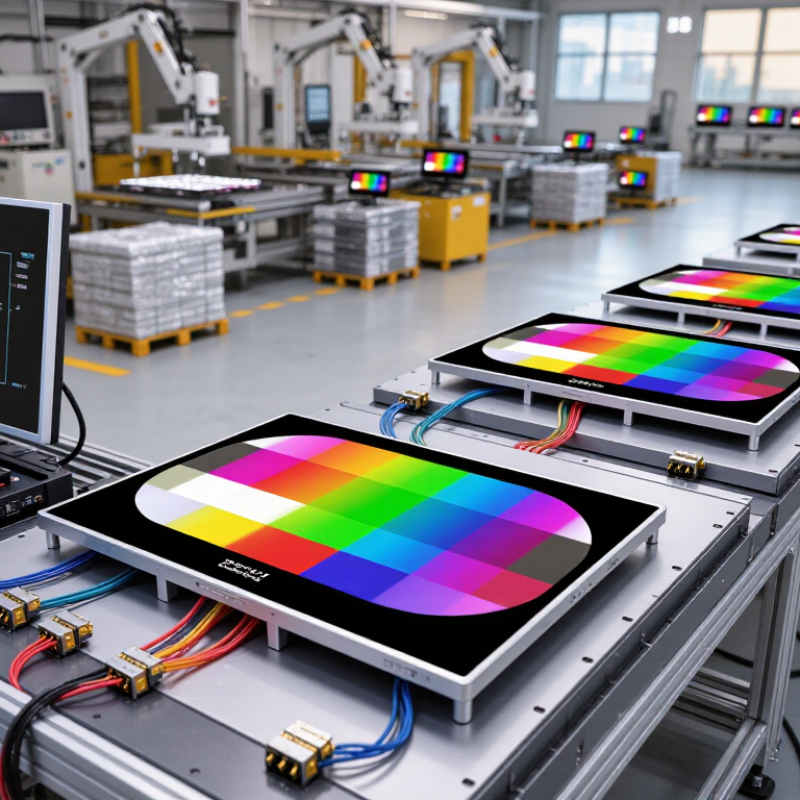
China’s TFT-LCD supply landscape is shaped by large production capacity, integrated component networks, and strong export logistics. Industry estimates often place China’s share of global LCD capacity above 70%, although figures vary by year and measurement method. Large plants support televisions, industrial panels, vehicle displays, medical equipment, and handheld devices. This scale can reduce unit costs, but it does not guarantee consistent quality.
Export data also requires careful reading. Customs records for liquid-crystal display modules may combine different sizes, technologies, and finished-product categories. A high export value can reflect larger panels, not necessarily better engineering. Buyers should compare shipment volume, average unit value, panel size, resolution, brightness, and rejected-sample rates. Supplier audits remain useful. Paper capacity is not always available capacity.
Tips: Request recent production photos, sample test reports, and monthly output data. Confirm whether glass cutting, bonding, backlight assembly, and final inspection occur in-house. Ask for export references by destination region, but verify them independently. A supplier with lower capacity may provide better communication and tighter control. That is easy to overlook. Also, specifications can change after sampling, especially for touch interfaces and outdoor brightness. Put every critical parameter into the purchase agreement, then test a pilot batch before scaling orders.
Choosing the best China color TFT LCD supplier starts with measurable display quality, not catalogue language. For indoor instruments, 300–500 cd/m² usually provides readable text without excessive glare. Outdoor equipment may require 600–1,000 cd/m², especially beneath glass or direct sunlight. However, peak brightness alone can mislead. A panel may reach 1,000 cd/m² briefly while sustained brightness falls sharply after heating.
Resolution must match viewing distance and screen size. A 7-inch panel at 1,024 × 600 pixels can suit control interfaces, while 1,920 × 1,080 pixels gives finer maps, images, and dashboards. The 2024 SID Display Week technical papers emphasize efficiency, uniformity, and thermal stability alongside pixel count. These factors deserve supplier-level verification. Ask for luminance uniformity data, measured across at least nine points. Small corners matter.
Color performance also needs a clear reference. IEC 61966-2-1 defines the sRGB color space, and a practical benchmark is at least 99% sRGB coverage with documented calibration conditions. The 2023 International Color Consortium industry guidance stresses that coverage and accuracy are different measurements. A screen can cover sRGB yet display inaccurate skin tones. I have seen this gap in sample evaluations. It is easy to overlook. Request Delta E results, viewing-angle tests, and brightness readings after thermal aging. A reliable supplier should provide test methods, not only attractive numbers.
When choosing a China color TFT LCD screen supplier, compliance should be checked beyond a certificate on a website. The ISO Survey 2022 recorded about 1.26 million ISO 9001 certificates worldwide. It also reported more than 529,000 ISO 14001 certificates. These figures show broad adoption, but certification alone does not prove stable display quality.
Ask for the current certificate, certification scope, factory address, and recent audit status. ISO 9001 should connect with incoming inspection, pixel checks, brightness testing, and traceability. ISO 14001 should cover waste handling, energy controls, and chemical management. Small details matter. A missing revision date can signal weak document control.
RoHS and REACH require deeper evidence. RoHS restricts ten substance groups in electrical and electronic equipment. REACH compliance requires monitoring substances of very high concern, especially as the European Chemicals Agency updates its Candidate List. Request material declarations, supplier test reports, and laboratory results for glass, polarizers, backlights, cables, and adhesives. Independent testing is useful, though not perfect. Reports may cover one batch only. A careful supplier should explain sampling limits and corrective actions. That honest gap is often more valuable than an impressive compliance claim.
Choosing the best China color TFT LCD screen supplier starts with application fit, not a catalog image. Measure the enclosure, viewing distance, and expected light conditions. A 3.5-inch panel suits a handheld meter, while a 10.1-inch display gives operators clearer alarms. Check active area, bezel limits, thickness, and mounting holes together. Small mismatches become expensive during tooling. I have seen a bright panel fail because its connector faced the wrong direction. Details matter.
The interface must match the controller and cable length. RGB works for simple embedded designs, while LVDS or MIPI DSI supports higher resolutions with fewer signal lines. Confirm pin definitions, voltage levels, initialization commands, and connector locking. A 60 Hz screen suits menus and instruments. Choose 90, 120, or 144 Hz for smooth motion, camera previews, or responsive controls. Higher refresh rates increase bandwidth, power, and heat. Faster is not automatically better.
Touch needs equal attention. Projected capacitive touch feels natural, but gloves, water, and thick cover glass can reduce accuracy. Ask for tests using the actual cover lens, firmware, and operating environment. Request samples, optical measurements, aging data, and interface documentation before volume production. One weakness remains: sample performance may not represent every batch. Set acceptance limits, inspect incoming panels, and keep a backup design option. A reliable supplier answers technical questions clearly, even when the answer is inconvenient.
Choosing the best China color TFT LCD screen supplier requires more than comparing unit prices. Total cost begins with the minimum order quantity, or MOQ. A low MOQ can reduce inventory pressure, but it may increase the screen price. A high MOQ can improve pricing, yet unused displays may become outdated before installation. Request a trial order with actual samples, packaging details, and inspection records.
Lead time also affects the real budget. Ask whether the quoted period covers component purchasing, production, testing, and shipment. A supplier promising seven days may exclude controller boards or final calibration. That creates costly delays. Confirm the production schedule in writing, including the response plan for shortages. I once viewed delivery speed as the strongest advantage. That was too simple. Stable output matters more than an impressive promise.
Warranty terms should describe coverage, repair procedures, and response times. Clarify whether dead pixels, backlight failure, color drift, or touch defects qualify. A practical agreement should define replacement quantities and freight responsibility. AQL inspection adds another layer of reliability. AQL 1.0 is stricter than AQL 2.5, so it usually requires tighter process control and may raise inspection costs. Specify critical, major, and minor defect limits separately. Review random samples from several production batches, not only one polished sample. Keep photographs, test data, and signed acceptance records. Small details prevent expensive arguments.
Precision Cable Assemblies
16830 Pheasant Drive
Brookfield, WI 53005
Phone: 262-784-7887
Fax: 262-784-0681