What Is Adjusting Pop Up Sprinklers and How Does It Work?
Adjusting Pop Up Sprinklers is an essential part of maintaining an efficient irrigation system. These compact sprinkler heads rise from the ground when water pressure begins, then disappear after watering. Correct adjustment helps distribute water evenly across lawns, garden beds, and narrow planting areas. It also prevents overspray on driveways, walls, and walkways.
The process usually involves checking the spray pattern, turning the adjustment screw, and observing the coverage. Small changes can make a noticeable difference. A nozzle aimed only a few degrees too far may waste water against a fence. A weak stream may indicate clogged filters, low pressure, or damaged components. Experience shows that adjustments should happen while the system runs. Dry soil can hide uneven coverage.
Begin carefully. Do not force the adjustment screw. Different sprinkler models use different tools and settings, so the manufacturer’s instructions remain important. Clean water filters and inspect the pop-up stem before changing the pattern. Sometimes, the sprinkler is not the real problem. That can be easy to miss.
Reliable irrigation depends on more than strong water flow. Proper spacing, suitable nozzles, soil type, and seasonal weather all influence performance. After adjustment, check the soil several inches below the surface. It should feel moist, not muddy. A practical test takes only a few minutes, but it can reveal dry patches and runoff. This guide explains how pop-up sprinklers work, how to adjust them safely, and where common mistakes occur. Expect some trial and error. Even experienced gardeners occasionally overcorrect a sprinkler head.
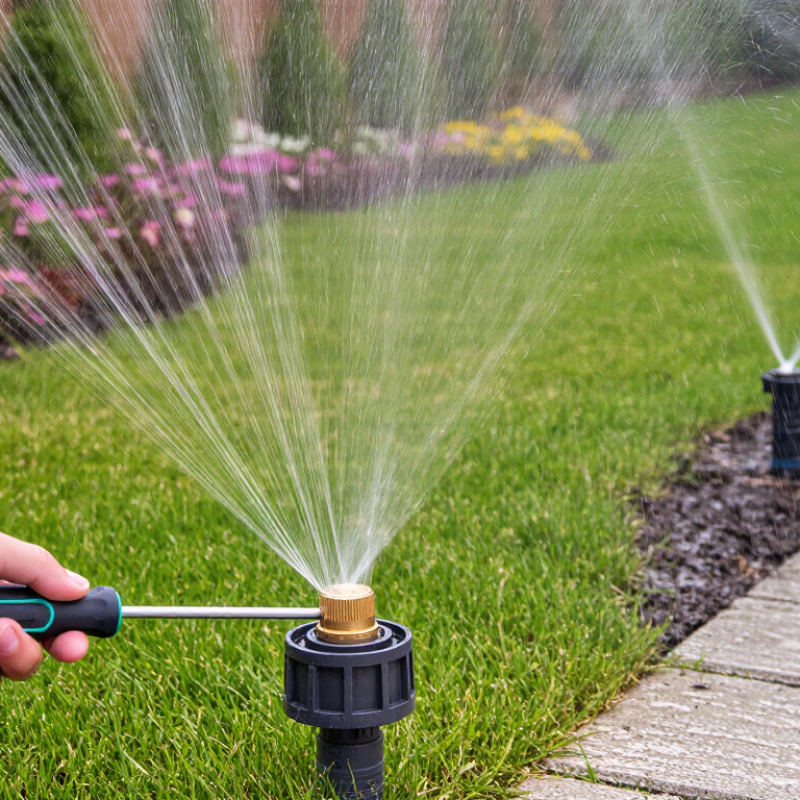
How Pop-Up Sprinklers Work and Why Adjustment Matters
A pop-up sprinkler stays below the soil surface until a zone valve opens. Water pressure then lifts its stem, allowing the nozzle to spray. When the cycle ends, the stem retracts into its housing. The mechanism is simple, but its coverage is not automatically accurate. Nozzle type, water pressure, soil slope, and wind all affect performance. During a field check, I look for dry grass beside puddled soil. That pattern usually signals poor adjustment, not insufficient watering.
Adjustment matters because a small spray error can waste substantial water. The U.S. Environmental Protection Agency reports that landscape irrigation uses nearly 9 billion gallons of water daily in the United States. It also estimates that up to 50% can be lost through evaporation or runoff. A misaligned head may spray a sidewalk, fence, or driveway instead of the root zone. Adjusting the arc keeps water inside the planted area. Reducing the radius can prevent overspray near hard surfaces. However, pressure problems are sometimes mistaken for nozzle problems. That mistake deserves more attention.
Tips: Run each zone for two minutes and inspect every head. Clean blocked nozzles carefully. Set the arc after the stem rises fully. Check for misting, which may indicate excessive pressure. Measure catch-can depth across the lawn for a practical comparison. The Irrigation Association recommends checking distribution uniformity, because equal operating time does not guarantee equal coverage. Soil still decides how fast water should be applied. Recheck adjustments after mowing, edging, or heavy rain. Perfect settings rarely stay perfect.
Main Parts That Control Pop-Up Sprinkler Performance
What Is Adjusting Pop-Up Sprinklers and How Does It Work?
Main Parts That Control Pop-Up Sprinkler Performance
Adjusting a pop-up sprinkler means changing its spray direction, arc, or water range. The nozzle controls how water leaves the sprinkler head. A filter screen catches grit before it blocks the small openings. Even a little sand can distort the spray pattern. Clean water flow matters.
The adjustment screw changes the spray distance on many pop-up models. Turning it carefully reduces the radius, while loosening it can restore greater coverage. The internal stem rises when water pressure builds. Its seal keeps water from leaking around the stem. If the seal wears out, the sprinkler may remain partly raised after watering. That creates a clear mowing hazard.
The body and swing connection keep the head aligned with the buried pipe. A tilted body often causes uneven coverage, even with a perfect nozzle. I once reduced the radius to stop overspray, but the lawn still had dry patches. The real problem was a clogged filter. Check the pattern first. Then adjust.
Water pressure also affects performance. Low pressure produces weak streams and incomplete rotation. Excessive pressure creates mist, runoff, and wasted water. Use a pressure gauge when possible. Small changes are safer than forceful turns. One overlooked detail is soil movement; a settled sprinkler head may need leveling before any adjustment works.
What Is Adjusting Pop-Up Sprinklers and How Does It Work?
Sprinkler performance is controlled by the nozzle, pressure, filter, riser, and adjustment mechanism. The chart shows how nozzle flow typically changes with operating pressure. Values are calculated using the standard pressure-flow relationship Q₂ = Q₁ × √(P₂/P₁), with reference flows of 1, 2, and 3 gallons per minute at 30 psi.
Increasing pressure generally increases flow, while the nozzle determines the basic discharge rate. The arc-adjustment ring controls the watering angle, the radius screw changes throw distance, and a clean filter helps maintain stable performance.
How to Check Spray Coverage, Pressure, and Alignment
Adjusting pop-up sprinklers starts with observing the spray pattern, not turning random screws. Run the system for five minutes and place identical cups around the lawn. Compare water depths from each cup. Even coverage usually means similar measurements, while dry strips reveal poor spacing or blocked nozzles. Check whether each spray reaches the neighboring sprinkler. This head-to-head pattern matters more than a strong-looking stream.
Tips: Clean the nozzle before adjusting it. Measure pressure at the valve and at the sprinkler body if possible. Low pressure can cause weak, uneven sprays, while excessive pressure creates mist and runoff. Turn the radius screw slowly, using quarter-turn adjustments. Mark the original position first. Small changes are easier to evaluate.
Alignment also affects coverage. With the sprinkler running, rotate the arc adjustment until water stops at the lawn edge, not the pavement. Keep the head level with the soil surface. A tilted body can spray too high on one side. Clear grass and soil from the pop-up shaft, but do not force a stiff mechanism. Soil often settles after installation, so a perfect setting today may shift later. Recheck after mowing, heavy rain, or nearby landscaping work. One test can mislead. Turf color and puddles still provide useful evidence.
Common Adjustment Problems and Practical Solutions
What Is Adjusting Pop-Up Sprinklers and How Does It Work?
Adjusting a pop-up sprinkler means changing its arc, distance, flow, or nozzle position. The goal is even coverage, not maximum spray. The U.S. Environmental Protection Agency reports that outdoor use exceeds 30% of household water consumption, reaching nearly 9 billion gallons daily in the United States. A misaligned head can waste water on sidewalks while leaving dry, pale grass nearby.
Common problems are easy to recognize. Water sprays into the street when the arc is too wide. Dry corners usually indicate poor spacing, blocked nozzles, or insufficient pressure. Turn the adjustment screw slowly, often by one-quarter turns, and watch the spray pattern. Clean the filter and nozzle before changing pressure. Check it wet. A tilted stem may need careful repositioning rather than stronger flow.
Uneven misting can come from wind, low pressure, or a damaged nozzle. The Irrigation Association’s landscape guidance recommends matching precipitation rates across a zone, yet many residential systems mix incompatible nozzles. That mistake feels minor, but it creates puddles and dry strips. I still misjudge coverage when checking only one head. Walk the entire zone during operation. EPA WaterSense guidance also stresses regular maintenance because small leaks and overspray can quietly increase consumption. Not perfectly. Recheck after mowing, soil settling, or seasonal pressure changes.