Choosing the 2026 Best Steel Threaded Lifting Socket Suppliers? requires more than comparing prices or polished websites. The Steel Threaded Lifting Socket supports controlled lifting, mold handling, and temporary load transfer. Its performance depends on thread accuracy, steel grade, heat treatment, weld quality, and documented testing. Small defects can become serious at a busy production line.
The World Steel Association reported approximately 1.88 billion tonnes of crude steel production worldwide in 2024. That scale shows strong material availability, but it does not prove supplier reliability. Buyers should examine mill certificates, batch traceability, dimensional inspection records, and proof-load results. Supplier quality systems aligned with ISO 9001 can improve consistency. Welding controls referencing ISO 3834 may also provide useful evidence. For lifting applications, engineers should review applicable requirements under standards such as EN 13155, ASME B30.20, or relevant local regulations.
Real experience matters here. A socket may look perfect while its internal thread is slightly rough or misaligned. Ask whether samples were tested with the intended lifting eye, load direction, and installation torque. Request clear working load limits, safety factors, surface-treatment details, and inspection intervals. The best suppliers explain limitations, not only strengths. That is important.
Market reports from Grand View Research and MarketsandMarkets indicate continuing demand for industrial lifting and material-handling equipment, supported by construction, manufacturing, and infrastructure investment. However, supplier rankings remain imperfect because published data rarely reveals factory-level rejection rates. This guide therefore evaluates technical evidence, manufacturing experience, customization capability, delivery reliability, and after-sales support. A lower quotation may still create higher operational costs. Reflect carefully. Safety deserves more than a convenient number.
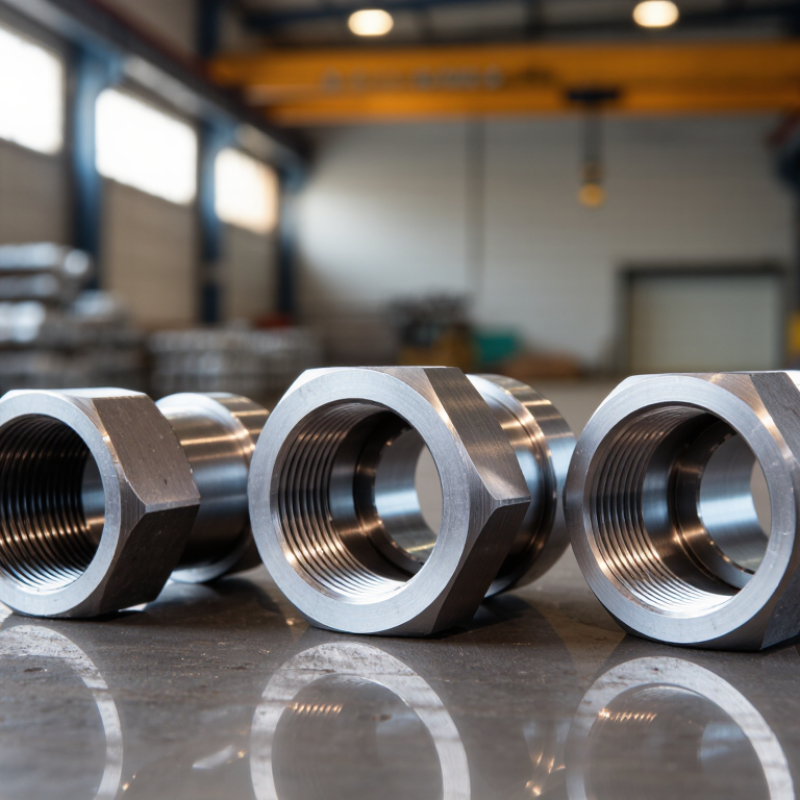
Steel threaded lifting sockets are embedded steel components used to lift precast concrete panels, stairs, beams, and other heavy units. Each socket contains an internal thread and an anchoring body. The body transfers lifting forces into the concrete, while a compatible lifting eye or threaded insert connects during handling.
In practice, workers position sockets before casting and keep the thread protected from concrete. After curing, they inspect the socket, remove the cover, and attach approved lifting hardware. Engineers should verify load direction, concrete strength, edge distance, and reinforcement details. A socket may look strong, yet poor placement can cause cracking or rotation. I have seen installation drawings create confusion when dimensions were not checked against the actual mold.
Tips: Select sockets with traceable test data and clear installation instructions. Match the thread exactly. Do not mix components casually. Inspect threads for dirt, rust, or deformation before every lift. Suppliers should provide rated capacities, material details, batch records, and guidance for temporary lifting conditions. A qualified person must approve the complete lifting arrangement, including slings, angles, anchors, and site conditions. Small details matter.
In 2026, safe steel threaded lifting socket performance depends on more than a supplier’s catalogue claims. ASME B30.20 provides guidance for below-the-hook lifting devices, while ASME BTH-1 addresses design categories and service classes. In Europe, EN 13155 covers removable lifting attachments, including strength, marking, and testing expectations. These standards may not describe every socket design directly, so engineers must confirm the product’s exact scope and application.
A reliable supplier should provide material certificates, dimensional drawings, working load limits, and documented proof-test results. Thread engagement must match the specified bolt or lifting point. Surface damage, cross-threading, and side loading can reduce capacity quickly. Fatigue matters too, especially in factories with repeated lifting cycles. Independent testing under ISO 17025 competence adds credibility, but paperwork alone is not proof of safe installation. That is an uncomfortable point.
Tips: Ask for traceability from raw steel to finished socket. Check thread condition before every lift. Confirm the load direction and lifting angle. Never treat a higher rated load as automatically safer. Supplier experience helps, but site inspection remains essential. Some standards leave design interpretation open, so a qualified engineer should review unusual loads, temperature exposure, corrosion, and dynamic movement before approval.
Choosing a steel threaded lifting socket starts with the steel grade, not the catalog capacity. ISO 898-1 lists property class 8.8 bolts at 800 MPa nominal tensile strength and class 10.9 at 1,000 MPa. Higher strength can reduce size, but it may increase brittleness and stress concentration. Confirm toughness, heat treatment, corrosion exposure, and traceable mill certificates.
Thread design changes real performance. Coarse threads usually tolerate dirt and minor damage better. Fine threads can offer greater tensile area and adjustment accuracy, but they need cleaner engagement. Check the internal thread length, root radius, pitch diameter, and whether the thread is rolled or cut. ASME BTH-1-2023 separates design category and service class, reminding engineers that repeated loading matters. A static rating alone is incomplete.
Tips: Compare working load limits, not breaking loads. Apply the stated design factor. Inspect the first engaged threads, seating face, and socket alignment. Never assume a larger diameter solves poor engagement. A small angular gap can create uneven loading. Test reports should identify grade, heat number, thread gauge results, proof load, and fatigue method. I have seen capacity tables look convincing while ignoring side loading. That is a useful warning: calculations can be correct, yet the installation can still be wrong.
A reliable steel threaded lifting socket supplier understands how small components affect an entire lifting system. Their engineers should explain thread dimensions, material grades, working load limits, and installation requirements clearly. They should not hide behind vague claims. Practical experience matters here. A knowledgeable supplier can discuss socket performance after repeated loading, vibration, and exposure to moisture.
Look for documented quality controls. Each production batch should have material certificates, dimensional inspection records, and traceable identification. Load testing should follow recognized industry methods, with results available for review. The supplier should also explain how sockets are inspected for cracks, thread damage, and surface defects. Clear drawings help. So do responsive technical support. A dependable team answers questions before delivery, not after a failure.
No supplier is perfect. That matters. Reliable companies admit production limits, clarify uncertain data, and correct mistakes openly. I would ask for sample sockets before placing a large order. Check the thread fit by hand, then inspect the socket under suitable lighting. A tiny burr can signal poor finishing, although one defect does not prove the whole batch is weak. Delivery consistency, packaging quality, and after-sales records reveal more than polished sales language. Choose a supplier willing to discuss risks, maintain records, and improve when feedback exposes a weakness.
Selecting a steel threaded lifting socket supplier starts with your actual lifting conditions, not a catalog price. Define the working load, safety factor, thread size, embedment depth, concrete strength, and lifting angle. A socket for precast panels may face different stresses from one used in industrial machinery.
Ask suppliers for material certificates, dimensional drawings, load-test records, and clear traceability. Experienced manufacturers should explain steel grade, heat treatment, corrosion protection, and thread tolerances in practical terms. Request samples when possible. A thread that feels rough or binds during fitting can create expensive delays on site.
Budget comparisons should include tooling, inspection, packaging, delivery, and replacement costs. A cheaper socket may require extra testing or fail to match your installation equipment. Check whether the quoted load applies to axial lifting only. Angled loading can change performance significantly. Ask for written technical support and documented quality procedures.
Do not rely on polished certificates alone. Compare production consistency across batches and inspect several pieces from the same shipment. I have found that small dimensional differences can matter during repeated assembly. My first quotation comparison was too simple; it ignored testing and installation time. That mistake changed the final cost. A reliable supplier should welcome detailed questions, admit application limits, and recommend an engineer’s review when site conditions remain uncertain.
| Supplier Profile | Typical Application | Common Material and Finish | Typical Thread and Size Range | Indicative Working Load Limit | Quality and Compliance Evidence | Typical Lead Time | Typical MOQ | Relative Budget Level | Best Selection Criteria |
|---|---|---|---|---|---|---|---|---|---|
| Standard industrial lifting-hardware supplier | General fabrication, maintenance lifting points, machine bases, and removable lifting fixtures | Forged or machined alloy steel Common finishes include zinc plating, black oxide, or painted protection. | Common metric coarse threads such as M12–M30 Thread dimensions must match the certified lifting point and parent material. | Approximately 0.3–3.0 tonnes per lifting point Capacity depends on geometry, thread engagement, loading angle, and installation. | Material certificate, dimensional inspection report, rated-load marking, and proof-test documentation where specified | 2–6 weeks for standard items | 10–50 pieces | Low to medium | Choose when standard dimensions, moderate volumes, and short procurement cycles are more important than extensive customization. |
| Heavy-duty forged-component supplier | Heavy machinery, steel structures, molds, industrial equipment, and repeated lifting operations | Heat-treated alloy steel Forging traceability and controlled heat treatment are important for cyclic lifting service. | Metric or imperial threads, typically M16–M48 or equivalent Larger sizes require verified installation torque and sufficient parent-material thickness. | Approximately 1.0–10.0 tonnes per lifting point Do not infer capacity from thread diameter alone. | Heat-treatment records, chemical composition, tensile or hardness results, proof-load testing, and batch traceability | 5–10 weeks | 25–100 pieces | Medium to high | Choose when high strength, fatigue resistance, batch traceability, and long service life are required. |
| Custom engineering and low-volume supplier | Prototype equipment, special-purpose machinery, low-volume lifting frames, and non-standard mounting conditions | Carbon steel or alloy steel selected according to the design load Surface treatment may include plating, coating, or corrosion-resistant painting. | Custom internal or external threads, special shoulders, lengths, and mounting features | Design-specific; commonly 0.5–5.0 tonnes per point A signed drawing and engineering calculation should define the allowable load. | Approved drawing, design calculation, prototype inspection, material certificate, and load-test report | 6–12 weeks | 1–10 pieces | High | Choose when geometry, installation depth, clearance, or thread configuration cannot be met by standard products. |
| High-volume OEM production supplier | Industrial machinery, vehicle equipment, lifting assemblies, and repeat-production programs | Controlled-grade carbon or alloy steel Automated process control and consistent heat treatment are typically prioritized. | Repeatable standard or customer-defined thread sizes, commonly M12–M36 | Approximately 0.3–5.0 tonnes per lifting point The supplier should validate the design for the intended load direction and duty cycle. | Production-part approval documentation, process capability data, inspection plan, batch records, and change-control procedure | 8–16 weeks for tooling or qualification; 3–8 weeks for repeat orders | 100–1,000 pieces | Low to medium at volume | Choose when unit cost, repeatability, scheduled releases, and supply continuity are key priorities. |
| Corrosion-focused supplier | Outdoor equipment, marine-adjacent installations, humid factories, and washdown environments | Alloy steel with protective coating or stainless steel where the design permits Material selection must consider strength loss, galling, and galvanic corrosion. | Common metric threads such as M12–M30; custom sizes may be available | Approximately 0.2–3.0 tonnes per lifting point Corrosion protection does not replace inspection or reduce the need for rated-load verification. | Material certificate, coating specification, corrosion-resistance test data where applicable, dimensional report, and load documentation | 4–10 weeks | 10–100 pieces | Medium to high | Choose when exposure conditions, inspection intervals, and coating compatibility are more demanding than normal indoor use. |
| Certified lifting-system specialist | Engineered lifting points, lifting frames, dies, molds, and applications requiring controlled documentation | Certified forged alloy steel The supplier should define the material grade, heat treatment, and surface condition on controlled documents. | Standard lifting threads and engineered custom configurations, often M12–M48 | Approximately 0.5–10.0 tonnes per point Capacity should be stated for straight, angular, and any prohibited loading conditions. | Conformity documentation, proof-load or type-test records, inspection certificates, installation instructions, and traceability | 6–14 weeks | 5–50 pieces | High | Choose when third-party review, formal technical files, documented installation procedures, or critical lifting risk controls are required. |
| Regional stock and distribution supplier | Urgent maintenance, replacement parts, repair work, and low-quantity standard requirements | Standard forged steel products Available finishes and material grades depend on the stocked product range. | Frequently stocked metric sizes, commonly M10–M30 | Approximately 0.2–3.0 tonnes per lifting point Confirm that the exact part is rated for lifting and not merely intended for fastening. | Product marking, manufacturer documentation, certificate availability, and inspection records on request | 1–10 business days when in stock | 1–10 pieces | Low for urgent small orders | Choose when immediate availability and small quantities outweigh custom design support or the lowest unit price. |
| Export-oriented custom manufacturer | International projects, private-label programs, container orders, and multi-market supply | Carbon or alloy steel with customer-specified heat treatment and finish Export packaging, labeling, and documentation should be agreed before production. | Metric, imperial, or project-specific threads; typically M12–M48 or equivalent | Approximately 0.3–10.0 tonnes per lifting point The final rating must be supported by design documentation and testing. | Material certificates, inspection plan, proof-load records, packing list, certificate of conformity, and traceability documents | 6–14 weeks including production and export preparation | 50–500 pieces | Medium at volume | Choose when international documentation, packaging control, customization, and consolidated shipping are required. |
Precision Cable Assemblies
16830 Pheasant Drive
Brookfield, WI 53005
Phone: 262-784-7887
Fax: 262-784-0681