
Choosing the right Ratchet Bungee Straps begins with a simple question: what cargo must remain stable?
The 2026 market is shaped by faster deliveries, heavier mixed loads, and tighter warehouse schedules. The World Bank’s Logistics Performance Index 2023 highlights reliability, tracking, and transport efficiency as critical supply-chain priorities. Meanwhile, Grand View Research reports continued growth in global e-commerce logistics, increasing demand for practical load-control equipment. These reports do not measure Ratchet Bungee Straps directly. They reveal the pressure behind their popularity.
A dependable strap should feel controlled, not merely tight. Look for reinforced webbing, corrosion-resistant hardware, readable working-load limits, and a ratchet handle that operates smoothly with gloved hands. Check the stitching near the hooks. That small area often reveals poor construction.
Cargo safety specialist John R. McCraw offers a useful warning: “A tie-down is only reliable when its capacity, condition, and application work together.” That principle aligns with the Federal Motor Carrier Safety Administration’s Cargo Securement Rules, which emphasize working load limits, secure attachment points, and regular inspections. Bungee tension alone cannot replace compliant cargo restraint.
The strongest-looking strap may still be unsuitable.
This guide compares the 2026 best Ratchet Bungee Straps through practical testing criteria, including grip, stretch control, weather resistance, hook security, and long-term wear. Some ratings remain subjective. Real cargo differs. That matters. A short haul with boxed tools demands different protection than an exposed trailer carrying outdoor equipment. The goal is not the cheapest strap, but a dependable balance of strength, usability, and honest limitations.
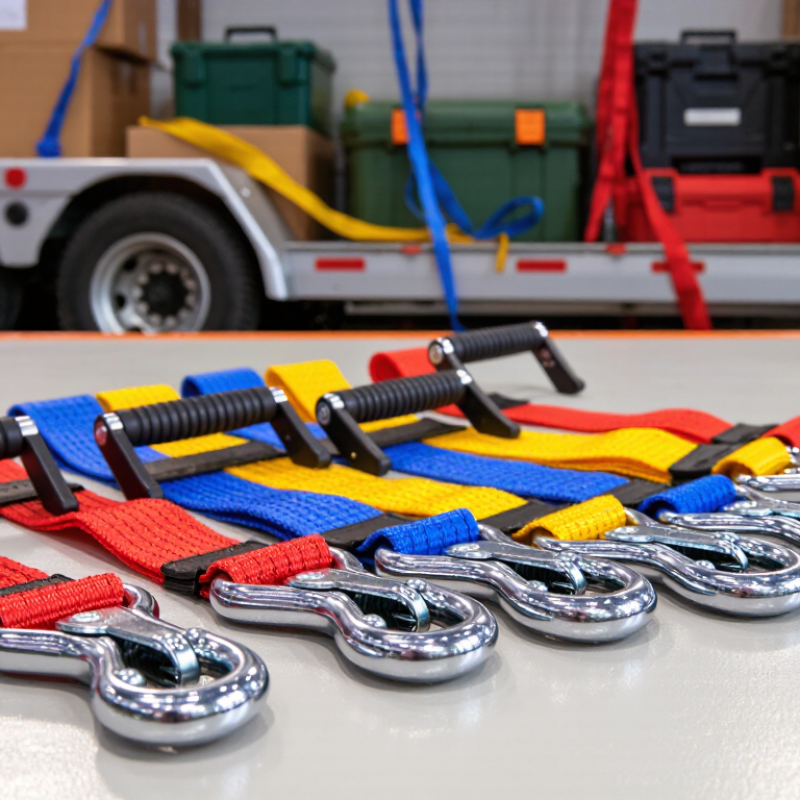
For 2026 cargo hauling, ratchet bungee straps should support a securement system, not replace careful load planning. Under FMCSA cargo-securement rules, the aggregate Working Load Limit (WLL) of all tie-downs must equal at least 50% of the cargo’s weight. For a 1,000-pound load, the combined WLL must reach 500 pounds or more.
Check the label, not the color or thickness. A strap’s WLL differs from its breaking strength. If two straps each carry a 250-pound WLL, they may meet the basic calculation, but the setup still needs suitable anchor points and correct tension.
Uneven loading can shift pressure toward one strap. That simple detail is easy to miss.
Use ratchet mechanisms that lock firmly and release without sudden recoil. Keep straps away from sharp edges, hot surfaces, and damaged metal. Bungee sections can help control loose material, but they may not provide a marked WLL. I would not treat an unrated bungee as primary cargo securement. I learned this the hard way during a rushed loading job: the straps felt tight, yet the load moved several inches after braking. Tight is not the same as secure. Inspect the cargo after the first few miles, then check it again whenever conditions change. Weather, vibration, and repeated tension can expose weaknesses that looked minor at departure.

2026 Best Ratchet Bungee Straps for Secure Cargo?
Ratchet bungee straps look simple, but each part carries a different responsibility. The webbing provides the main tension path around the load. Choose flat, tightly woven material with visible stitching and a readable working load limit. WSTDA-T-1 emphasizes traceable ratings and proper tie-down assembly inspection. Frayed edges, glazed fibers, or pulled stitches are warning signs.
The hooks connect the strap to approved anchor points. They should seat fully, without sideways loading. The ratchet creates controlled tension through its handle and spool. It should lock firmly, but not require violent force. The elastic core mainly absorbs vibration and helps maintain contact. It should not replace a rated tie-down system. That distinction is easy to miss.
The U.S. Federal Motor Carrier Safety Administration requires aggregate working load limits of at least half the cargo weight under 49 CFR 393.102. The Commercial Vehicle Safety Alliance’s 2024 International Roadcheck data continued to identify cargo securement as a common inspection failure area. That finding matters for everyday users, not only commercial fleets. Before departure, I check the first wrap, hook seating, and ratchet closure. I also recheck after several miles. Elastic parts can relax, especially in cold weather. A clean-looking strap can still be unsafe. Personally, I would rather reject one questionable strap than trust a perfect appearance.
The chart compares representative elongation-at-break ranges for the main materials commonly found in ratchet bungee straps. Elastic cores provide stretch, polyester or nylon webbing controls the load path, and steel hooks and ratchets are designed to remain comparatively rigid. Actual performance depends on construction, material grade, temperature, wear, and the manufacturer’s working load limit.
Choosing the best ratchet bungee strap for 2026 starts with one safety rule: select by Working Load Limit (WLL), not breaking strength. Breaking strength describes failure in a controlled test. It is not a safe working capacity.
A complete strap system includes the webbing, ratchet, hooks, stitching, and anchor points. Use the lowest-rated component as the system’s WLL. For example, if the webbing supports 1,000 pounds but one hook supports only 600 pounds, treat the entire assembly as rated for 600 pounds. A heavier load may seem secure in a driveway, yet braking, sharp turns, wind, and road vibration can multiply force. I have seen straps remain tight while hooks slowly deform. That small warning deserves attention.
Tips: Check every rating label before loading. Inspect stitching, cuts, melted fibers, bent hooks, and damaged ratchets. Keep the strap aligned with the load. Avoid knots, sharp edges, and overstretching. Never use breaking strength as permission to carry more.
Load shape matters, too. A loose cooler can shift even when the strap looks tight. Add padding around edges and use suitable anchor points.
Recheck tension after the first few miles. Personally, I would rather use two properly rated straps than trust one oversized strap with a questionable fitting. Ratings can be misunderstood, especially when sellers display only the highest number. Verify the manufacturer’s WLL guidance and follow applicable transport requirements.
2026 Best Ratchet Bungee Straps for Secure Cargo?
Choosing a ratchet bungee strap starts with working load limit, or WLL. WLL is not the breaking strength. Stay below the lowest rating in the complete assembly. Check the strap, ratchet, hooks, and anchor points separately. A heavier strap is not automatically safer if the anchor point is weak. Measure the cargo before buying. Too little length creates poor tension. Too much loose material can flap, catch, or reduce control. Leave enough room for secure wrapping, but avoid large hanging loops.
Hook design must match the cargo and anchor shape. S-hooks suit open rails, while flat hooks may sit better on wider attachment points. Never force a hook sideways. Side loading can bend it or release tension. Inspect stitching, webbing, elastic sections, and ratchet teeth before every trip. Look for cuts, flattened areas, rust, and stretched cords. I once underestimated how much vibration changes tension over distance. That mistake made me more cautious about rechecking straps after the first few miles.
Tips: Match WLL to cargo risk, not just cargo weight. Fragile boxes need stable compression, not excessive force. Sharp edges require protective sleeves. Wet, dusty, or hot conditions may shorten service life. Keep the strap clear of exhaust heat and moving parts. Do not combine damaged components with new ones. When cargo shifts during a test pull, stop and adjust the arrangement instead of tightening blindly. A second person can watch the hooks while you operate the ratchet.
Ratchet bungee straps can hold cargo firmly, but securement is not a set-and-forget task. Road vibration, sharp turns, and changing weather can loosen tension. A practical inspection schedule starts within the first 50 miles. Stop in a safe location and examine every strap, hook, and anchor point.
Look for stretched cords, cuts, crushed webbing, bent hooks, or damaged ratchets. Check whether the load has settled or shifted. Feel for reduced tension without placing fingers near pinch points. Tighten only when the strap remains within its rated capacity. Never hide wear beneath dirt.
After the first check, inspect the cargo every three hours or 150 miles, whichever comes first. Recheck sooner after heavy braking, rough pavement, strong crosswinds, or sudden temperature changes. These conditions can alter pressure and movement. Keep straps away from sharp edges, hot surfaces, and exhaust components. Use edge protection when contact cannot be avoided.
Small details matter.
From field use, I have learned that a visual check alone can miss gradual loosening. I once noticed a strap sitting correctly while the cargo underneath had compressed. The tension felt acceptable, yet the load had developed movement. That mistake changed my routine: I now check both the restraint and the cargo position. Replace questionable equipment rather than stretching its service life. Follow the strap manufacturer’s rated limits and applicable transport requirements for each load.
Representative ratchet bungee strap configurations for light-duty cargo control. Verify the working load limit on the product label before use.
| Configuration | Typical Length | Strap Width | Working Load Limit | Assembly Breaking Strength | Hook Style | Best Use | Inspection Schedule | Important Limitation |
|---|---|---|---|---|---|---|---|---|
| Compact Utility | 4 ft to 6 ft | 1 in | 300 lb | 900 lb | Coated S-hook | Coolers, toolboxes, small bins, and light recreational equipment | Recheck within 50 miles; then every 3 hours or 150 miles, whichever occurs first | Not intended for heavy machinery, motorcycles, or sharp-edged loads |
| Standard Cargo | 6 ft to 10 ft | 1 in | 500 lb | 1,500 lb | Vinyl-coated J-hook | Luggage, camping gear, cartons, and moderate loads on pickup beds | Recheck within 50 miles; then every 3 hours or 150 miles, whichever occurs first | Use edge protection where the webbing contacts corners or metal surfaces |
| Wide-Web Heavy Utility | 8 ft to 12 ft | 1.5 in | 833 lb | 2,500 lb | Closed wire hook | Heavier outdoor equipment and dense, compact cargo with suitable anchor points | Recheck within 50 miles; then every 3 hours or 150 miles, whichever occurs first | Do not exceed the lowest rated component, anchor point, or vehicle capacity |
| Long-Bed Adjustable | 10 ft to 15 ft | 1 in | 500 lb | 1,500 lb | Coated flat hook | Large cargo areas, trailers, tarped loads, and irregularly shaped items | Recheck within 50 miles; then every 3 hours or 150 miles, whichever occurs first | Excess slack can allow load movement; keep the strap tensioned without over-tightening |
| Weather-Resistant Utility | 6 ft to 10 ft | 1 in | 500 lb | 1,500 lb | Corrosion-resistant coated hook | Repeated outdoor use, wet conditions, and cargo exposed to road spray | Recheck within 50 miles; then every 3 hours or 150 miles, whichever occurs first | Dry before storage; replace if webbing becomes brittle, cut, chemically damaged, or deeply abraded |
| Low-Profile Tie-Down | 5 ft to 8 ft | 1 in | 400 lb | 1,200 lb | Flat wire hook | Low-clearance cargo, roof-rack accessories, and items requiring minimal hook projection | Recheck within 50 miles; then every 3 hours or 150 miles, whichever occurs first | Confirm that each hook is fully seated and cannot disengage from the anchor point |
Safety reminder: These straps are supplemental cargo-control devices, not substitutes for properly rated tie-downs or load-rated chains. Inspect the webbing, stitching, ratchet mechanism, hooks, anchor points, and cargo stability before departure and at every scheduled recheck. Never use a strap that shows cuts, melted fibers, severe abrasion, deformation, corrosion, or damaged stitching.
Precision Cable Assemblies
16830 Pheasant Drive
Brookfield, WI 53005
Phone: 262-784-7887
Fax: 262-784-0681